
A Practical Guide to Late Rent Tenants

What Every Small Landlord Needs to Know About Late Rent Tenants
Late rent tenants are one of the most common — and costly — challenges facing small landlords today. Here's a quick overview of what to do and what to expect:
Quick answers:
- Rent is late when it isn't paid by the due date in the lease (often with a short grace period of 3-5 days)
- Late fees are legal in most states if your lease includes them, but caps apply (e.g., 10-12% in Texas, "reasonable costs" in California)
- Before evicting, you must serve a formal pay-or-quit notice — timelines vary by state (3 days in Texas, 5 days in Illinois, 10 days in Maryland)
- Accepting partial rent without a written agreement can waive your eviction rights in many states
- Eviction costs $5,000-$10,000 on average and takes 6-12 weeks — communication and payment plans almost always cost less
The numbers paint a clear picture of how widespread this problem is. As of early 2024, roughly 3.7 million U.S. renter households were behind on rent, totaling around $8 billion in unpaid rent. For small landlords managing a duplex or triplex in Providence, even one late-paying tenant can put real financial pressure on mortgage payments, maintenance costs, and property taxes — all of which keep coming whether rent does or not.
The good news? Most late rent situations don't end in eviction. With the right process — clear communication, proper documentation, and a firm but fair approach — the majority of cases resolve before anyone sets foot in a courtroom. This guide walks you through exactly how to handle it.
I'm Isaac Spragg, founder of LionsGate Property Management, and managing late rent tenants is something I've dealt with — both as a rental property owner and as a full-service property manager serving Providence, Cranston, Warwick, and Pawtucket. The step-by-step process I'll share here is built from real experience, not just theory.
Legal Rights and Rules for Managing Late Rent Tenants

When dealing with late rent tenants, jumping straight to anger is a natural human reaction, but it is a terrible business strategy. To protect your investment and avoid expensive lawsuits, you must navigate the situation strictly within the boundaries of local and state laws.
Under the Rhode Island Landlord Tenant & Eviction Law, both landlords and tenants have specific statutory rights and obligations. Landlords have the right to receive their rent in full and on time, while tenants have the right to a habitable living environment and a formal, court-supervised process if the landlord wishes to terminate the tenancy.
Understanding these boundaries is critical. Trying to take matters into your own hands through "self-help" evictions—such as changing the locks, shutting off utilities, or removing a tenant's belongings—is highly illegal. In Rhode Island, doing so can expose you to severe statutory damages, including paying the tenant up to three months' rent, plus their attorney fees. Every step of the collection and eviction process must follow the letter of the law.
To learn more about your general rights, you can consult resources like the Your Rights as a Tenant - Rhode Island Legal Services guide.
Landlord and Tenant Responsibilities
In any standard rental agreement, the landlord's primary obligation is to maintain a safe, clean, and habitable property. This means keeping the heat running in the winter, ensuring the plumbing works, and addressing structural maintenance promptly.
The tenant's primary obligation, in exchange for this habitable space, is to pay the agreed-upon rent on or before the due date. Most leases specify that rent is due on the first of the month.
However, a tenant's obligation to pay rent is generally independent of the landlord's maintenance duties in Rhode Island. Unlike some states where tenants can easily withhold rent for minor repairs, Rhode Island law requires tenants to follow strict statutory procedures if they plan to deduct repair costs from their rent, and they cannot simply stop paying rent altogether. If you find yourself in a situation where a tenant has stopped paying and refuses to communicate, check out our guide on What to Do If Tenants Don’t Pay Rent and Won’t Leave for actionable steps.
Late Fees and Grace Periods
Many landlords choose to include late fees in their rental agreements to encourage timely payments. However, you cannot charge a late fee unless it is explicitly written into the lease agreement before the tenancy begins.
Grace periods—typically three to five days—are common, but they are not always legally required unless specified by state law or your lease. For instance, in Texas, landlords cannot legally charge a late fee until rent has remained unpaid for two full days after the due date. In California, late fees must represent a "reasonable estimate" of the actual cost the landlord incurs due to the late payment, rather than acting as a punitive penalty.
In Rhode Island, there is no strict statutory cap on late fees, but courts will throw out fees that they deem unconscionable or punitive. Charging a $50 late fee is generally considered reasonable; charging $500 for being one day late is not. To structure your lease terms safely and protect your cash flow, read through our A-Z Guide to Landlord Rent Guarantee.
Step-by-Step Collection Protocol Without Court

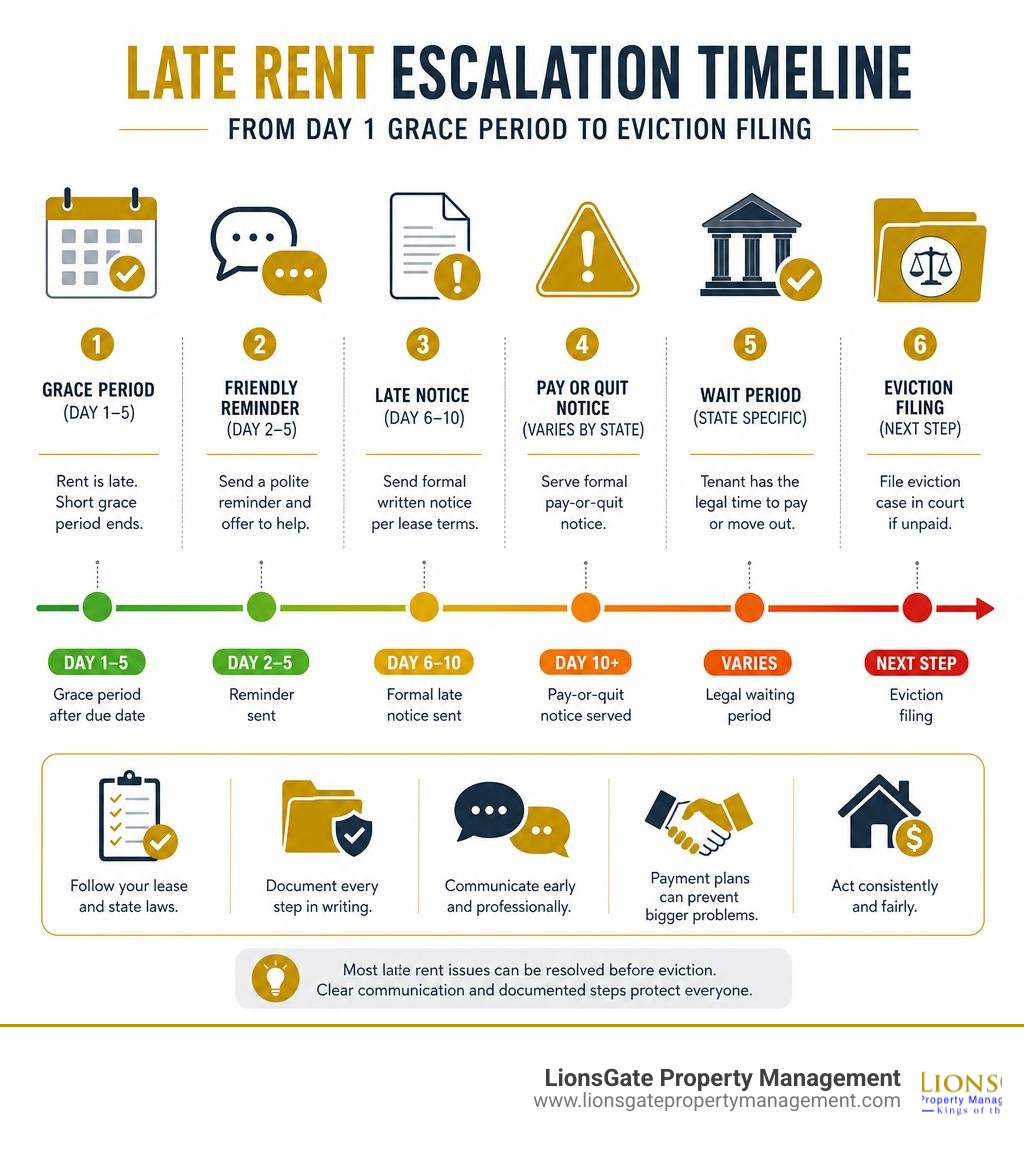
Going to court is expensive, time-consuming, and stressful. The smartest landlords use a systematic, step-by-step escalation protocol designed to secure payment without filing an eviction.
By standardizing your collection process, you remove emotion from the equation and treat late rent as a standard business transaction. The table below outlines the difference between informal, relationship-preserving communication and the formal, legal notices required if the situation escalates.
| Communication Stage | Timing | Primary Goal | Legal Weight |
|---|---|---|---|
| Friendly Reminder | Days 2-5 | Prompt the tenant gently; assume a simple oversight. | None (informal) |
| Late Fee Notification | Day 6 | Apply agreed lease terms; request immediate payment. | Contractual |
| Direct Phone Call | Days 7-10 | Understand the root cause; negotiate a solution. | None (informal) |
| Formal Pay-or-Quit Notice | Day 15+ (RI) | Establish a strict legal deadline to pay or vacate. | Required for court |
Proactive Communication Strategies for Late Rent Tenants
The moment rent becomes late, communication should begin. However, we always recommend waiting until the grace period expires before sending a formal late fee notice.
On Day 6, send a friendly, automated text or email. A simple, "Hi [Tenant Name], we noticed your rent payment hasn't posted yet. Please submit payment online or reach out if you have any questions!" resolves about 80% of late payments within 48 hours. Often, it's a simple banking glitch or a payroll delay.
If the tenant fails to respond, escalate to a phone call by Day 10. Keep your tone professional, calm, and collaborative. Your goal is to find out why the rent is late. Is this a temporary cash flow hiccup (like an unexpected medical bill), or is it a structural financial problem (like job loss)? Knowing the cause helps you decide whether to offer a temporary payment plan or prepare for a transition. For landlords in the East Providence area, establishing these clear, professional communication channels early is The Secret to Stress-Free Rent in East Providence.
Enforceable Payment Plans and Cash-for-Keys
If a tenant is experiencing a temporary, one-time financial setback but has a history of on-time payments, a payment plan is often the best path forward. However, never accept a verbal promise.
An enforceable payment plan must be:
- Written down and signed by all adult tenants on the lease.
- Specific, detailing exact payment amounts and due dates (e.g., splitting the rent into two payments aligned with their bi-weekly paydays).
- Clear about the consequences of non-compliance, stating that failure to meet the plan terms will void the agreement and result in immediate eviction filing.
If the tenant's income has permanently dried up and they cannot afford the property, a "cash-for-keys" agreement can actually save you thousands of dollars compared to a formal eviction. In a cash-for-keys deal, you offer the tenant a small sum of money (e.g., $500 to $1,000) in exchange for them leaving the property clean, undamaged, and completely vacant by a specific date. While it feels counterintuitive to pay a non-paying tenant, it is often a highly practical business decision that avoids weeks of lost rent and legal fees.
To completely eliminate the stress of chasing down rent or negotiating these awkward situations, consider protecting your property with rent guarantee coverage. Learn how in our comprehensive No More Missed Payments: A Landlord’s Guide to Rent Guarantee Coverage.
State-by-State Eviction Rules and Timelines
When informal collection methods fail, you must transition to the formal legal process. Every state has distinct timelines and procedural requirements that must be followed perfectly. Even a minor paperwork error can cause a judge to dismiss your case, forcing you to restart the entire process from day one.
If you are a landlord in Rhode Island, you must familiarize yourself with the official court procedures. You can access the official forms and jurisdictional guidelines directly via the District Court Eviction Guide.
When to Initiate Eviction for Late Rent Tenants
In Rhode Island, the eviction process for nonpayment of rent is highly structured. You cannot simply file an eviction the day after rent is late.
Under state law, rent must be overdue for at least 15 days before a landlord can officially initiate the eviction process. Once that 15-day threshold is met, you must serve the tenant with a formal 5-Day Demand Notice for Nonpayment of Rent. This notice informs the tenant that they have five days to pay the outstanding balance in full or the lease will terminate, allowing the landlord to file a lawsuit in District Court.
If the tenant pays the full amount within those five days, the eviction process stops. If they do not, you can file a nonpayment eviction complaint in court on the sixth day.
Navigating court dates, process servers, and legal filings can be overwhelming for independent owners. For a detailed breakdown of the legal steps involved, read our guide on How to Navigate the Tenant Eviction Process. Additionally, to understand the financial reality of this step, check out How Much Does It Cost to Evict a Tenant.
Security Deposits and Rent Arrears
A common question landlords ask is: "Can I just use the tenant's security deposit to cover their late rent?"
During an active tenancy, the answer is generally no, unless both parties sign a written agreement to do so (which is risky, as it leaves you with no security deposit to cover physical property damage later). The security deposit is designed to protect the landlord against physical damage and unpaid rent after the tenant has vacated the property.
In Rhode Island, once a tenant moves out or is evicted, you have 20 days to return the security deposit or provide a detailed, itemized written statement explaining any deductions. Unpaid rent arrears are a perfectly legal deduction from the security deposit. If the outstanding rent exceeds the deposit amount, you can apply the entire deposit to the balance and sue the tenant in small claims court for the remaining debt.
To learn how professional management protects your cash flow from these deposit shortfalls, read How to Secure Your Income with Guaranteed Property Management.
Frequently Asked Questions about Late Rent
Can a landlord refuse partial rent payments?
Yes, and in many cases, you should refuse them if you are planning to evict. In many jurisdictions, accepting even a single dollar of partial rent after serving an eviction notice legally waives your right to evict for that month, forcing you to restart the legal notice timeline. If you do decide to accept a partial payment, ensure the tenant signs a strict, written non-waiver agreement stating that accepting the partial payment does not waive your right to continue with eviction proceedings for the remaining balance.
Can a landlord require cash payments after a bounced check?
Yes, but you must follow proper legal steps. If a tenant pays with a check that bounces, you can charge a reasonable returned check fee (typically up to $25-$35) if authorized in your lease. Furthermore, you can legally require the tenant to pay in cash, money order, or certified funds for a limited period (typically up to three months) to prevent future payment failures, provided you deliver a formal written notice of this change.
How do rent control laws affect late rent collection?
While Rhode Island does not have statewide rent control, local ordinances and tenant protection acts in other regions (such as the Cook County RTLO or the California Tenant Protection Act) place strict limits on how landlords can handle late rent, rent increases, and evictions. Even without local rent control in cities like Cranston or Warwick, landlords must remain strictly compliant with municipal housing codes and state-level fair housing laws to avoid legal complications.
Conclusion
Managing late rent tenants is one of the most stressful parts of owning rental property. Between tracking down payments, sending legal notices, and worrying about your mortgage, it can quickly turn a passive investment into a exhausting full-time job.
That is where we come in. At LionsGate Property Management, we offer comprehensive, full-service rental property management for duplexes, triplexes, and small-to-mid-size apartment buildings throughout Rhode Island—including Providence, Cranston, Warwick, Pawtucket, and North Providence.
We deliver a truly stress-free ownership experience by handling everything for you: proactive maintenance, prompt snow removal, and professional tenant relations. Best of all, we offer a specialized Guaranteed Rent Program and no-cost evictions, ensuring your rental income remains completely secure, no matter what.
Ready to make your rental investment truly passive? Learn more about how we can protect your cash flow by visiting the LionsGate Guaranteed Rent Program page today!