
Protect Your ROI with Guaranteed Rent Insurance

Why Guaranteed Rent Insurance Is the Smartest Safety Net for Landlords
Guaranteed rent insurance is a policy that pays your rental income when a tenant stops paying — protecting your cash flow while the eviction process plays out.
Quick answer for landlords evaluating rent insurance options:
| Question | Answer |
|---|---|
| What does it cover? | Missed rent payments, often legal fees and eviction costs |
| How long does coverage last? | Typically up to 12 months after default |
| Who pays the premium? | Usually the landlord, though some policies shift cost to the tenant |
| How much does it cost? | Roughly 5–7% of annual rental income |
| When does it kick in? | After a 30-day waiting period following the first missed payment |
| Is it the same as landlord insurance? | No — landlord insurance covers property damage and liability, not tenant default |
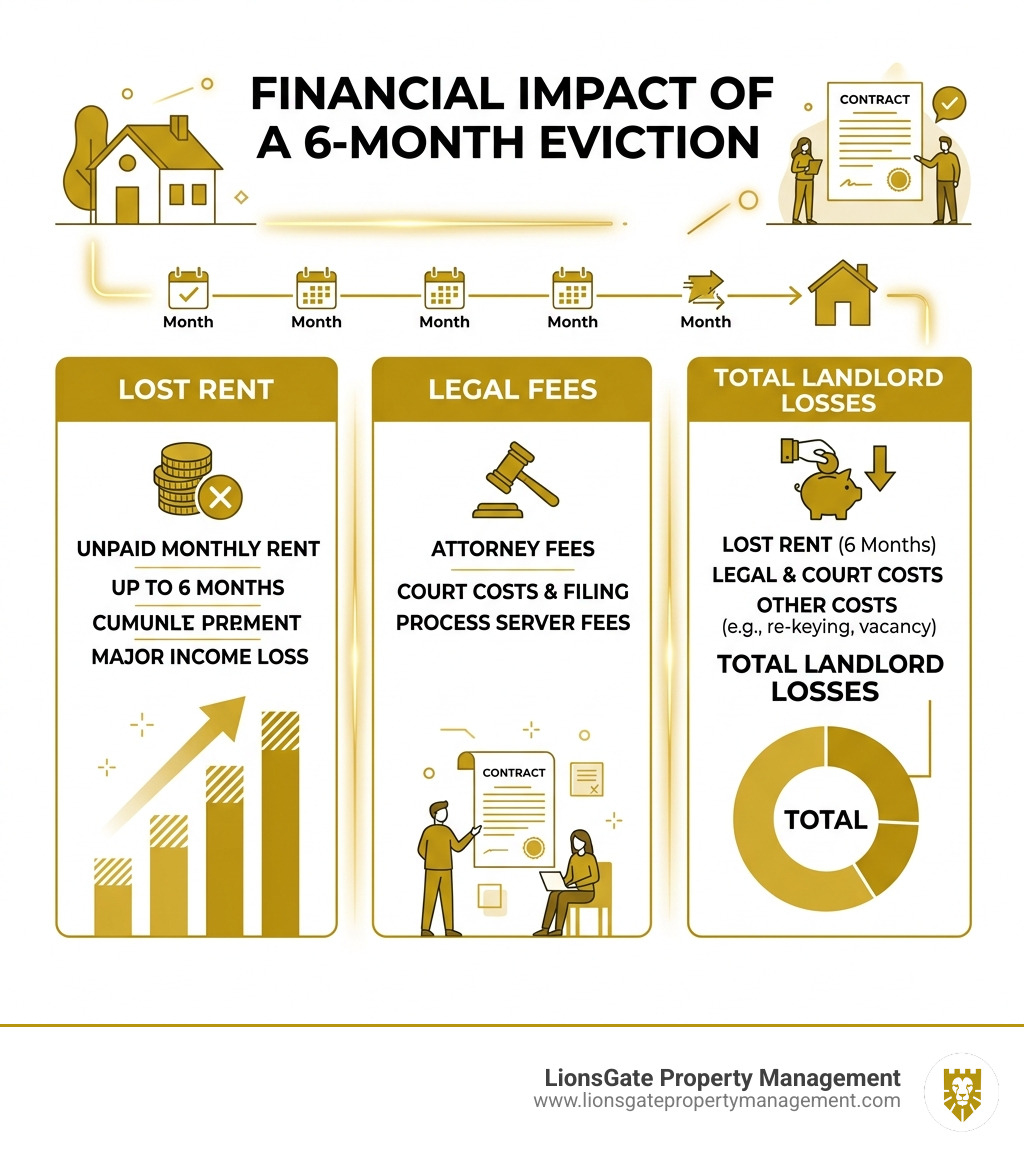
Here's the reality: even a carefully screened tenant can lose their job, go through a divorce, or face a health crisis. When that happens, the rent stops — but your mortgage, taxes, and maintenance costs don't. Research shows that 93% of tenants who fall behind on rent never fully catch up, and evictions in many states take 6 to 10 months to resolve. For a small landlord with a duplex or triplex, that's not a minor inconvenience — it's a serious financial hit.
This guide walks you through everything you need to evaluate guaranteed rent insurance: how it works, what it covers, what it excludes, what it costs, and how it stacks up against other income protection strategies.
I'm Isaac Spragg, founder of LionsGate Property Management, and I've worked with Providence-area landlords who've experienced the costly reality of tenant default — which is exactly why guaranteed rent insurance is a core part of how I help owners protect their rental income. If you own a duplex, triplex, or small apartment building in Rhode Island, the information in this guide is written with your specific situation in mind.
What is Guaranteed Rent Insurance and How Does It Work?

At its core, guaranteed rent insurance (also known as rent default insurance) is a risk management tool designed to ensure your cash flow remains uninterrupted. Think of it as a specialized financial safety net. While traditional insurance focuses on the building's physical structure, this product focuses on the lease's financial performance.
Understanding Rent Guarantee Insurance involves knowing that this isn't a "get out of jail free" card for tenants. Instead, it is a reimbursement program for the owner. If a tenant stops paying, the insurance company steps in to cover the monthly rent for a set period—typically up to 12 months.
The Claim Process and Payout Timelines
How does it actually work in the real world? Most policies follow a standard sequence:
- The Default: The tenant misses a payment.
- The Waiting Period: Most policies have a 30-day waiting period. This means the insurance usually kicks in after the second consecutive month of non-payment.
- The Claim: You submit proof of the lease and the missed payment.
- The Payout: Once approved, the insurer pays you the monthly rent amount, often continuing until the tenant is evicted or the policy limit is reached.
In April 2026, as the rental market continues to evolve, having this predictable payout is vital for maintaining ROI, especially for owners of multi-family units in areas like Warwick or Pawtucket where property taxes and utility costs remain constant regardless of whether a tenant pays.
Typical Coverage of Guaranteed Rent Insurance
What are you actually getting for your premium? Most comprehensive policies cover:
- Missed Rent: The primary benefit, often capped at a specific dollar amount (e.g., $60,000) or a number of months (e.g., 12 months).
- Legal Expenses: Evicting a tenant is expensive. The average cost of legal, court filing, and sheriff fees for tenancy hearings is around $1,450. Many policies provide coverage for these fees, sometimes up to $2,000 or more.
- Arrears Recovery: Some insurers will handle the legal legwork of pursuing the tenant for the debt, saving you the headache of debt collection.
When you consider that the average homeowner losses related to tenant evictions hover around $16,000, and the timeline to evict can stretch from 6 to 10 months, the value of our Guaranteed Rent Program Providence becomes clear. It’s about mitigating the "Big Three" risks: lost time, lost money, and legal stress.
Common Exclusions and Limitations
No insurance policy covers everything. It is important to read the fine print to avoid surprises. Common exclusions include:
- Vacancy Periods: The insurance does not pay you if the unit is simply empty between tenants. It only triggers when a living tenant fails to pay.
- Property Damage: While some high-end policies include a small amount of damage protection, standard guaranteed rent insurance is for income, not repairs. (That’s what your security deposit and landlord insurance are for!)
- Uninhabitable Units: If a fire makes the unit unlivable, this insurance usually won't pay. You would look to your "Loss of Use" coverage in a standard landlord policy for that.
- Pre-existing Arrears: You cannot buy a policy for a tenant who is already behind on rent. The "house" must be "dry" before you can buy "flood insurance."
Comparing Income Protection Strategies
As a landlord in Rhode Island, you have several ways to protect your income. Understanding the nuances between them is the difference between being "covered" and being "protected."
| Feature | Guaranteed Rent Insurance | Landlord Insurance | Loss of Rent (Peril-based) |
|---|---|---|---|
| Trigger | Tenant Default/Non-payment | Fire, Storm, Liability | Property Damage |
| Covers Rent? | Yes (due to default) | No | Yes (only if unit is unlivable) |
| Legal Fees? | Often included | No | No |
| Property Damage? | Rarely | Yes | Yes |
| Liability? | No | Yes | No |
Guaranteed Rent Insurance vs. Guaranteed Rent Schemes
It’s easy to confuse these two, but they are very different animals.
- Rent Guarantee Insurance: You keep control of the property. You manage the tenants (or we do for you). You pay a premium to an insurer. If the tenant defaults, you get paid.
- Guaranteed Rent Schemes: Usually involves a 3-5 year contract where a management company or agency "leases" the property from you at a slightly below-market rate. They then sublet it. You get your money every month regardless of whether the unit is occupied, but you lose significant control over who lives there.
For many of our clients in East Providence and Cranston, the insurance model is preferred because it allows them to maintain market-rate returns while keeping a hand on the wheel. You can learn more about these distinctions in our guide on How To Secure Your Income With Guaranteed Property Management.
How Guaranteed Rent Insurance Differs from Landlord Insurance
Think of landlord insurance as your "Shield" against physical disasters and lawsuits. It covers the roof if it blows off in a storm and the legal fees if someone trips on the stairs. However, standard Landlord and Rental Property Insurance almost never covers a tenant who simply decides to stop paying rent because they bought a new car instead. Guaranteed rent insurance is the "Safety Net" that catches your cash flow when the tenant's finances fail.
Costs, Eligibility, and Implementation

How much does peace of mind cost? In the current 2026 market, guaranteed rent insurance typically costs between 5% and 7% of your total annual rental income. Some leaner policies might range from 2% to 5%, depending on the coverage limits and the deductible (the waiting period).
For example, if your duplex in North Providence brings in $3,000 a month ($36,000 a year), a 5% premium would be $1,800 for the year. That might seem like a lot until you realize that a single eviction could cost you $16,000 in lost rent and legal fees. It’s a classic case of spending a little to prevent losing a lot.
Who Pays for the Policy?
There are two main ways this is handled:
- Landlord-Paid: The owner pays the premium as a business expense. This is the most common route because it ensures the owner is the policyholder and in total control.
- Tenant-Paid: Some landlords include a requirement in the lease that the tenant must pay for a lease guarantee. This is often used for "marginal" tenants—people with great income but perhaps a lower credit score or a lack of local rental history. It allows the tenant to get the apartment they want while removing the risk for the landlord at no cost to the owner.
Eligibility Requirements for Tenants
Insurers aren't in the business of losing money, so they won't cover just anyone. To qualify for guaranteed rent insurance, tenants usually need to meet specific criteria:
- Income-to-Rent Ratio: Most providers require a gross household income of at least 2.5x to 3x the monthly rent. Some strictly cap the rent-to-income ratio at 50%.
- Credit History: A clear credit check is usually mandatory—no bankruptcies or major court judgments (CCJs) within the last three years.
- Employment Verification: At least one person in the household typically needs to be gainfully employed with proof of income (pay stubs or bank statements).
- Reference Checks: A solid history of on-time payments from previous landlords is often required.
If a tenant doesn't quite meet these, some insurers allow for a qualified guarantor to step in and back the lease, making the "un-insurable" tenant insurable.
When Should Landlords Invest in Rent Protection?
Not every landlord needs this insurance, but for many, it's a non-negotiable part of their strategy. You should strongly consider it if:
- You Have Thin Margins: If one month of missed rent means you can't pay the mortgage on the property, you need protection.
- You Are an Out-of-State Owner: Managing an eviction from three states away is a nightmare. Having an insurer handle the financial side makes it much more manageable.
- You Own High-Rent Units: The higher the rent, the more you lose every day the tenant stays without paying.
- Economic Volatility: With half of American tenants struggling to afford rent, the risk of default is higher than ever.
In our professional property management office, we see that landlords who utilize these programs sleep much better at night. They’ve moved the risk of a $20,000 loss off their personal balance sheet and onto the insurance company's.
Frequently Asked Questions about Rent Protection
How is this different from a security deposit?
A security deposit in Rhode Island is typically capped at one month's rent. If a tenant defaults, that one month is gone instantly. Guaranteed rent insurance can provide a reimbursement cap of up to $60,000—far exceeding what any security deposit could cover. Deposits are for minor damages; insurance is for major income failure.
Can I get coverage for existing tenants?
Yes! Many providers allow for mid-lease enrollment. However, they will usually require proof that the tenant has paid on time for the last 6 to 12 months. You can't wait until they miss a payment to sign up, but you can certainly add protection to a stable, existing tenancy.
Does it cover the cost of eviction?
Most "Gold Standard" policies do. They often include a legal fee cap (around $2,000) which covers paralegal support and court filing fees. This is a huge benefit because it means you don't just get the rent—you get the professional help needed to regain possession of your property.
Conclusion
At LionsGate Property Management, we specialize in the unique needs of owners with duplexes, triplexes, and small-to-mid-size apartments in the Providence, RI area—including Cranston, Warwick, and Pawtucket. We understand that your rental property isn't just a building; it's your retirement fund, your children's college tuition, or your primary source of wealth.
Protecting that ROI requires more than just a "good feeling" about a tenant. It requires a proactive strategy that includes maintenance, snow removal, and, most importantly, income security. Our USP includes a "no-cost eviction" approach and a robust Protect your rental income with our Guaranteed Rent Program that ensures you get paid, no matter what.
Don't let a single bad break for a tenant become a financial disaster for you. Let's secure your property against the unpredictable. Reach out to us today to see how we can stabilize your portfolio and give you the peace of mind you deserve.