
How Rhode Island Landlords Can Guarantee Their Monthly Rent

Why Rhode Island Landlords Are Turning to Rent Guarantee Programs
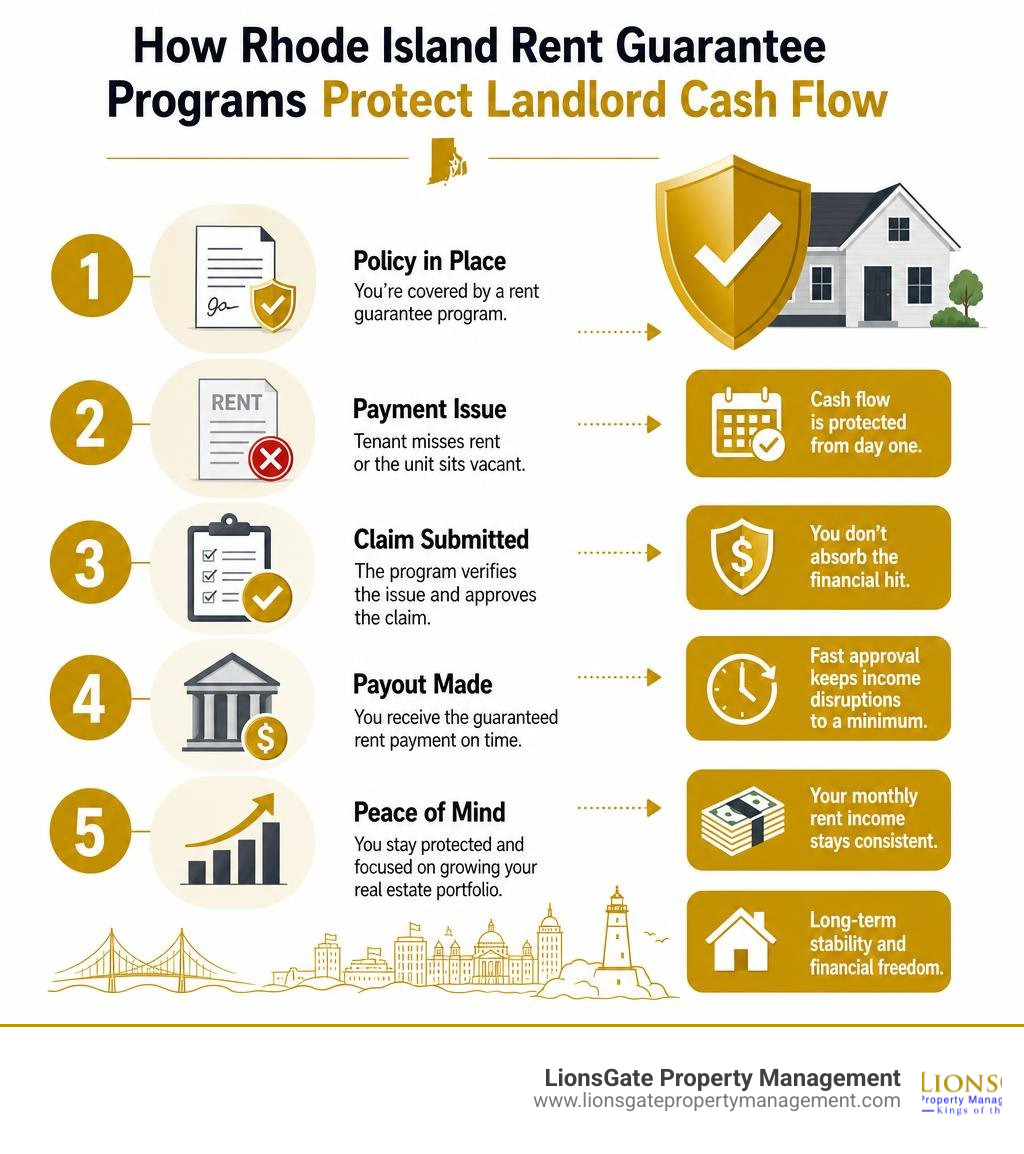
Landlord rent guarantee Rhode Island programs give property owners a way to receive consistent monthly income — even when tenants miss payments or a unit sits vacant.
Here's a quick overview of how they work:
| Program Type | How It Works | Who Pays | Payout Speed |
|---|---|---|---|
| Lease Guarantee (e.g. TheGuarantors) | Insurance policy; landlord is beneficiary | Tenant pays premium | On claim after default |
| Property Management Guaranteed Rent | Management company guarantees monthly payment | Landlord pays management fee | Monthly, regardless of tenant payment |
| Personal Rent Guarantor | Individual co-signer covers unpaid rent | Free to landlord | After notice and demand |
Rhode Island's tight legal environment makes unpaid rent a real problem. The state caps security deposits at one month's rent — meaning a landlord's financial cushion is slim if a tenant stops paying. Evictions move through the court system, and that process takes time. Meanwhile, the bills keep coming.
For small landlords managing duplexes or triplexes in Providence, Cranston, or Pawtucket, a single bad tenant can wipe out months of profit.
That's where rent guarantee programs come in. They shift the income risk away from you — and keep cash flowing no matter what happens on the ground.
I'm Isaac Spragg, founder of LionsGate Property Management, and I've built our guaranteed rent programs specifically to solve the income instability that Rhode Island landlords face every day. My hands-on experience managing my own investment properties — and navigating the same landlord rent guarantee Rhode Island landscape you're dealing with — means our solutions are designed around what actually works here.
A Guide to the Landlord Rent Guarantee Rhode Island

Owning investment properties in the Ocean State can be highly rewarding, but it also comes with its fair share of financial nail-biting. If you own a duplex in Cranston or a triplex in Pawtucket, you know that your mortgage company doesn't care if your tenant is late on rent. They want their money on the first of the month, period.
To help make sense of how you can protect your cash flow, we have put together this complete A-Z Guide to Landlord Rent Guarantee. Understanding these systems is the first step toward transforming your rental property from a source of daily stress into a truly passive stream of income. If you have ever wondered What is Guaranteed Rent and Why Should You Care, the answer is simple: it is the only way to ensure your business remains profitable even when life throws your tenants a curveball.
What is a Landlord Rent Guarantee Rhode Island Program?
A landlord rent guarantee Rhode Island program is a specialized risk-mitigation service designed to protect property owners from tenant rent defaults. Unlike standard property management where the manager simply collects whatever rent the tenant pays and passes it along to you (minus their fee), a rent guarantee program steps in to keep you whole when payments stop.
If a tenant experiences a job loss, medical emergency, or simply refuses to pay, the guarantee provider ensures that your monthly rental income continues to arrive on time. For a deeper look into how these programs protect your bottom line, check out our guide on No More Missed Payments: A Landlord's Guide to Rent Guarantee Coverage. By removing the risk of non-payment, these programs allow you to confidently project your annual revenues, pay your mortgages on time, and reinvest in your properties without fearing a sudden financial drought.
Rent Guarantees vs. Traditional Security Deposits and Insurance
Many Rhode Island landlords mistakenly believe that traditional security deposits or standard landlord insurance policies offer enough protection against tenant defaults. However, these tools serve completely different purposes and often leave massive financial gaps.
Consider how these three options compare when a tenant stops paying rent:
- Traditional Security Deposits: Under Rhode Island law, security deposits are capped at a maximum of one month's rent. If a tenant defaults, that single month of coverage is quickly eaten up by unpaid rent, leaving absolutely nothing to cover physical property damage, cleaning costs, or the legal fees associated with an eviction.
- Standard Landlord Insurance: While standard landlord insurance is vital for protecting your building's structure against fire, wind, or water damage, it typically does not cover rental income lost due to a tenant simply failing to pay. Some policies offer limited "loss of rent" coverage, but this is generally triggered only if the property becomes physically uninhabitable due to a covered disaster, not because of a tenant's financial distress.
- Rent Guarantee Programs: These programs are built specifically to handle tenant defaults. They ensure that you receive your monthly income throughout the delinquency period and often cover the costs associated with the eviction process. To see how these dynamics play out in real life, you can read about Rent guarantee insurance explained: two leases, two outcomes, which highlights the massive difference between operating with a safety net versus going it alone.
The Legal Landscape of Rhode Island Rental Properties

Navigating the legal framework of the Ocean State is one of the most challenging aspects of being a landlord. Rhode Island is generally considered a tenant-friendly state, meaning the laws are designed to protect renters from sudden displacement and unfair practices. While this ensures community stability, it also means that landlords must be incredibly precise in how they manage their properties to avoid costly legal traps. To stay on the right side of the law, every property owner should closely study the [PDF] landlord-tenant handbook - Rhode Island Judiciary.
How the One-Month Security Deposit Cap Impacts Landlords
Under Rhode Island General Law, landlords are strictly prohibited from demanding or receiving a security deposit that exceeds one month’s periodic rent. This is a rigid cap. You cannot ask for "first, last, and security" if the "last" and "security" combined exceed one month's rent.
This strict limitation places a heavy financial burden on landlords. If a tenant in Providence defaults on their $2,000-a-month apartment, your $2,000 security deposit is gone the moment they miss their first payment. If it takes three months to resolve the issue, you are out thousands of dollars with no way to recover those losses from the deposit.
Some landlords attempt to mitigate this by using co-signers and having them complete a Guaranty or Guarantee of Payment of Rent - Rhode Island: Fill out & sign online | DocHub. While a personal guarantor can provide an extra layer of security, tracking down a co-signer who may live out of state to collect unpaid rent is often a logistical nightmare that requires additional legal action. A professional rent guarantee program bypasses these headaches entirely by acting as a reliable, institutional backstop.
Rhode Island Eviction Laws and Tenant Protections
In Rhode Island, evicting a tenant for non-payment of rent is a highly structured, legal process that must be followed to the letter. Landlords are strictly prohibited from using "self-help" eviction methods, such as changing the locks, shutting off utilities, or removing a tenant's belongings. Doing so can result in severe penalties, including court orders forcing you to pay the tenant up to three months' rent plus attorney's fees.
Instead, you must go through the formal court process:
- The 5-Day Demand Notice: You must wait until rent is at least 15 days late before you can send a formal 5-Day Demand Notice for non-payment.
- Filing the Complaint: If the tenant does not pay within those 5 days, you can file a Summons and Complaint in the local District Court.
- The Court Hearing: A hearing is typically scheduled, where both sides can present their case.
Because of court backlogs and tenant protection laws, this process can easily drag on for two to three months—or even longer if the tenant raises valid defenses regarding property maintenance or habitability. During this entire time, you are receiving zero rental income. This is why learning How to Secure Your Income with Guaranteed Property Management is so critical. A guaranteed program keeps your cash flow intact while the legal wheels turn behind the scenes.
Fair Housing Compliance and the Landlord Rent Guarantee Rhode Island
When using rent guarantee programs or screening prospective tenants who apply with a third-party lease guarantee, you must remain fully compliant with federal and Rhode Island fair housing laws.
Rhode Island protects individuals from discrimination based on:
- Race, color, religion, sex, sexual orientation, gender identity, or national origin
- Familial status (families with children)
- Disability status
- Source of Income (including housing choice vouchers like Section 8)
You cannot reject an applicant simply because they use a housing voucher or rely on a third-party lease guarantee program to meet your income qualification requirements. If you accept lease guarantees, you must apply your screening criteria consistently to all applicants to avoid fair housing violations. Working with a professional property management team ensures that your tenant screening and guarantee approvals are handled with absolute legal compliance, keeping your business safe from costly discrimination lawsuits.
Protecting Your Investment: Insurance and Risk Mitigation
Managing a successful rental portfolio in Rhode Island requires a comprehensive approach to risk management. Beyond securing your monthly rent, you must protect the physical structure of your buildings and stay compliant with evolving state health and safety regulations. Implementing The Landlord's Guide to Proactive Rental Maintenance in RI is a fantastic way to prevent minor maintenance issues from turning into expensive emergencies that might drive a tenant to withhold rent.
Rhode Island Landlord Insurance and Coastal Weather Risks
Rhode Island's unique coastal geography makes it a beautiful place to live, but it also exposes rental properties to severe New England weather risks, including hurricanes, coastal flooding, blizzards, and heavy wind damage. Standard homeowners policies do not cover rental activities, making dedicated landlord insurance an absolute necessity.
When selecting coverage, look for specialized options like those offered through Landlord Insurance Rhode Island | Insurance for Real Estate Investors, which provide tailored liability and property protection for investment properties. Additionally, local agencies like the Landlord Protection Insurance - Caldarone Agency can help you navigate local risk factors.
That standard landlord policies typically exclude flood damage, which must be purchased separately. To fully safeguard your business, ensure you understand the Comprehensive Insurance for Rhode Island Landlords options, including "loss of rental income" riders that protect you if a major storm makes your property temporarily uninhabitable.
The Mandatory RI Rental Registry and Lead Compliance
To ensure tenant safety and transparency in the rental market, Rhode Island General Law 34-18-58 established a mandatory statewide rental registry. All landlords must register their rental properties with the state.
Key requirements for the registry include:
- Registration Deadlines: Initial registration was required by October 1, 2024. New landlords must register within 30 days of acquiring or leasing a property, and annual re-registration must be completed by October 1 of each year.
- Lead Hazard Compliance: If your rental property was built before 1978, you must possess and upload a valid lead-safe certificate to successfully register. Rhode Island has incredibly strict lead mitigation laws, and failing to secure this certificate can result in massive fines and legal liability.
To register your units and review the official state guidelines, visit the RI Rental Registry - Rhode Island Department of Health - RI.gov. Staying compliant with these health regulations is not just a legal obligation; it is also a prerequisite for utilizing professional rent guarantee programs, which require all covered properties to meet local habitability standards.
Frequently Asked Questions About Rhode Island Rent Guarantees
As landlords explore ways to protect their rental income, several common questions arise regarding the logistics, costs, and tax implications of landlord rent guarantee Rhode Island programs. To help you make an informed decision, we have compiled answers to some of the most frequent inquiries we receive, and you can always check out our comprehensive Property Management FAQs for additional details.
How much does a rent guarantee program cost?
The cost of a rent guarantee program depends on the specific structure you choose.
- Tenant-Paid Lease Guarantees: In this model, the tenant pays a non-refundable upfront premium (typically ranging from 70% to 120% of one month's rent) to a third-party guarantee provider. This is highly popular for renters who do not meet standard income or credit requirements but have the financial means to pay a premium to secure the apartment.
- Landlord-Paid Property Management Guarantees: When built directly into a comprehensive property management agreement, the cost of the guarantee is typically covered as part of your monthly management fee. To compare the different pricing structures and find the right fit for your portfolio, take a look at The Ultimate Guaranteed Rent Program Roundup.
Are rent guarantee fees tax-deductible in Rhode Island?
Yes! In almost all cases, the fees associated with rent guarantee programs, landlord insurance premiums, and property management services are considered ordinary and necessary business expenses. This means you can typically deduct these costs on Schedule E of your federal tax return, reducing your overall taxable rental income. Always consult with a qualified local CPA or tax professional to ensure you are maximizing your deductions in accordance with current IRS guidelines and Rhode Island state tax codes.
What happens if a tenant defaults under a rent guarantee?
If a tenant stops paying rent under our guaranteed rent program, the transition is completely seamless for you. You do not have to chase down the tenant, send demand letters, or worry about how you will make your next mortgage payment. We continue to disburse your guaranteed monthly rent on schedule.
Behind the scenes, our team handles the entire collections and dispute resolution process. If an eviction becomes unavoidable, we manage and coordinate the entire legal proceeding from start to finish. Because we stand behind our guarantee, we cover the legal costs of the eviction process ourselves, shielding you from both the stress and the financial drain of a landlord-tenant dispute.
Conclusion
At LionsGate Property Management, we believe that owning rental properties in Rhode Island should be a source of financial freedom, not a second full-time job filled with midnight maintenance emergencies and late-rent anxiety.
We specialize in full-service rental property management for duplexes, triplexes, and small-to-mid-size apartment buildings across Rhode Island, including Providence, Cranston, Warwick, Pawtucket, and North Providence. By combining our unique guaranteed rent program with proactive maintenance, reliable snow removal, and no-cost eviction coverage, we deliver a truly hands-off, stress-free ownership experience.
If you are ready to secure your monthly cash flow and protect your hard-earned investments, learn more about our Guaranteed Rent Program Providence and discover why partnering with us is The Landlord's Dream: Guaranteed Rent in Providence and Cranston.
Contact us today to explore our Residential Property Management Services Providence and let us take the risk out of your rental portfolio!