
No More Missed Payments: A Landlord's Guide to Rent Guarantee Coverage

Why Missed Rent Payments Are a Bigger Risk Than Most Landlords Realise
Landlord rent guarantee cover is a type of insurance policy that protects you from losing rental income when a tenant stops paying — and it typically includes legal expenses cover for eviction proceedings too.
Here's what you need to know at a glance:
- What it covers: Unpaid rent (usually up to £2,500/month), legal costs up to £100,000, and eviction expenses
- How it works: After a waiting period (typically 30–60 days of missed payments), the insurer pays your rent while legal proceedings continue
- What it costs: Roughly 5–7% of annual rental income, or from around £195 per year
- Key requirement: Tenants must pass referencing checks (credit, affordability, ID) before the policy starts
- What it doesn't cover: Pre-existing arrears, properties outside the UK, or tenancies where referencing wasn't completed
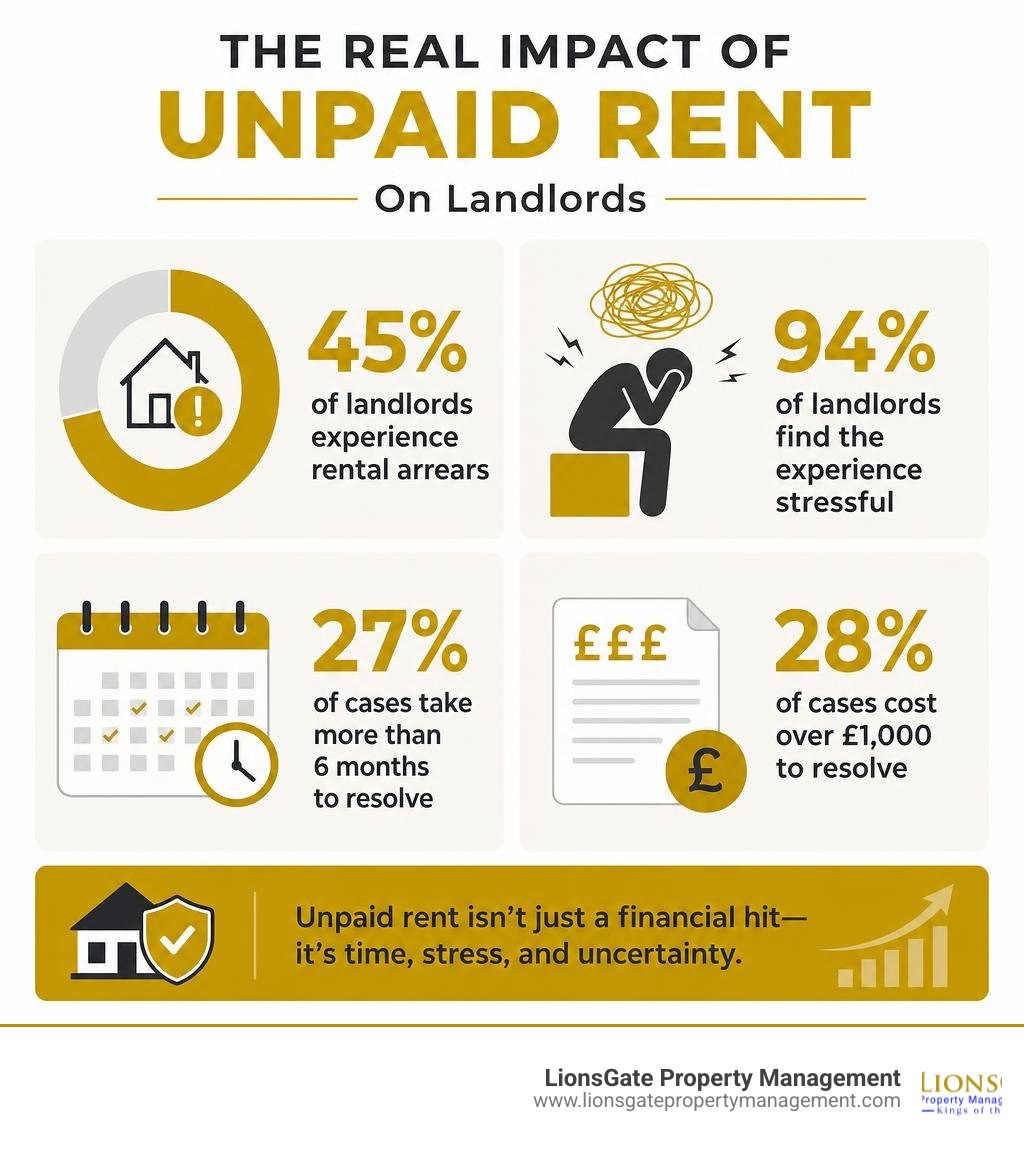
If you own a duplex, triplex, or small apartment block, a single tenant defaulting can create real financial pain — fast. Over 50% of landlords rely on rental income to cover their mortgage payments. And according to industry data, 45% of landlords have experienced rental arrears, with 94% finding the experience stressful.
It's not just the money. It's the months of uncertainty.
27% of arrears situations take more than six months to resolve. That's six months of chasing payments, navigating legal processes, and wondering whether you can cover your costs.
That's exactly the problem rent guarantee cover is designed to solve.
I'm Isaac Spragg, founder of LionsGate Property Management, and I've managed my own real estate investments in Providence, Rhode Island — so I understand how quickly an unpaid rent situation can spiral without the right protection in place. In this guide, I'll walk you through everything you need to know about landlord rent guarantee cover, from how policies work to what to watch out for before you buy.
What is Landlord Rent Guarantee Cover and How Does It Work?

At its heart, landlord rent guarantee cover—often referred to as rent default insurance or rent protection insurance—is a risk-management product. If your tenant stops paying rent, the policy steps in to reimburse your lost income for a set period.
But it is more than just a financial safety net; it is an active legal shield. When a tenant defaults, you do not just lose rent—you also face the daunting prospect of legal fees to regain possession of your property. Most comprehensive rent guarantee policies automatically bundle legal expenses coverage to handle these exact headaches.
Core Coverage and Policy Triggers
A standard policy does not simply write you a check the day a tenant is five minutes late with their rent. Instead, it is triggered when a tenant falls into formal arrears (usually defined as being at least 30 days behind on their payments).
Once triggered, a high-quality policy typically covers:
- Unpaid Rent: Most policies pay up to £2,500 (or equivalent local limits) per month for a set duration—typically 6, 12, 15, or even 24 months—or until vacant possession is achieved.
- Legal Expenses and Court Costs: Up to £100,000 to cover the legal costs of evicting a tenant, serving formal notices, and reclaiming your property.
- Mediation Services: Many modern insurers now provide early mediation. This involves professional dispute-resolution experts stepping in to work out a payment plan with the tenant before escalating to court.
- Post-Possession Cover: If the property is left damaged and cannot be immediately re-let, some policies pay up to 75% of the rent for up to three months while repairs are made.
- Squatter Protection: Legal assistance to evict unauthorized occupants who have moved into your property without permission.
You can learn more about how different providers structure these products by reviewing resources like Landlords Rent Guarantee Insurance - From £195 for 12 months or checking out Rent Guarantee and Legal Expenses Insurance - Orwell Insurance Services.
Key Benefits and Potential Drawbacks
Like any financial product, rent protection comes with clear trade-offs.
The Benefits:
- Consistent Cash Flow: You can sleep easy knowing that your mortgage, property taxes, and maintenance fees will be covered even if your tenant experiences a sudden job loss, illness, or divorce.
- Stress Reduction: Knowing you have a dedicated legal team handling eviction proceedings means you do not have to spend your weekends researching court filing procedures.
- Protection for Out-of-State or Passive Investors: If you do not live near your rental properties (for example, if you own multi-family homes in Warwick or Cranston but live elsewhere), having this coverage ensures your local investments remain truly passive.
The Drawbacks:
- Waiting Periods: Most policies have a 30-day to 60-day "deferral" or waiting period before payouts begin. This means you must still have enough cash reserves to cover the first missed month.
- Premium Costs: While affordable, paying 5% to 7% of your annual rental income year after year can eat into your net yield if you never end up making a claim.
- Strict Compliance Rules: If you make a mistake during tenant screening or fail to serve the correct legal notices on time, the insurer can—and will—deny your claim.
Rent Guarantee vs. Other Landlord Protections
To understand where landlord rent guarantee cover fits into your overall risk strategy, it helps to compare it directly to other common protections.
| Feature | Rent Guarantee Insurance | Standard Landlord Insurance | Security Deposits | Professional Guaranteed Rent Programs |
|---|---|---|---|---|
| Primary Purpose | Protects against tenant rent default and legal eviction costs. | Covers physical property damage (fire, storm) and liability. | Covers minor property damage and minor lease breaks. | Ensures 100% predictable monthly income with zero landlord effort. |
| Average Cost | 5% to 7% of annual rent. | Varies by property size and location. | Paid by tenant (usually 1 month's rent). | Integrated into full-service property management. |
| Tenant Default Cover | Yes (usually up to 6–12+ months). | No (unless specifically added as an extra). | Yes (but limited to the deposit amount). | Yes (100% covered by the management contract). |
| Legal/Eviction Cover | Yes (typically up to £100,000). | No. | No. | Yes (handled and paid for by the manager). |
| Void Period Cover | No (only covers default by an active tenant). | No (unless due to an insured peril like fire). | No. | Yes (rent is paid even if the property is vacant). |
Why Standard Landlord Insurance Differs from Landlord Rent Guarantee Cover
A common mistake we see among property owners in Rhode Island is assuming that their standard landlord insurance policy covers unpaid rent. It rarely does.
Standard landlord insurance—such as the policies you might find through Landlord Insurance RI | Rental Home Protection or Landlord's Insurance - Learn About Landlord Coverage—is designed to protect the physical structure of your building and protect you from liability claims (such as a tenant slipping on ice in North Providence).
If a fire makes your duplex uninhabitable, standard landlord insurance may offer "loss of rental income" cover to reimburse you while the building is being rebuilt. However, if the building is perfectly fine but the tenant simply stops paying their rent, a standard policy will not pay you a dime. For that, you need specific landlord rent guarantee cover. You can read more about these differences on Rent Guarantee Insurance | Let Alliance or Rent Guarantee Insurance | Rent Protection Insurance.
Rent Guarantee Insurance vs. Professional Guaranteed Rent Programs
While insurance policies are a great tool, they still require you to pay premiums, manage tenant relations, wait out deferral periods, and file complex claims when things go wrong.
That is why many property owners choose a Guaranteed Rent Program instead.
Under a professional guaranteed rent program, a property management company acts as your tenant. They pay you a fixed monthly rent directly, whether the property is occupied or vacant, and whether the actual sub-tenant pays their rent or not.
This model completely eliminates the waiting periods, claim denials, and premium costs associated with traditional insurance. To understand how this works in practice, take a look at our guide on How to Secure Your Income with Guaranteed Property Management.
Eligibility, Costs, and Key Exclusions

Before you purchase a policy from a provider like Landlord Rent Guarantee Insurance, you must understand that insurers are in the business of managing risk. They will not cover a high-risk tenancy without strict underwriting.
How Much Does Landlord Rent Guarantee Cover Cost?
The cost of rent protection insurance depends heavily on your property's monthly rent, its location, and whether you purchase it as a standalone policy or bundle it with standard landlord cover.
On average, standalone policies cost between 5% and 7% of the annual rental income. However, some companies offer flat-rate pricing. For example, some UK-based baseline policies start around £195 per year for a standard tenancy, while others charge a monthly premium starting at roughly £15 to £17 per month.
Key factors that will influence your premium include:
- The Monthly Rent Amount: Properties with higher monthly rents present a larger financial risk to the insurer, resulting in higher premiums.
- The Coverage Limit: A policy that covers you for up to 24 months of missed rent will cost significantly more than one that caps payouts at 6 months.
- Lease Length: Longer leases sometimes carry different risk profiles, which can impact the pricing.
Tenant Screening and Referencing Requirements
To qualify for landlord rent guarantee cover, your tenants must pass a rigorous screening process before the tenancy agreement is signed. If you fail to perform these checks, the insurer will deny your claim.
Typically, insurers require:
- A Comprehensive Credit Check: The tenant must have a clean credit history with no active bankruptcies, foreclosures, or court judgments (like CCJs or local eviction filings) over the past three years.
- Affordability Verification: The tenant's gross household income must meet strict thresholds—usually at least 2.5 times the monthly rent for employed individuals, or 3 times the monthly rent for self-employed individuals.
- Employment Confirmation: Written proof of stable employment and income.
- Identity Verification: At least two forms of identification, including one photographic ID.
- A Co-Signer or Guarantor: If the tenant does not meet the income or credit requirements, you must secure a qualified guarantor who does meet these criteria and is legally liable for the rent.
For a deeper dive into how these tenant qualifications are assessed, you can read Rent Guarantee Insurance for Landlords: How to Get Coverage - Avail.
Common Exclusions and Limitations to Keep in Mind
No insurance policy covers everything. When reviewing the fine print of a rent protection policy, keep an eye out for these common exclusions:
- Pre-Existing Arrears: You cannot buy a policy to cover a tenant who is already behind on their rent.
- The First 60 Days (Mid-Tenancy Policies): If you purchase a policy mid-lease, there is usually a "no-claim window" (often 60 days) during which you cannot file a claim if the tenant defaults.
- Commercial Properties: Rent guarantee insurance is strictly designed for residential tenancies; commercial properties are excluded.
- Empty Properties: The policy only pays out if a tenant defaults while living in the property. It does not cover normal "void periods" between tenancies.
- Uncertified Properties: If you do not hold the legally required safety certificates (such as gas, electric, or local occupancy permits), your policy will be voided.
Navigating the Claims Process and Legislative Changes
If the worst happens and your tenant stops paying, you need to act quickly and follow the insurer’s rules to the letter.
Step-by-Step Guide to Filing a Claim
Filing a claim for unpaid rent requires meticulous documentation. Here is the general process:
- Monitor Payments Instantly: The moment a payment is missed, document it. Do not wait weeks hoping they will pay.
- Initiate Early Mediation: Many modern policies require or strongly encourage you to notify them within 21 days of the first late payment so they can offer mediation services to resolve the issue early.
- Gather Your Documentation: You will need a signed copy of the tenancy agreement, proof of the completed tenant referencing checks, a clear rent ledger showing the payment history, and copies of any correspondence with the tenant.
- Submit within the Notification Window: Most insurers require you to submit a formal claim within 45 to 90 days of the first missed payment. If you submit late, you may face a penalty (such as a one-month rent deduction) or complete claim denial.
- Await the Deferral Period: Once approved, your payouts will typically begin after the policy's standard waiting period (usually 30 days).
The Impact of the Renters' Rights Act 2025 on Landlords
The legislative landscape for landlords is shifting rapidly. In the UK, the introduction of the Renters' Rights Act 2025 (with major provisions taking effect in mid-2026) has fundamentally changed how evictions work. The abolition of Section 21 "no-fault" evictions means all possession claims must now go through court-led Section 8 grounds.
Because landlords can no longer use straightforward possession routes, court backlogs are expected to grow, making evictions take significantly longer. This legislative shift makes rent guarantee cover and robust legal expenses insurance more crucial than ever before. If an eviction takes 8 to 12 months to wind through the courts, a landlord without rent protection could face catastrophic losses.
While the Renters' Rights Act is a UK-specific law, it highlights a global trend: tenant protections are strengthening everywhere, court processes are slowing down, and landlords must find proactive ways to secure their income.
Frequently Asked Questions About Rent Protection
For more quick answers to common property management queries, you can always visit our Property Management FAQs.
Can I purchase rent guarantee insurance if my tenant is already in arrears?
No. Insurance is designed to protect against unexpected future risks, not active crises. If your tenant has already missed a payment, you cannot buy a policy to cover those arrears. If you buy a policy mid-tenancy while payments are up to date, the insurer will apply a strict 60-day waiting window before any claim can be made to ensure you are not buying coverage for a tenant you suspect is about to default.
Does rent guarantee cover the property if it is vacant between tenancies?
No. Rent guarantee insurance only covers defaults by an active tenant under a signed lease. It does not cover "void periods"—the natural gaps when a property sits vacant while you search for a new resident. If you want 100% protection against void periods, a professional guaranteed rent program is a much better fit.
Who pays for the rent guarantee policy, the landlord or the tenant?
The landlord purchases and pays the premium for the policy, as they are the beneficiary. However, many smart landlords simply factor the cost of the premium into their monthly rental calculations or include it as part of their overall operating expenses.
Conclusion: Securing Your Rental Income in Rhode Island
If you own rental property in Rhode Island—whether it’s a multi-family home in Providence, a duplex in Cranston, or an apartment building in Warwick, Pawtucket, or North Providence—protecting your monthly cash flow is the single most important thing you can do to ensure the long-term success of your investment.
While traditional insurance policies offer a helpful safety net, they still come with premiums, waiting periods, strict tenant screening hurdles, and the stress of managing claims during a crisis.
At LionsGate Property Management, we believe there is a better way.
We offer comprehensive Residential Property Management Services Providence that take the stress entirely out of your hands. Even better, our signature Guaranteed Rent Program Providence delivers the ultimate landlord experience. We guarantee your rent is paid on time every single month—regardless of whether the tenant pays us or the property sits vacant. Plus, we handle proactive maintenance, snow removal, and offer no-cost evictions if things ever go sideways.
Ready to turn your rental property into a truly passive, risk-free source of income? Read more about The Landlord's Dream: Guaranteed Rent in Providence and Cranston and contact us today to see how we can protect your investment.