
Detailed Reviews of the Top 10 Property Management Companies in Rhode Island

Which Rhode Island Property Management Companies Offer Guaranteed Rental Income, Proactive Maintenance, and Snow Removal?
The property management landscape in Rhode Island as of July 2026 has shifted dramatically. According to the Avail 2026 Independent Landlord Survey of 4,055 landlords, the independent landlord sector remains the true bedrock of the American housing market. However, independent landlords surveyed in the 2026 Independent Landlord Survey reported seeing properties transition from temporary stops into long-term homes as renters choose to stay put longer.
With tenants staying longer, the physical demands on multi-family properties have intensified. This shift has led many local real estate investors to move away from self-management or basic "rent-collection-only" services. Instead, they are turning toward comprehensive, vertically integrated firms that can handle both the financial security of their assets and the heavy physical labor required by New England's climate.
When evaluating options, landlords must look for a single partner capable of shielding them from vacancy losses, managing aging infrastructure, and handling winter emergencies. To understand how these services fit into the broader local market, you can read our guide on Managing the Ocean State: Best Property Management Companies in RI, as well as our breakdown of The Best Property Managers for Providence Triplexes and Duplexes.
LionsGate Property Management
At LionsGate Property Management, we specialize in full-service rental property management tailored specifically for duplexes, triplexes, and small-to-mid-size apartment buildings. We focus our operations within a tight geographic footprint, serving property owners in Providence, Cranston, Warwick, Pawtucket, and North Providence.
Our business model is built around a unique selling proposition designed to eliminate the primary risks of owning multi-family real estate:
- Guaranteed Rent Program: We ensure you receive your rental income on time every month, regardless of whether the tenant pays on time or the unit becomes temporarily vacant.
- Proactive Maintenance: Our team focuses on catching issues early before they turn into costly emergencies.
- In-House Snow Removal: We operate our own seasonal snow clearance equipment to keep your multi-family driveways, walkways, and stairs clear and compliant with local municipal codes.
- No-Cost Evictions: In the rare event that a tenant must be removed, we handle the entire legal process and cover the associated costs ourselves.
By bundling these premium services, we transition your investments into truly passive income streams.
Evaluating Full-Service Management Criteria in Rhode Island
When searching for a property manager in Rhode Island, it is vital to look beyond basic leasing services. A true full-service firm should offer vertical integration. This means they do not simply call third-party contractors for every minor issue; instead, they utilize in-house maintenance, landscaping, and seasonal snow removal divisions.
For multi-family properties, vertical integration ensures faster response times and significantly lower costs. When a single firm controls the maintenance staff and the heavy machinery needed for winter storms, they can guarantee service delivery when independent contractors are overwhelmed.
Key Performance Indicators for Multi-Family Property Managers
To protect your yield, a property manager must excel at several operational benchmarks:
- Strategic Rental Pricing: Setting rents too high leads to costly vacancies, while pricing too low leaves money on the table. Managers must use real-time local data to optimize rent rates.
- Rigorous Tenant Screening: A comprehensive screening process—including background checks, employment verification, and rental history assessments—is the first line of defense against property damage and eviction.
- Geographic Focus: A manager should operate within a tight radius of their primary office. This ensures their team can physically visit your properties regularly and respond to emergencies within minutes, not hours.
Assessing Proactive Maintenance and Emergency Response Capabilities
Most property managers operate on a reactive basis: they wait for a tenant to complain before sending a repair technician. This approach is highly damaging to multi-family buildings in Kent and Providence counties, where older construction requires constant vigilance.
Top-tier property managers utilize preventive maintenance planning to schedule regular system checks. Additionally, they must maintain a 24/7 phone answering and dispatch system to triage after-hours emergencies, protecting your building from catastrophic water or heating failures.
Analyzing Tenant Placement and Urban Management Expertise
Managing multi-family rentals in high-density urban centers like Pawtucket, Central Falls, and East Providence requires specialized expertise. These markets feature older housing stock, close-set properties, and strict municipal parking and trash regulations.
Firms operating in these areas must offer robust tenant placement guarantees to protect owners from high turnover costs. They must also have a deep understanding of local landlord-tenant dynamics to resolve neighbor disputes and maintain high resident retention rates.
How Do Guaranteed Rental Income Programs Work for Rhode Island Landlords?

A Guaranteed Rent Program (GRP) is designed to eliminate the single greatest stressor of rental property ownership: cash flow volatility. Under a standard management agreement, if a tenant fails to pay rent or a unit sits vacant between leases, the landlord receives zero income while still remaining responsible for mortgage payments, taxes, and utility bills.
A GRP reshapes this dynamic by transferring the financial risk of tenant default and vacancy from the property owner to the property management company. To explore how these programs are structured in our local market, you can review our dedicated Guaranteed Rent Program Providence page, or read our detailed article on How to Secure Your Income with Guaranteed Property Management.
What are the typical terms of a rent guarantee?
While specific terms vary depending on the provider, a standard guaranteed income program operates under a clear set of parameters:
- Consistent Monthly Payouts: The management company pays the landlord a set monthly sum (typically a pre-agreed percentage of the market rent) on a specific day of the month, regardless of whether the tenant has paid.
- Vacancy Coverage: If a tenant moves out, the management company continues to pay the landlord during the transition period while actively marketing the unit.
- Property Qualifications: To qualify for a GRP, properties must typically meet basic safety and habitability standards, and the landlord must commit to a long-term management contract.
How do managers handle tenant defaults under these programs?
When a tenant stops paying rent under a guaranteed program, the property manager absorbs the immediate financial loss. Because the manager's own capital is on the line, they are highly incentivized to handle the default quickly and professionally.
The manager will issue the required legal notices, attempt to negotiate a payment plan, and, if necessary, initiate eviction proceedings. Because we bundle our rent guarantee with no-cost evictions, we cover all filing fees, legal representation costs, and court appearances, shielding the landlord from both the stress and the expense of the legal system.
Why Is Proactive Maintenance Critical for Multi-Family Rentals in New England?
In Rhode Island, a large portion of the multi-family housing stock consists of historic wood-frame double-deckers and triple-deckers. While these buildings offer excellent rental yields, their age makes them highly vulnerable to deferred maintenance.
Waiting for components to break before fixing them—known as reactive maintenance—is incredibly expensive. For example, ignoring a small water stain on a ceiling can eventually lead to a rotted subfloor, structural sagging, and mold remediation, turning a minor repair into a multi-thousand-dollar disaster.
Proactive maintenance involves catching these issues early through scheduled inspections and preventive upkeep. For a deeper dive into protecting your property's physical integrity, see The Landlord's Guide to Proactive Rental Maintenance in RI.
The cost difference: Proactive vs. Reactive repairs
To illustrate the financial impact of proactive upkeep, consider the following cost comparison of common multi-family maintenance items:
| Maintenance Item | Proactive Cost (Scheduled Upkeep) | Reactive Cost (Emergency Repair/Failure) |
|---|---|---|
| Main Sewer Drain | $150 - $300 (Annual preventative snaking) | $1,500 - $4,000 (Emergency main line backup & water cleanup) |
| Heating System (Boiler/Furnace) | $120 - $200 (Annual fall tune-up & filter change) | $800 - $2,500 (Emergency holiday/weekend repair or premature replacement) |
| Roofing & Gutters | $100 - $250 (Semi-annual gutter cleaning & shingle check) | $3,000 - $8,000 (Water intrusion damaging plaster, drywall, and paint) |
| Plumbing Fixtures | $50 - $100 (Replacing worn toilet flappers/faucet washers) | $1,000 - $5,000 (Undetected slow leak rotting subfloor and ceiling below) |
What does a comprehensive multi-family inspection checklist include?
A professional property manager should conduct thorough inspections of each multi-family unit at least once a year. This checklist must cover:
- Structural & Mechanical Systems: Checking the basement for foundation cracks, monitoring the age and performance of water heaters, and inspecting heating systems before the winter freeze.
- Safety Equipment: Testing all smoke detectors and carbon monoxide alarms to ensure full compliance with Rhode Island fire codes.
- Lease Compliance: Checking for unauthorized occupants, unapproved pets, or signs of lease violations that could damage the property.
- Exterior Integrity: Inspecting roofs, siding, and gutters to ensure water is shedding away from the building's foundation.
How Do Property Managers Handle Snow Removal for Multi-Family Properties?
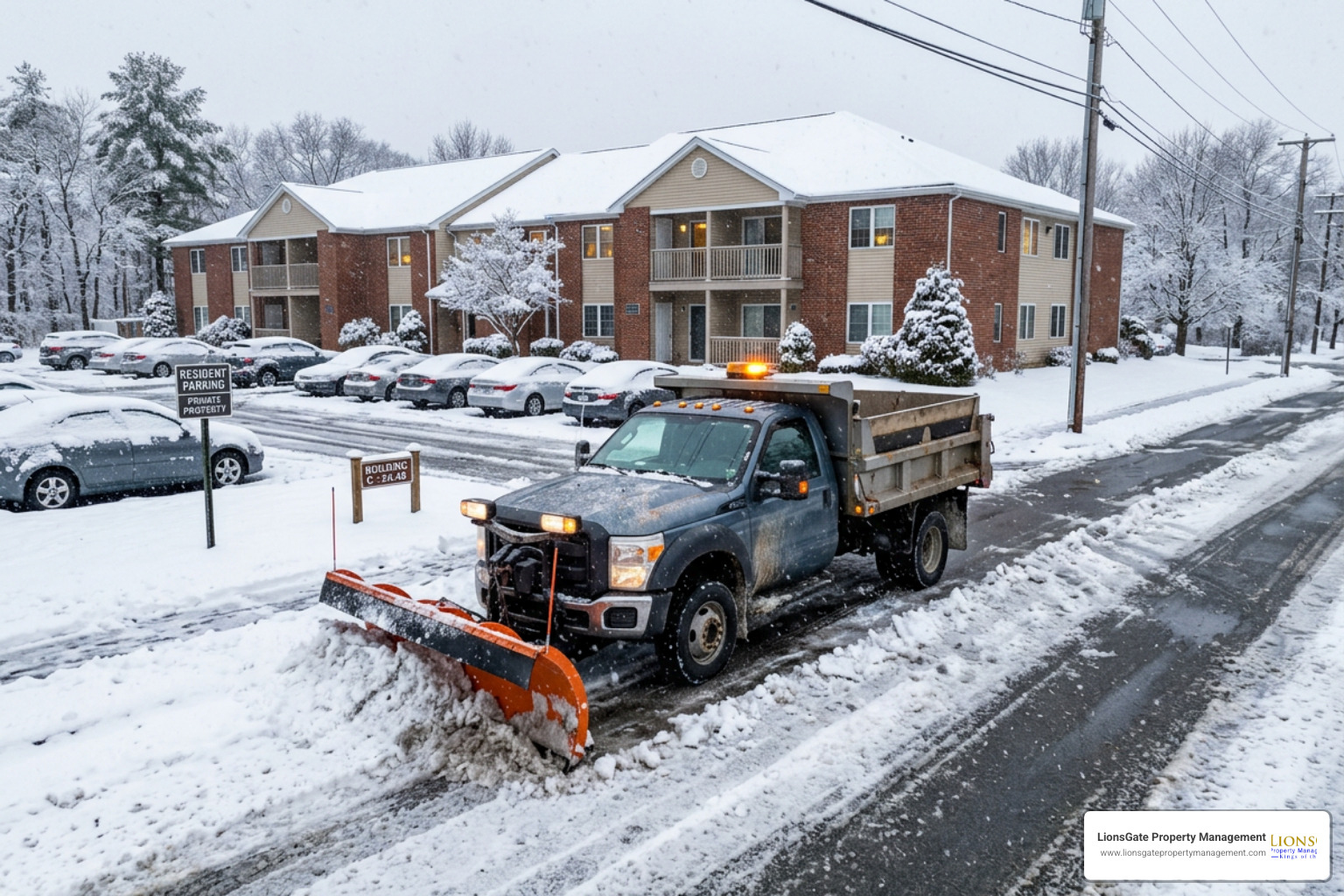
Snow and ice management is one of the most challenging aspects of multi-family property ownership in Rhode Island. Unlike single-family homes, where tenants can often be contracted to shovel their own driveways, multi-family properties feature shared common areas, walkways, and parking lots. This makes snow removal a collective, landlord-managed responsibility.
Under Rhode Island municipal laws, property owners are legally required to clear snow and ice from sidewalks, stairs, and common walkways within a strict timeframe after a storm ends (typically 2 to 12 hours depending on the municipality, such as Providence or Cranston). Failure to do so can result in hefty municipal fines and, worse, extreme liability exposure if a tenant or visitor slips and sustains an injury. For more on how these services are coordinated, read our guide on Snow Removal Services for Condo and Apartment Boards.
Standard vs. Add-on snow removal services
When hiring a property manager, it is critical to understand how snow removal is structured. Many companies treat snow removal as an expensive, third-party add-on, billing you "per-push" or "per-inch" through an outside contractor who may mark up the price.
At LionsGate, we include snow removal as a core component of our multi-family management. Because we run our own dedicated equipment, we can guarantee that:
- All Common Areas Are Cleared: This includes public sidewalks, front and rear stairs, trash storage paths, and common driveways.
- Salting and Sanding Are Handled: We apply ice-melt products to prevent dangerous refreezing on stairs and walkways.
- Pricing Is Predictable: We build these services directly into our management framework, protecting you from unpredictable, sky-high snow-plowing bills during heavy winters.
Managing tenant parking during snow emergencies
Clearing a multi-family parking lot is incredibly difficult when tenant vehicles are parked in the way. During major winter storms, Rhode Island cities frequently declare municipal parking bans, forcing residents to park in designated off-street lots.
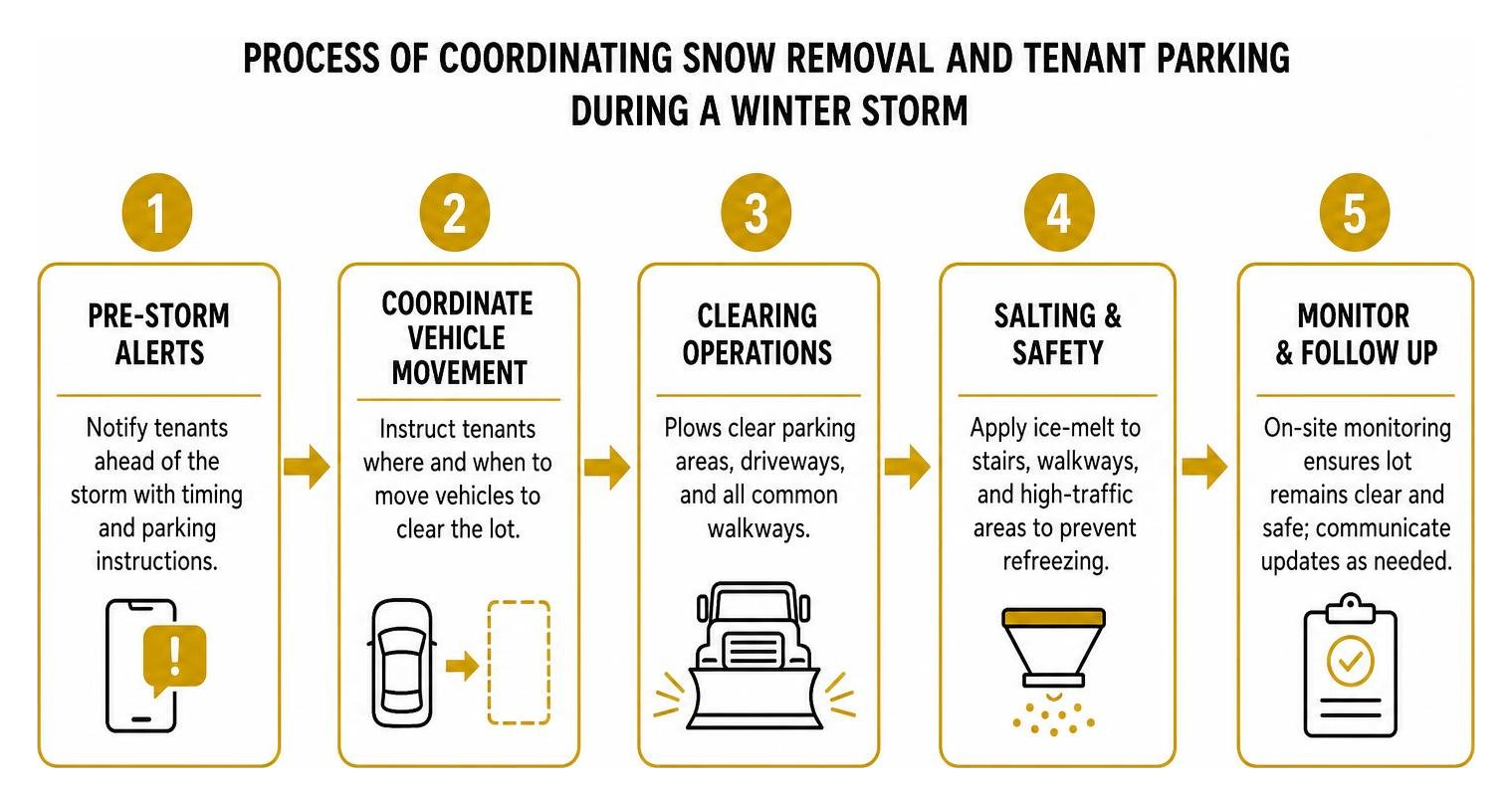
To manage this chaos, we utilize clear communication protocols:
- Pre-Storm Alerts: We send automated text alerts to all tenants ahead of a forecasted storm, detailing when plows will arrive.
- Coordinated Vehicle Movement: We instruct tenants on where and when to move their cars so our plows can clear the entire lot safely and efficiently.
- Active Monitoring: Our team coordinates directly on-site to ensure no vehicles are plowed in and the property remains safe and accessible.
What Are the Typical Fees and Contract Requirements for RI Property Managers?
Understanding the cost of professional property management is essential for calculating your net operating income. In Rhode Island, the standard fee structure for full-service property management consists of several components:
- Monthly Management Fee: This is the ongoing fee for day-to-day operations, rent collection, and tenant communication. It typically ranges from 8% to 12% of the gross monthly rent collected. Some companies charge flat monthly rates, but percentage-based fees remain the regional standard.
- Leasing/Tenant Placement Fee: This fee covers the cost of marketing a vacant unit, conducting showings, screening applicants, and drafting the lease. It is typically equal to one full month's rent or a flat fee of around $500 to $1,000.
- Maintenance Coordination Fees: Some managers charge a markup (usually 10% to 20%) on top of subcontractor invoices to oversee repairs. Firms with in-house maintenance divisions can often bypass these markups, offering lower, direct hourly rates instead.
Understanding the fine print of management contracts
Before signing a property management agreement, landlords must carefully review the contract terms to avoid hidden costs:
- Termination Clauses: Look for agreements that allow you to terminate the contract with 30 or 60 days' notice if you are unsatisfied with the service. Avoid long-term lock-in contracts with heavy cancellation penalties.
- Reserve Funds: Most managers require you to maintain a "reserve fund" (typically $300 to $500 per unit) in an escrow account to cover minor, pre-authorized repairs without needing to contact you for every small expense.
- Vacant Unit Fees: Some companies charge a reduced monthly management fee even when a unit is vacant. Ensure your contract only charges fees based on collected rent.
Comparing regional standards: Rhode Island vs. neighboring states
Rhode Island's property management fees are highly competitive compared to neighboring Massachusetts and Connecticut. In high-cost metro areas like Boston, management fees can easily exceed 12%, and leasing fees are frequently higher due to intense demand.
However, Rhode Island's older housing stock means that while base management fees may be comparable, maintenance and seasonal snow removal costs can be higher if not bundled effectively. Working with a local manager who understands the unique physical demands of Ocean State properties is key to keeping your operational expenses predictable.
Frequently Asked Questions About Rhode Island Multi-Family Property Management
Do Rhode Island property managers require a real estate license?
Yes. Under Rhode Island law, any individual or company engaged in leasing, renting, or collecting rent for real estate on behalf of another person must hold an active Rhode Island real estate broker's license. This licensing is regulated by the Rhode Island Department of Business Regulation (DBR).
Working with a licensed broker ensures that your rental transactions, security deposits, and escrow accounts are handled in strict compliance with state laws and professional ethics standards.
How do property managers handle pet policies in multi-family units?
Pet policies are a critical consideration for multi-family landlords. According to industry data, nearly 90% of renters are pet owners. Restricting pets entirely can severely limit your applicant pool, increase vacancy times, and reduce your overall rental yield.
To balance property protection with tenant demand, professional property managers implement structured pet screening processes. This includes requiring pet resumes, references, and charging reasonable "pet rent" or non-refundable pet fees to cover potential wear and tear.
However, landlords must understand that under the federal Fair Housing Act (FHA), assistance animals (including service dogs and emotional support animals) are not legally classified as pets. Landlords must make reasonable accommodations for these animals, and they cannot charge pet fees or pet rent for them, provided the tenant supplies valid documentation from a qualified healthcare professional.
What is the eviction process for non-paying tenants in Rhode Island?
The eviction process in Rhode Island follows a strict legal timeline that must be executed precisely to avoid case dismissal:
- 5-Day Demand Notice: If rent is more than 15 days late, the landlord or property manager can mail a formal 5-Day Demand Notice for Nonpayment of Rent.
- Court Filing: If the tenant does not pay or vacate within 5 days of receiving the notice, the manager can file a Summons and Complaint for Eviction in the local district court.
- Court Hearing: A hearing is typically scheduled within 9 to 11 days of the filing.
- Execution of Judgement: If the court rules in favor of the landlord, the tenant is given a set period to vacate. If they remain, a county sheriff must physically execute the eviction.
Because we offer no-cost evictions, our team handles this entire process, including legal filings and court representation, saving you thousands of dollars in legal fees and minimizing your stress.
Conclusion
Managing a multi-family rental property in Rhode Island does not have to be a source of constant stress. By partnering with a property management company that bundles guaranteed rental income, proactive maintenance, and dedicated snow removal, you can protect your cash flow, preserve your physical asset, and enjoy true passive income.
These premium services eliminate the primary risks of real estate investing—vacancy, deferred maintenance, and winter liability—allowing you to treat your portfolio like a true business.
If you are ready to experience a stress-free approach to real estate ownership, we invite you to explore our professional management solutions tailored specifically for duplexes, triplexes, and apartment buildings. Contact us today at LionsGate Property Management Providence Services to schedule your free rental analysis and secure your investment's future.