
Snow Removal Services for Condo and Apartment Boards

Why Every Apartment Board Needs a Reliable Snow Removal Service This Winter
Apartment snow removal service is a must-have for any condo or apartment board managing multi-unit properties — especially heading into another Rhode Island winter.
Here's a quick summary of what you need to know:
| Question | Quick Answer |
|---|---|
| Who is responsible? | Usually the landlord or property manager for common areas |
| What's included? | Plowing, shoveling, de-icing, salting, and sidewalk clearing |
| When does service trigger? | Typically at 2 inches of snowfall accumulation |
| What does it cost? | $45–$160 per visit, or $300–$1,000 for a seasonal contract |
| Should you hire a pro? | Yes — over 11,500 snow shoveling injuries happen every year |
Snow doesn't wait for a convenient time. Icy walkways, blocked parking lots, and uncleared entryways create real risks — for your residents and for your liability exposure as a property owner.
And yet, many small landlords still scramble to find help after a storm hits, rather than having a plan in place before the first flake falls.
That's a costly mistake.
I'm Isaac Spragg, founder of LionsGate Property Management, and through hands-on management of my own multi-unit investments across Providence, I've seen how a proactive apartment snow removal service strategy protects both residents and property owners throughout the winter season. In this guide, I'll walk you through everything you need to know — from legal responsibilities to choosing the right contractor.
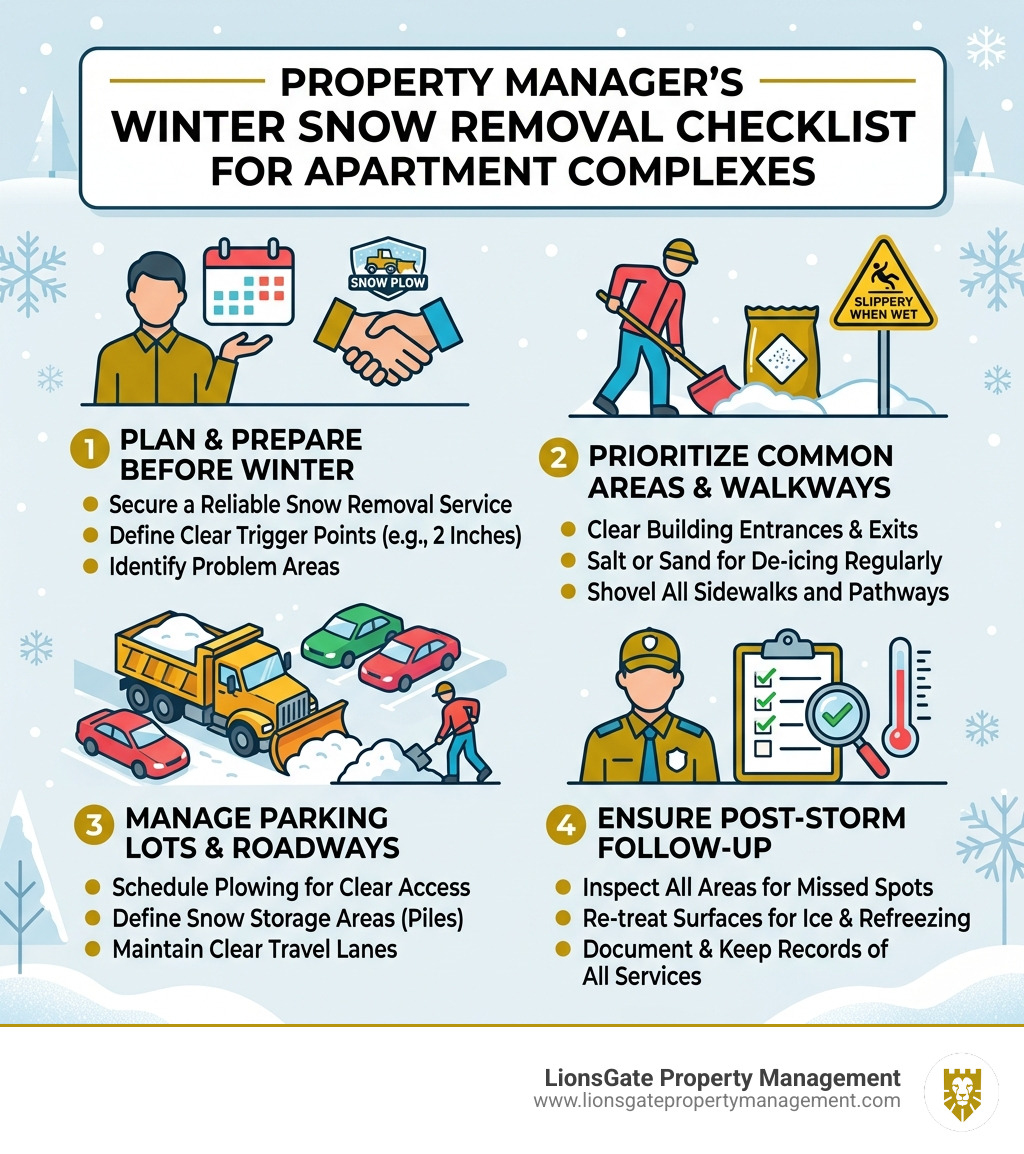
Professional oversight is the backbone of winter safety. Whether you are managing a triple-decker in Pawtucket or a mid-size complex in Warwick, Residential Property Management Services Providence ensures that your property remains accessible and compliant with local safety standards.
Essential Components of an Apartment Snow Removal Service
When we talk about a professional apartment snow removal service, we aren't just talking about a guy with a shovel. For multi-unit properties, the scope is much broader. It involves a coordinated effort to ensure that hundreds of residents can safely leave for work in the morning and return home at night without slipping on a patch of black ice or getting their car stuck in a snowbank.

A comprehensive service plan for an apartment complex includes several moving parts:
- Snow Plowing: Using heavy-duty trucks to clear large expanses like parking lots and private driveways.
- Manual Shoveling: Essential for areas where trucks can't go, such as narrow walkways, porches, and stairs.
- De-icing and Salting: The application of salt or sand to lower the freezing point of water and provide traction on slippery surfaces.
- Snow Hauling: In high-density areas of Providence where there is no room to pile snow, professionals use skid steers and dump trucks to physically move the snow off-site.
- Sidewalk Clearing: Ensuring that the public walkways adjacent to your property meet municipal clearing requirements.
What is included in a standard apartment snow removal service?
A standard contract for a multi-family building is much more detailed than a single-family residential agreement. We focus on high-traffic zones and safety-critical areas:
- Common Areas: Hallways, mailboxes, and community rooms must remain accessible.
- Parking Lots: Clearing enough space for resident vehicles to maneuver and ensuring guest spots are available.
- Entryways and Stairs: These are the highest-risk areas for slip-and-fall accidents.
- Emergency Exits: These must be kept clear at all times to comply with fire codes.
- Fire Hydrants: Professionals will clear a path to any hydrants on or adjacent to the property.
- Ice Management: Ongoing monitoring to prevent "refreeze" — when melted snow turns into a sheet of ice overnight.
How quickly do crews respond for an apartment snow removal service?
In the property management world, timing is everything. Most professional services operate on a "service trigger." For the majority of our clients in Rhode Island, the standard trigger is 2 inches of snow accumulation. However, for high-traffic areas or medical facilities, we may set a 1-inch trigger.
Professional crews monitor the weather 24/7. This means that if a storm starts at midnight, the crews are often out by 2:00 AM or 5:00 AM to ensure the property is clear before the morning commute. Unlike "on-call" services that you might find on a gig app, a professional contract guarantees priority. During major storms, crews may make multiple passes to keep up with the accumulation rather than waiting until the snow stops.
Effective winter management is also about spotting trouble before it starts. Learning How to Spot Hidden Maintenance Issues in Multi-Unit Properties can help you identify drainage problems that lead to dangerous ice patches long before the first storm hits.
Legal Responsibilities and Liability for Property Boards
Managing an apartment snow removal service isn't just about convenience; it’s about legal protection. As a property owner or board member, you have a "duty of care" to ensure the premises are reasonably safe for residents, guests, and even mail carriers.

In Rhode Island, local ordinances in cities like Providence and Cranston are very specific about how quickly sidewalks must be cleared. Failure to comply can result in hefty municipal fines. Even more concerning is the risk of a slip-and-fall lawsuit. With over 11,500 snow-shoveling-related injuries reported annually, the physical and financial stakes are high.
Landlord vs. Tenant Responsibilities
The question of "who shovels?" is one of the most common disputes in rental housing. Here is how it typically breaks down:
- Multi-Unit Dwellings: In almost all cases involving apartments or condos with shared common areas, the responsibility falls on the landlord or the property management company. You cannot legally "delegate" the safety of a shared parking lot or a main entrance to a single tenant.
- Single-Family or Duplexes: In some cases, a lease agreement may state that the tenant is responsible for their own driveway or walkway. However, this must be explicitly written in the lease and must comply with local laws.
- Common Area Maintenance: Even if a tenant is responsible for their own porch, the landlord is almost always responsible for the "common paths" that lead to the street or parking area.
Ensuring these responsibilities are clearly defined in your lease is a key part of risk management.
Cost Factors and Seasonal Contract Options
Budgeting for a Rhode Island winter can be tricky because snowfall is unpredictable. Most apartment snow removal service providers offer two main ways to pay:
| Pricing Model | Average Cost (2026) | Best For |
|---|---|---|
| Per-Visit (Per-Event) | $45 – $160 | Properties in areas with infrequent snow |
| Seasonal Contract | $300 – $1,000 | Budget predictability and priority service |
| Hourly Rate | $25 – $75 per hour | Large complexes with complex layouts |
Pricing Models for 2026
Several factors will influence your specific quote:
- Property Size: A 50-space parking lot in North Providence will naturally cost more than a small driveway in Pawtucket.
- Snowfall Volume: Many contracts have a "base" price for the first 6 inches, with additional "per inch" charges for major blizzards (typically $10–$25 for the first few inches and $4–$9 for each extra inch).
- Equipment Needs: If your property requires a skid steer or a dump truck for snow hauling, the price will increase.
- De-icing Surcharges: The cost of salt and specialized pet-safe ice melt is often billed as an add-on, ranging from $50 to $150 per application.
For many boards, the seasonal contract is the gold standard. It allows you to lock in a fixed cost for the winter, making your HOA or property budget much easier to manage.
Benefits of Professional Snow Management
While some landlords consider the DIY route, the risks often outweigh the savings. Professional snow management offers several key advantages that a shovel and a bag of salt simply can't match.
- Safety and Reduced Injury Risk: Shoveling is physically taxing and leads to thousands of cardiac-related incidents and back injuries every year. Professionals have the training and equipment to do the job safely.
- Property Preservation: Amateur plowing can easily tear up asphalt, clip curbs, or destroy expensive landscaping. Professional operators use high-grade equipment and have the experience to navigate tight apartment complexes without causing damage.
- Curb Appeal: A property that is quickly and cleanly cleared looks better to prospective tenants. It shows that the management cares about the property and the residents' well-being.
- Peace of Mind: Knowing that a crew is automatically dispatched at 2 inches of snow means you don't have to wake up at 4:00 AM to check the driveway.
Understanding Why Hiring Reliable Property Managers in Providence Pays Off goes beyond just snow; it's about the total protection of your investment.
Preventing Property Damage
Winter is hard on buildings. Professional apartment snow removal service providers look out for:
- Freeze-Thaw Cycles: By clearing snow before it melts and refreezes, they prevent water from seeping into cracks in the pavement and expanding, which creates potholes.
- Drainage Management: Pros ensure that snow piles aren't blocking catch basins or drains, which could lead to flooding during a thaw.
- Roof Snow Removal: In cases of extreme accumulation, professionals can clear roofs to prevent structural damage or dangerous "snow slides" onto walkways.
Frequently Asked Questions about Apartment Snow Removal
Who is responsible for snow removal in apartment complexes?
In Rhode Island, the responsibility for common areas, parking lots, and shared walkways almost always rests with the landlord or property manager. While a lease might task a tenant with a specific private area, the "duty of care" for the general public and other residents remains with the owner.
What equipment do professionals use for multi-unit properties?
Professional teams utilize a variety of tools depending on the property's needs:
- Snow Plows: For large lots and driveways.
- Skid Steers: For moving large piles or loading snow for hauling.
- Power Sweepers: Great for clearing light snow from sidewalks without damaging the surface.
- Salt Spreaders: To ensure even coverage of de-icing agents.
- Manual Shoveling Teams: For detailed work around entryways and stairs.
How do I choose a reliable snow removal contractor?
When vetting an apartment snow removal service, always ask for:
- Proof of Insurance: You don't want to be liable if a contractor's truck hits a resident's car.
- References: Ask for other multi-unit properties they service in the Providence or Warwick area.
- Written Contracts: Ensure the "trigger" (e.g., 2 inches) and the scope of work are clearly defined.
- Response Times: Confirm they have the capacity to handle your property during a major storm when everyone else is also calling for help.
Conclusion
Winter in Rhode Island doesn't have to be a season of stress for condo boards and apartment owners. By partnering with a professional apartment snow removal service, you protect your residents, safeguard your property, and significantly reduce your legal liability.
At LionsGate Property Management, we specialize in the unique needs of multi-unit properties in Providence, Cranston, Warwick, and the surrounding areas. From proactive maintenance to our Guaranteed Rent Program Providence, we handle the heavy lifting so you can enjoy a worry-free winter. Don't wait for the first blizzard of 2026 to make a plan — reach out today and let us ensure your property stays safe and accessible all season long.