
Snow Removal Services Near You

Why Every Property Owner Needs a Reliable Snow Removal Service
A professional snow removal service can be the difference between a safe, accessible property and a liability nightmare when winter storms hit.
Here's what you need to know at a glance:
- Average cost: Starts around $45 per visit for residential properties
- Response time: Most services clear your property within 8 hours of a storm ending
- Service types: One-time/on-demand plowing or seasonal contracts (seasonal = lower per-push cost)
- What's included: Driveway plowing, sidewalk clearing, salting, and ice management
- Who it's for: Homeowners, landlords, condo boards, and commercial property owners
- How to book: Through local providers, apps like LawnGuru, or directly with a contractor
For landlords managing duplexes, triplexes, or small apartment buildings in Rhode Island, snow and ice aren't just an inconvenience — they're a legal and financial risk. Icy walkways and unplowed parking lots can lead to tenant injuries, code violations, and costly liability claims.
The good news? The right snow removal partner handles all of it so you don't have to.
I'm Isaac Spragg, founder of LionsGate Property Management, and through managing my own real estate investments across Providence and surrounding Rhode Island markets, I've seen how a dependable snow removal service protects both tenants and property owners during harsh New England winters. In this guide, I'll walk you through everything you need to choose the right provider, control costs, and keep your properties running smoothly all season long.
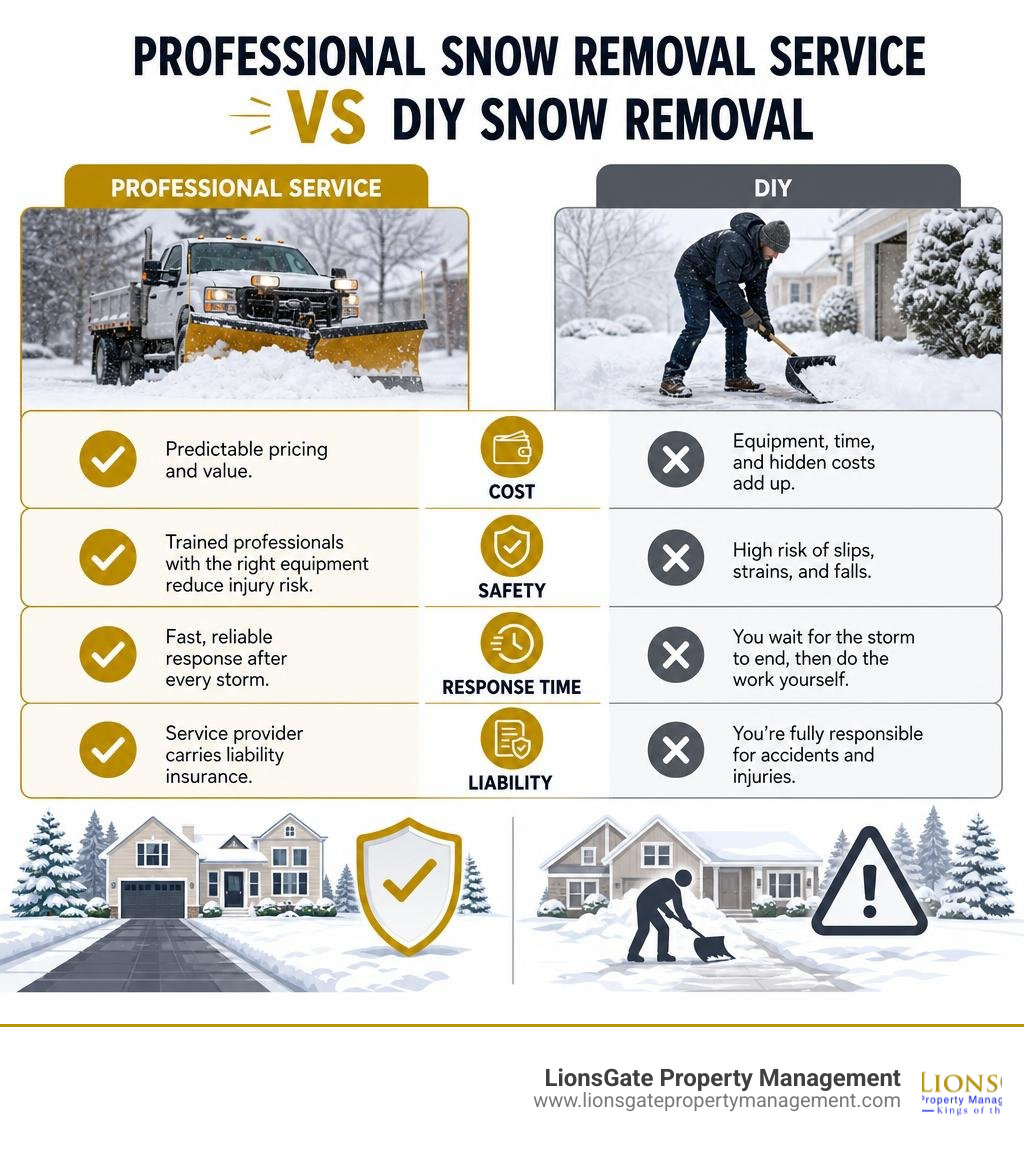
Types of Professional Winter Maintenance Services
When a winter storm barrels toward Rhode Island, having a clear plan for your property type is essential. Different properties require vastly different approaches to snow management. A single-family home has different clearing needs than a 20-unit apartment building in Pawtucket or a bustling retail strip in Warwick.
Understanding the landscape of professional winter services ensures you are not left scrambling when the first flakes begin to fall. For a comprehensive overview of how to prepare your property for the colder months, read our Don’t Get Snowed In: Your Go-To Guide for Local Snow Clearance.
Residential vs. Commercial Snow Removal Service
The distinction between residential and commercial services lies in the scale of the operation, the equipment used, and the legal standards for safety.
- Residential Snow Removal: This service typically covers single-family homes, duplexes, and triplexes. The primary focus is clearing residential driveways, front walkways, steps, and public sidewalks bordering the property. Providers often use smaller plow trucks, snow blowers, and hand shovels to navigate tight residential spaces without damaging lawns or garden beds.
- Commercial Snow Removal: This is geared toward retail centers, office parks, and larger multi-family complexes. It prioritizes keeping commercial entrances, expansive parking lots, and high-traffic pedestrian walkways completely clear. Because business operations rely on uninterrupted access, commercial services often require heavy machinery like skid steers, front-end loaders, and large containment plows to move massive volumes of snow quickly.
For multi-family properties, the lines can sometimes blur. Condo associations and apartment buildings require a specialized approach that blends the care of residential service with the rapid, high-volume capacity of commercial operations. To learn more about how to manage these unique needs, check out our guide on Snow removal for condo and apartment boards.
Seasonal Contracts vs. On-Demand Snow Removal Service
One of the most important decisions you will make is how you structure your service agreement. Snow removal companies generally offer two main options: seasonal contracts or on-demand (one-time) services.
- Seasonal Contracts: These agreements offer peace of mind. For a set seasonal fee (or a pre-negotiated per-push rate), your property is automatically added to a priority route. When a storm hits, the crew arrives automatically once snow reaches a certain accumulation threshold (usually 1 to 2 inches). You do not need to call or book a spot; your service is guaranteed.
- On-Demand Services: Also known as "one-time" or "per-storm" plowing, this model operates on a first-come, first-served basis. You only pay when you request a plow. While this can save money during unusually mild winters, it comes with a major catch: during heavy storms, on-demand response times are significantly longer because providers prioritize their contracted seasonal clients first.
| Feature | Seasonal Contract | On-Demand (One-Time) Service |
|---|---|---|
| Booking Requirement | Automatic dispatch during storms | Must request service manually each time |
| Priority Level | High (serviced first) | Low (serviced after contract clients) |
| Cost Structure | Predictable flat seasonal rate or set per-push rate | Variable, often higher per-visit pricing |
| Best For | Multi-family properties, landlords, businesses | Homeowners who prefer DIY but need backup |
| Response Time | Usually within 6–8 hours of storm end | Dependent on provider availability (up to 24+ hours) |
How to Choose the Right Snow Removal Service for Your Property
Selecting a snow clearing partner is about more than just finding the lowest price. In Rhode Island, where winter storms can bring a mix of heavy wet snow, sleet, and flash freezes, you need a provider who is reliable, properly insured, and deeply familiar with local regulations.
Whether you are looking for general assistance or specialized support, such as finding Reliable snow removal for seniors, asking the right questions upfront will save you from major headaches mid-winter.
Key Credentials and Safety Standards
Before signing any agreement, verify that the company meets professional standards:
- General Liability Insurance: This is non-negotiable. Snow plowing carries an inherent risk of property damage (such as torn-up turf or cracked asphalt) and slip-and-fall liability. Ensure your provider carries a robust liability policy specifically covering snow removal operations.
- Local Municipal Compliance: Different cities in Rhode Island have strict, specific laws regarding snow clearance. For example, the City of Providence requires property owners to clear sidewalks within a specific timeframe after a storm ends to maintain safety for pedestrians. Reviewing the Providence Snow Ready FAQ can help you understand these strict municipal timelines and ensure your contractor is prepared to help you meet them.
- Experienced Crews: Ask if the operators are trained in safety standards and equipment handling. Professional crews monitor local weather patterns and deploy strategically to stay ahead of the accumulation.
Preventing Property Damage and Ensuring Safety
A common concern for property owners is the potential for damage to driveways, curbs, and landscaping. Professional snow removal services take proactive steps to minimize these risks.
The most effective tool for property protection is driveway staking. Before the first snowfall of the season, contractors should install highly visible stakes along the edges of driveways, walkways, and near delicate landscaping features. These markers guide plow operators when the ground is completely blanketed in white.
Additionally, municipalities like Cranston maintain specific guidelines regarding where snow can be piled and how public pathways must be treated. Reviewing the Cranston Snow Removal Information portal is a great way to ensure your property remains compliant with local codes while protecting your physical assets from plow damage.
Professional Equipment, Timelines, and Ice Management

When a major winter storm hits Rhode Island, having the right tools and a clear timeline makes all the difference. Professional snow removal is a highly coordinated operation that relies on specialized machinery and real-time weather tracking.
Heavy-Duty Equipment and Methods
To clear properties efficiently without causing damage, professional services deploy a variety of tools matched to the specific layout of your property:
- Plow Trucks with Straight and Containment Blades: Ideal for open driveways and larger parking areas, these vehicles move high volumes of snow quickly.
- Skid Steers and Front-End Loaders: Used primarily on commercial and multi-family properties to stack snow or load it into dump trucks for off-site hauling when parking spaces must be preserved.
- Commercial Snow Blowers: Essential for clearing walkways, narrow pathways, and residential driveways where heavy trucks cannot safely maneuver.
- Hand Shoveling: The tried-and-true method for delicate areas, including front porches, stairs, and tight entryways.
Storm Response Timelines and Ice Management
Time is of the essence during a New England storm. Most professional companies operate on an 8-hour response window, meaning your property will be cleared within 8 hours of the storm's conclusion. During extended, heavy blizzards, priority contract clients can expect "mid-storm" passes to keep accumulation at a manageable level.
However, plowing is only half the battle. Ice management is critical to preventing dangerous slips and falls. Professional de-icing involves several key materials:
- Rock Salt (Sodium Chloride): The standard choice for melting ice on asphalt parking lots and driveways down to about 15°F.
- Calcium Chloride: A high-performance alternative that works in extreme cold (down to -25°F) and is gentler on concrete.
- Pet-Safe and Eco-Friendly De-icers: Specialized compounds that melt ice effectively without harming local vegetation, lawns, or the paws of neighborhood pets.
Cost Factors and Property Preparation
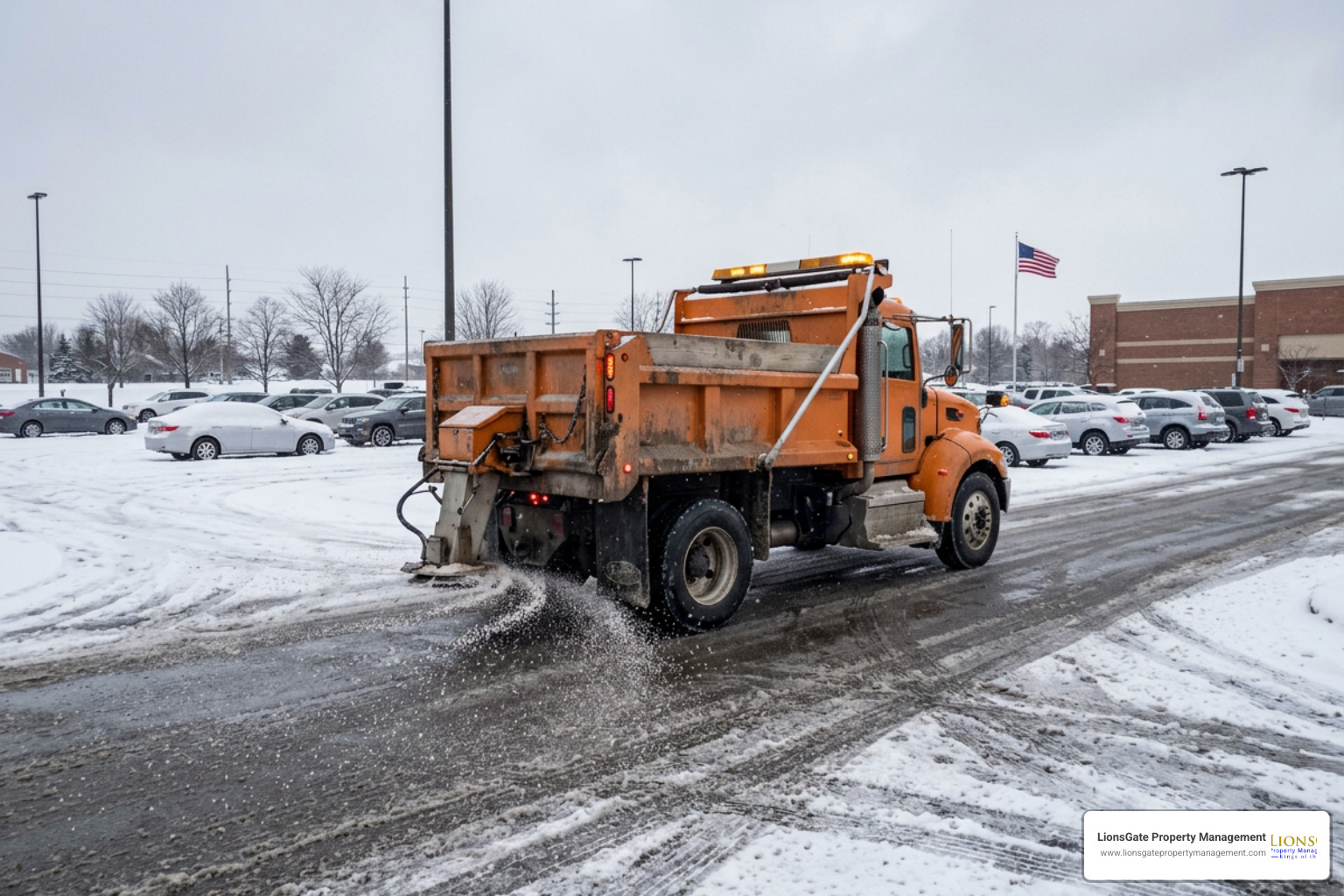
Understanding how snow removal pricing works can help you budget effectively for the winter months and avoid surprise charges on your invoice.
What Influences the Price of Snow Clearing?
The average cost of a single residential snow clearing visit starts around $45, but several factors can influence your final estimate:
- Property Size and Complexity: A straight, flat two-car driveway is much simpler to clear than a winding, sloped driveway with tight turns, retaining walls, or delicate landscaping.
- Accumulation Triggers: Many contracts use tiered pricing based on the depth of the snow. For example, a 2-to-6-inch storm will cost less than a heavy 12-inch blizzard that requires multiple visits and heavier machinery.
- Sidewalks and Stairs: Adding hand-shoveling services for walkways, steps, and public sidewalks will increase the labor cost compared to a simple "driveway-only" plow service.
To get a deeper look at industry pricing models and what to watch out for in service agreements, read our detailed breakdown on The truth about snow removal prices.
How to Prepare Your Property Before the Storm
To ensure your snow removal crew can work quickly and safely, there are a few simple steps you should take before the storm arrives:
- Clear Obstacles: Move vehicles, trash cans, garden hoses, and doormats out of the driveway and off walkways.
- Mark Boundaries: Ensure your driveway stakes are firmly in place so plow drivers can see the edges of your lawn.
- Pre-Treat Walkways: If you have access to pet-safe ice melt, applying a light layer on stairs and walkways before the snow begins can prevent ice from bonding to the surface, making final clearing much easier.
Frequently Asked Questions About Snow Removal
Navigating winter property maintenance can bring up plenty of questions. Here are some of the most common inquiries we receive from property owners in Rhode Island.
How quickly do professional snow removal crews respond after a storm?
Most professional companies aim to have all contracted properties cleared within 8 hours of the storm's end. However, if you have a seasonal contract, you will receive priority scheduling, meaning crews may arrive during the storm to perform initial passes. On-demand clients are serviced after contracted routes are completed.
Is salting and de-icing typically included in a standard plowing contract?
It depends on the contract. Some standard plowing agreements only cover physical snow removal, with salting and de-icing offered as an optional add-on service. Always review your service agreement to confirm whether ice management is included or billed separately.
What should I do if my property is damaged during snow removal?
If you notice damage to your lawn, driveway, or mailbox, report it to your service provider right away. Reputable, insured contractors have a clear process for assessing and repairing damage caused by their equipment once the spring thaw arrives. Utilizing driveway stakes before winter is the best way to prevent these issues entirely.
Conclusion
Managing winter weather in Rhode Island doesn't have to be a stressful, round-the-clock chore. Whether you own a multi-family home in Providence, a duplex in Cranston, or manage a portfolio of properties across Warwick, Pawtucket, and North Providence, securing a professional snow removal service is the smartest way to protect your investment and keep your tenants safe.
At LionsGate Property Management, we deliver a stress-free ownership experience by handling everything from proactive maintenance and rent collection to professional winter snow clearance. Let us take the worry out of the winter season for you.
Secure professional snow removal services for your condo or apartment board today and experience the peace of mind that comes with expert property care.