
A – Z Guide to Landlord Rent Guarantee

Why Every Providence Landlord Needs to Understand Rent Guarantee
A landlord rent guarantee is one of the most important financial protections a rental property owner can have — yet most small landlords don't fully understand what it covers until they're already dealing with a problem.
Here's a quick summary of what a landlord rent guarantee is:
- What it is: A policy or program that pays your rent if a tenant stops paying
- What it covers: Missed rent payments, eviction legal costs, sometimes property damage
- What it costs: Typically 5%–7% of annual rental income
- Who it's for: Landlords who rely on rental income to cover mortgage, taxes, or expenses
- What it's not: Standard landlord insurance (which covers physical damage, not unpaid rent)
The reality is stark. According to industry data, 45% of landlords have experienced rental arrears, and 94% found it extremely stressful. On average, evicting a non-paying tenant takes 6 to 10 months — and the total loss can exceed $16,000 when you factor in lost rent and legal fees.
For owners of duplexes, triplexes, and small apartment buildings in Providence, one bad tenant situation can wipe out an entire year of rental profits.
I'm Isaac Spragg, founder of LionsGate Property Management, and I've seen how a single tenant default can send a small landlord into financial freefall — which is why landlord rent guarantee programs are a core part of how we protect our clients' income. In this guide, I'll walk you through everything you need to know to choose the right protection for your rental properties.
What is a Landlord Rent Guarantee and How Does It Work?
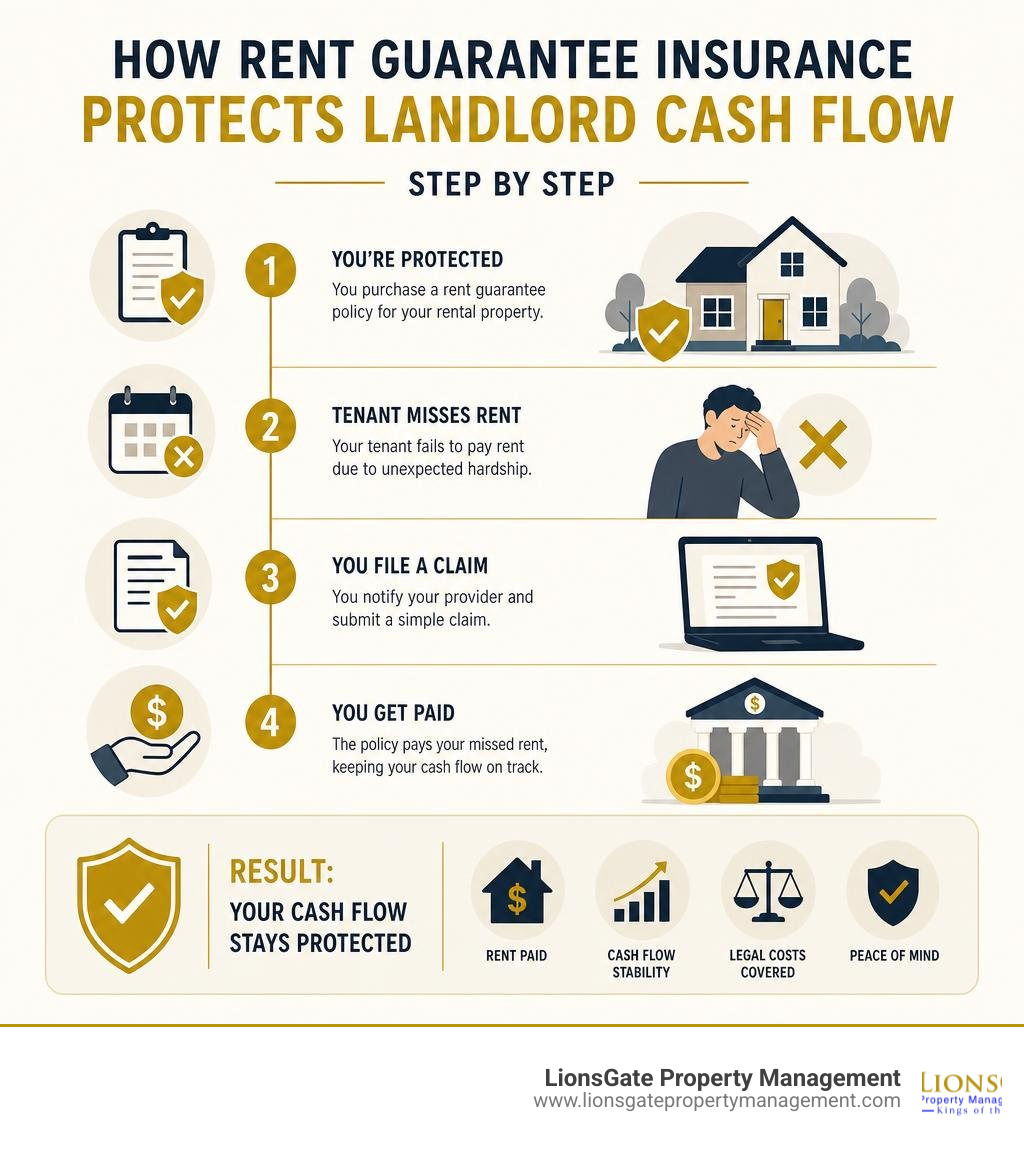
At its core, a landlord rent guarantee acts as a safety net for your cash flow. If your tenant hits a rough patch—whether due to job loss, medical emergencies, or personal crises—and stops paying their rent, this program steps in to keep your bank account whole. Instead of chasing down late payments or sweating over how you are going to pay the mortgage on your triplex in Pawtucket, the guarantee pays out your monthly rental income.
In the United States, more than 8 million renters are currently behind on their rent payments. This means that rent default is not a rare, hypothetical risk—it is a very real operational hazard. When a tenant defaults, a rent guarantee program is triggered. The program provider will typically pay the landlord the monthly rent amount for a set period (often up to 12 months, or up to a specific dollar cap like $60,000) while legal eviction proceedings are handled.
To understand how these programs can completely change your risk profile, it helps to look at real-world scenarios to see how different lease structures and guarantee policies protect your bottom line when things go sideways.
Understanding Landlord Rent Guarantee vs. Loss of Rent
Many property owners in Cranston and Warwick assume they are already covered because they purchased a standard landlord insurance policy. This is one of the most common—and expensive—misconceptions in the real estate world.
Standard landlord insurance is designed to protect your physical property. If a fire breaks out or a pipe bursts, your landlord insurance covers the repairs and liability. Within that policy, you might see a clause for "loss of rent." However, "loss of rent" insurance only kicks in if the property becomes physically uninhabitable due to a covered disaster (like a storm or fire). It will not pay you a dime if your tenant simply stops paying rent while continuing to live in the property.
To help clear up this confusion, we put together a comprehensive breakdown. Check out No More Missed Payments: A Landlord’s Guide to Rent Guarantee Coverage to see exactly where standard insurance ends and rent protection begins.
Key Coverage Elements: Tenant Default, Eviction, and Property Damage
A robust rent guarantee program does not just stop at replacing missed rent. It provides a comprehensive shield that covers the entire fallout of a tenant default. The best programs bundle several key coverage elements:
- Unpaid Rent Replacement: Direct reimbursement of the monthly rent for up to 12 months (or until vacant possession is recovered).
- Legal & Eviction Support: Coverage for court costs, filing fees, and paralegal or legal representation (often up to $2,000 or more).
- Lease Break Protection: Coverage for up to 30 days of lost rent if a tenant unexpectedly vacates the property before the lease term ends.
- Malicious Property Damage: Reimbursement (frequently up to $10,000) for physical damage caused by a defaulting tenant that goes beyond normal wear and tear.
To help you visualize these benefits, here is a comparison table of what is typically included in these programs:
| Coverage Feature | Standard Landlord Insurance | Loss of Rent Insurance | Landlord Rent Guarantee |
|---|---|---|---|
| Physical Property Damage | Yes (Accidental/Perils) | No | Yes (Malicious, up to limits) |
| Rent Loss due to Fire/Storm | No | Yes | No |
| Rent Loss due to Tenant Default | No | No | Yes (Up to 12 months) |
| Eviction Legal Costs | No | No | Yes (Up to specified caps) |
| Lease Break Protection | No | No | Yes (Typically 30 days) |
Eligibility, Costs, and Policy Exclusions
While a landlord rent guarantee is an incredible tool, providers do not hand them out blindly. Because the provider is taking on the financial risk of your tenant defaulting, they have strict criteria regarding who can qualify, how much the coverage costs, and what situations are excluded from protection.

To protect your investments in areas like North Providence, you must ensure your properties and tenants meet these underwriting standards. Additionally, to make sure your baseline property coverage is secure, you should evaluate your Rhode Island landlord insurance options before layering on a rent guarantee policy.
Tenant Qualification Criteria for a Landlord Rent Guarantee
To enroll a lease in a rent guarantee program, your tenant must pass a rigorous screening process. Providers want to see that the tenant has a proven track record of financial responsibility and sufficient income to support the rent.
Typical qualification criteria include:
- Income-to-Rent Ratio: The monthly rent cannot exceed a certain percentage of the tenant's gross household income (usually capped at 50%, though some strict policies require the tenant's income to be at least 2.5 times the rent).
- Credit History: A clean credit report with no active bankruptcies, foreclosures, or evictions within the past 3 to 5 years.
- Employment Verification: Proof of steady employment or stable income sources.
- Rental History: For existing tenants transitioning onto a guarantee policy, a clean record of on-time rent payments for the consecutive 12 months prior is required.
If you want to dive deeper into how this screening changes the game for local property owners, read The Landlord’s Dream: Guaranteed Rent in Providence and Cranston.
Average Costs, Waiting Periods, and Common Exclusions
Like any risk-management product, rent guarantees come with specific terms, costs, and boundaries:
- The Cost: On average, rent guarantee insurance costs between 5% and 7% of the monthly rent. Some providers offer a discount if you pay the premium annually rather than monthly.
- The Waiting Period: Most policies feature a 30-day waiting period from the date of the first missed payment before disbursements begin. This acts as a form of deductible and prevents claims on minor, temporary payment delays.
- Common Exclusions: You will not be covered if the tenant stops paying rent due to landlord negligence (e.g., failing to maintain the property in habitable condition). Furthermore, pre-existing arrears are strictly excluded; you cannot buy a policy today to cover a tenant who stopped paying rent last month.
Understanding these costs and waiting periods is essential for accurate cash flow planning. To see how professional management can help absorb these costs and streamline your operations, read Secure Your Income with Guaranteed Property Management.
Navigating the Claims Process and Legal Changes in 2026
Filing a claim under a rent guarantee policy is a legal and administrative process that requires precision. If you miss a deadline or fail to provide the right paperwork, your claim could be delayed or denied entirely. At the same time, the legal landscape governing rentals in Rhode Island is constantly shifting, making these protections more critical than ever in June 2026.
Whether you are managing a multi-family home on the East Side or a duplex in East Providence, staying compliant with local laws is the only way to ensure your guarantee remains valid. For a closer look at how local dynamics impact your rental income, explore The Secret to Stress-Free Rent in East Providence.
Step-by-Step Guide to Filing a Claim
When a tenant misses a payment, you must act quickly. Most rent guarantee policies require you to notify them within 15 to 30 days of the initial default. Here is the typical step-by-step process:
- Issue a Late Notice: Immediately contact the tenant and issue a formal late payment notice in accordance with Rhode Island landlord-tenant laws.
- Submit a Default Notice to the Provider: Fill out the provider's default claim form. You will need to upload a copy of the signed lease agreement, the tenant's initial screening/credit report, and a ledger showing the unpaid balance.
- Engage in Mediation: Many modern guarantee programs include built-in mediation services to contact the tenant and attempt to resolve the payment dispute before proceeding to court.
- Initiate Eviction: If mediation fails, the provider (or your property manager) will coordinate with legal counsel to file for eviction. The rent guarantee program will begin paying out your monthly rent replacement while this legal process plays out.
For landlords in East Providence, understanding local housing programs can also provide context on tenant support systems. You can review the East Providence housing assistance guidelines to understand what local resources might be available to tenants facing financial hardships.
Impact of Legislative Shifts and Eviction Timelines
In June 2026, landlords face a highly regulated rental market. Across the country and locally in Rhode Island, tenant protection laws have expanded, extending the average time it takes to complete an eviction to 6–10 months. Legal fees and court backlogs mean that landlords can easily spend thousands of dollars just trying to regain possession of their property.
Furthermore, compliance is no longer optional if you want your insurance or guarantees to pay out. For example, failing to register your property or keep up with lead safety certifications can void your coverage entirely. Landlords in Rhode Island must stay fully compliant with state systems, such as the RI Rental Registry compliance guidelines, to ensure their legal standing is secure when filing a non-payment or eviction claim.
Frequently Asked Questions about Rent Protection
What is the difference between rent guarantee and standard landlord insurance?
Standard landlord insurance covers physical damage to the property (from fires, wind, or water) and liability protection if someone is injured on site. It does not cover lost rent if a tenant simply defaults on their payments. A rent guarantee is specifically designed to protect your monthly rental income against tenant default, regardless of the physical state of the building.
How long does it take to evict a tenant and get reimbursed?
In Rhode Island, the eviction process for non-payment of rent typically takes anywhere from 2 to 4 months, but contested evictions or court backlogs can push this timeline to 6 months or longer. A rent guarantee program generally begins reimbursing your lost rent after a 30-day waiting period, ensuring you have cash flow to pay your mortgage while the legal eviction process is completed.
Can existing tenants be covered under a rent guarantee policy?
Yes, many programs allow you to purchase a rent guarantee for existing tenants. However, the tenant must have a history of on-time payments (usually at least 12 consecutive months without arrears) and must still pass the provider's underwriting criteria. You cannot purchase a policy to cover a tenant who is already behind on rent.
Conclusion
Owning rental properties in Rhode Island should be a path to long-term wealth, not a source of constant financial anxiety. Whether you own a multi-family building in Cranston, a duplex in Warwick, or an apartment building in Pawtucket, protecting your rental income is the single most important step you can take to secure your portfolio.
At LionsGate Property Management, we believe in delivering a truly stress-free ownership experience. That is why we offer a comprehensive suite of services tailored to duplexes, triplexes, and small-to-mid-size apartment buildings in Providence, Cranston, Warwick, Pawtucket, and North Providence. Our unique property management model includes proactive maintenance, rapid snow removal, no-cost evictions, and—most importantly—our industry-leading Guaranteed Rent program.
With our team in your corner, you never have to worry about missed payments, late-night maintenance emergencies, or costly legal battles again. We handle the hard work, so you can enjoy the rewards of real estate investing.
Ready to secure your cash flow? Secure your rental income with our Guaranteed Rent Program in Providence today and discover how easy property ownership can be.