
Protect Your Pocket: A Landlord's Guide to Rent Default Insurance Cost

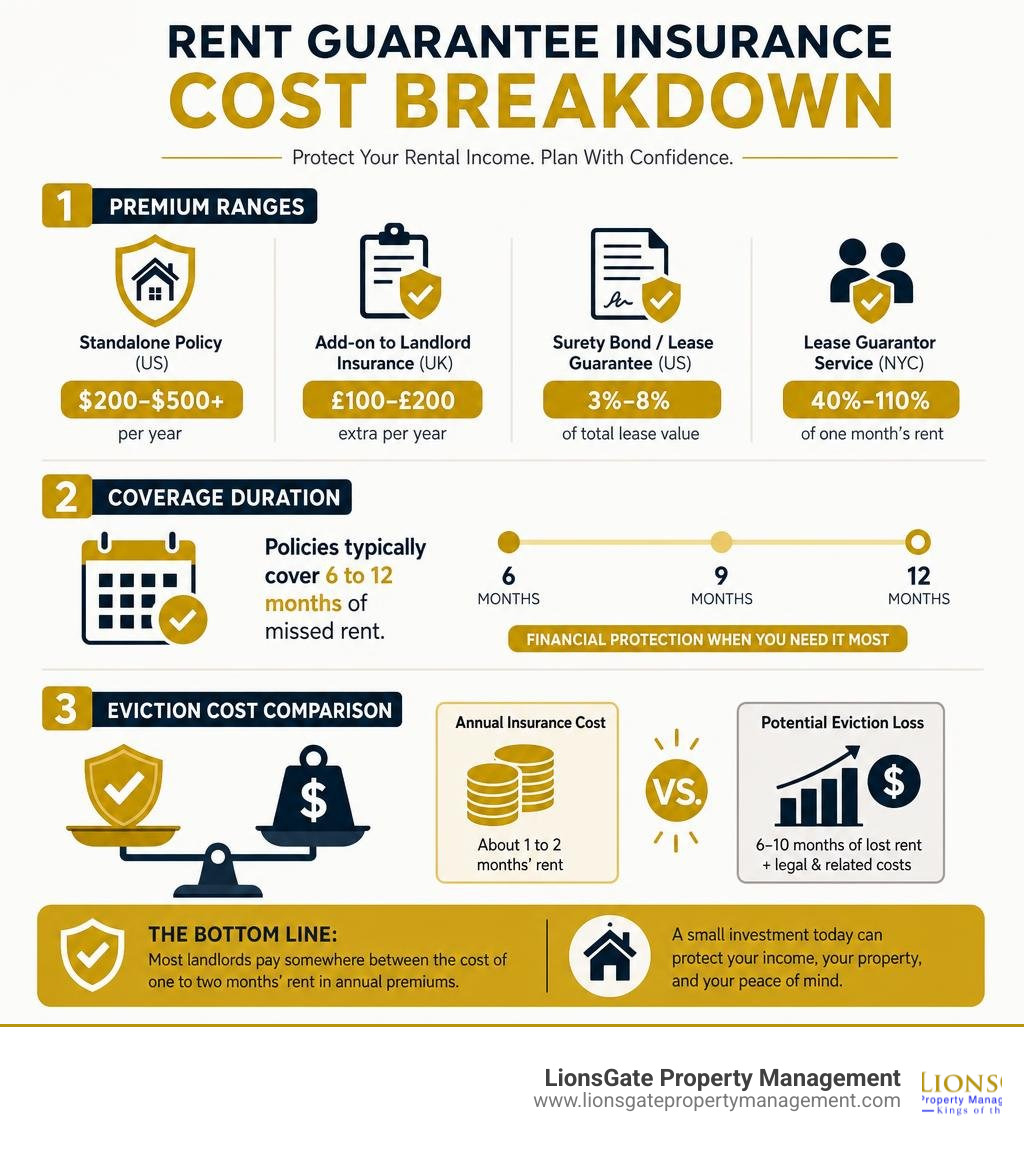
How Much Does Rent Guarantee Insurance Cost? (Quick Answer)
Rent guarantee insurance cost is one of the most important numbers a landlord should know before a tenant misses their first payment.
Here is a fast breakdown for landlords who want the key numbers upfront:
| Policy Type | Typical Annual Cost | As % of Annual Rent |
|---|---|---|
| Standalone policy (US) | $200–$500+ per property | 5%–7% of annual rent |
| Add-on to landlord insurance (UK) | £100–£200 extra per year | 3%–5% of annual rent |
| Surety bond / lease guarantee (US) | 3%–8% of total lease value | One-time upfront fee |
| Lease guarantor service (NYC) | 40%–110% of one month's rent | One-time upfront fee |
The bottom line: Most landlords pay somewhere between the cost of one to two months' rent in annual premiums. Against a potential 6–10 month eviction process — and average losses around $16,000 — that is a small price to pay.
For small landlords in Providence and the surrounding Rhode Island area, a tenant who stops paying rent is not just an inconvenience. It is a direct threat to your mortgage payment, your cash reserves, and your peace of mind. Yet many landlords only discover how long an eviction can drag on after they are already in one. The reality is stark: 93% of tenants who default on rent never fully catch up on what they owe. And once the legal process starts, you could be waiting six to ten months before you see your property again — all while the bills keep coming.
That gap between missed payment and resolution is exactly what rent guarantee insurance is designed to fill.
I'm Isaac Spragg, founder of LionsGate Property Management, and I have worked directly with rental property owners across Providence, Cranston, Warwick, and Pawtucket to evaluate and implement income protection strategies — including guaranteed rent programs — that address the real rent guarantee insurance cost versus benefit question. In the sections below, I will walk you through everything you need to make a confident, informed decision.
What is Rent Guarantee Insurance and How Does It Work?
At its core, rent guarantee insurance (often called rent default insurance) is a specialized risk management product designed to protect your cash flow. If your tenant stops paying rent due to job loss, medical emergencies, divorce, or any other life disruption, this policy steps in to pay the monthly rent directly to you.
Many landlords confuse this with standard property or landlord insurance, but they serve completely different masters. Traditional landlord insurance covers physical damage to the building from fires, storms, or water leaks. If your tenant simply decides to stop paying because they hit a rough patch, standard property insurance will look the other way. Rent guarantee insurance, however, focuses solely on the tenant's financial performance.
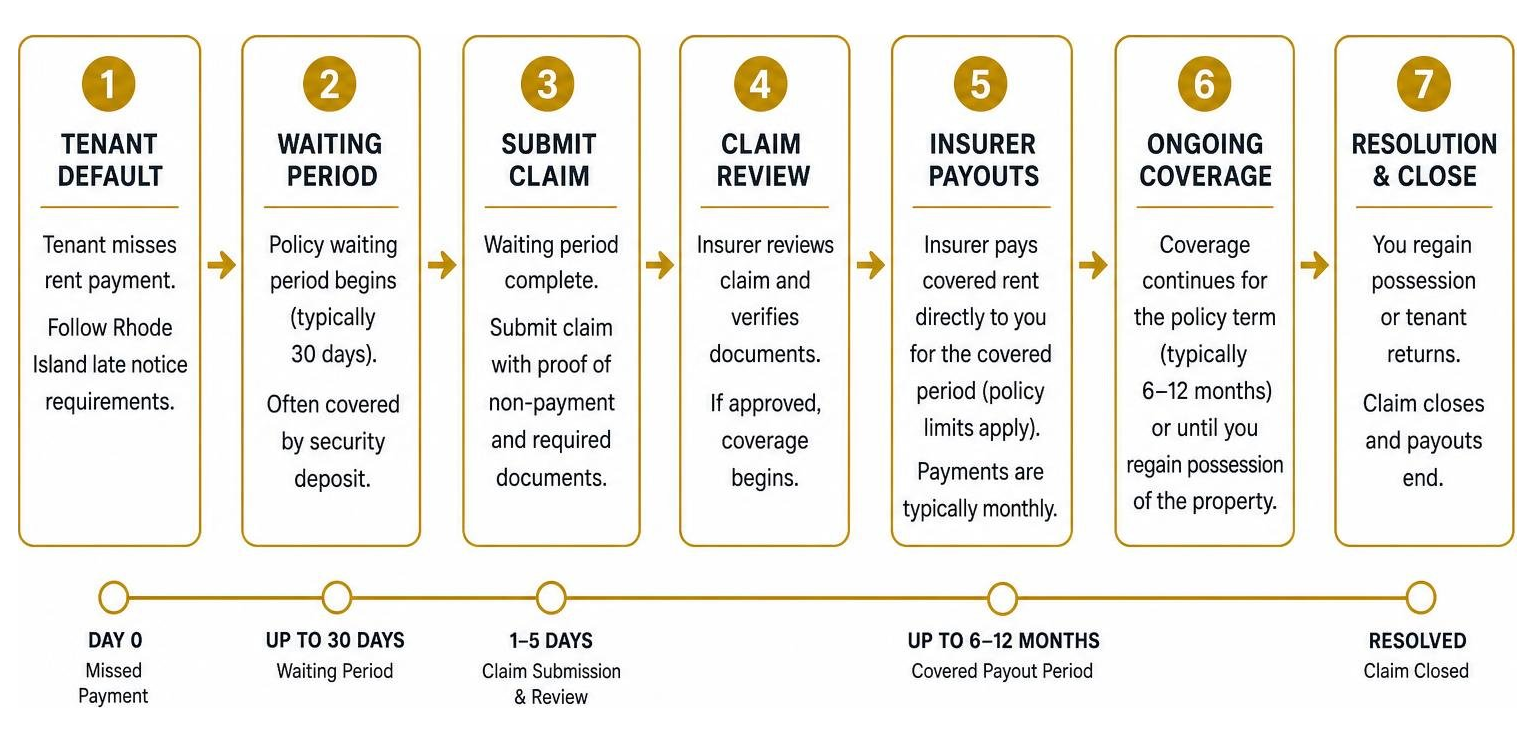
Here is how a typical policy works in practice:
- Underwriting and Tenant Screening: Before a policy is issued, the insurer reviews the tenant's credit history, income-to-rent ratio, and employment stability.
- The Default: The tenant misses a payment. You issue the required late notices according to Rhode Island landlord-tenant laws.
- The Waiting Period: Most policies feature a 30-day waiting period (often covered by the tenant's security deposit).
- The Claim and Payout: Once the waiting period passes and you submit proof of non-payment, the insurance carrier begins reimbursing your lost rent. Depending on your policy, this coverage can last anywhere from 6 to 12 months, or until you regain possession of the property.
For a deeper dive into how these policies integrate with your overall rental strategy, check out our A-Z Guide to Landlord Rent Guarantee.
Understanding the Rent Guarantee Insurance Cost in 2026
As we navigate through 2026, the rent guarantee insurance cost has settled into a predictable range, though premiums have hardened slightly due to extended eviction timelines nationwide. If you are looking to purchase a standalone rent guarantee insurance policy in the United States, you can generally expect to pay between 5% and 7% of the total annual rental income.
For example, if you own a multi-family property in Pawtucket renting for $2,000 per month, your annual rental income is $24,000. At a 6% premium rate, your rent guarantee insurance cost would be approximately $1,440 per year, or around $120 per month.
Alternatively, some providers structure their products as lease guarantee surety bonds. These are often paid upfront by the tenant rather than the landlord, with fees ranging from 3% to 8% of the total lease value (or roughly 40% to slightly more than one month’s rent) depending on the applicant's financial profile.
To understand how to leverage these costs to protect your bottom line, take a look at our guide on how to Protect Your ROI with Guaranteed Rent Insurance.
Key Factors That Influence Your Rent Guarantee Insurance Cost
- Tenant Credit Score and Profile: A tenant with a FICO score of 750+ represents a much lower risk of default than an applicant with a score of 620. Lower-risk tenants qualify for lower premium rates (often around 3% to 5%), while higher-risk profiles can push premiums toward the 8% mark.
- Rent-to-Income Ratio: Insurers typically require the tenant's gross monthly income to be at least 2.5 to 3 times the monthly rent. If the rent exceeds 50% of the household's gross income, the premium will skyrocket, or the application may be denied altogether.
- Lease Duration: Because the insurer's total exposure is calculated as
Monthly Rent x Lease Term, a longer lease increases the total dollar amount at risk. A 24-month lease will carry a higher total premium than a standard 12-month lease. - Property Location and Eviction Timelines: Insurers closely monitor local housing courts. In states or cities where the legal eviction process is notoriously slow, premiums are naturally higher to offset the risk of multi-month payouts.
Is a Rent Guarantee Insurance Cost Worth It? A Worked Example
To determine if the rent guarantee insurance cost makes sense for your portfolio, let's look at a realistic scenario for a duplex unit in Cranston, RI, with a monthly rent of $1,800.
Imagine your tenant loses their job in month three of a 12-month lease and stops paying rent. Here is how the financial math shakes out with and without rent guarantee insurance:
| Expense Category | Without Insurance | With Rent Guarantee Insurance (6% Premium) |
|---|---|---|
| Annual Premium Cost | $0 | $1,296 |
| Lost Rent (6-Month Eviction) | $10,800 | $1,800 (First month waiting period/excess) |
| Legal, Court Filing & Sheriff Fees | $1,450 | $0 (Covered by policy legal expense rider) |
| Insurance Reimbursement | $0 | -$9,000 (5 months of rent paid out) |
| Total Out-of-Pocket Loss | $12,250 | $4,096 (Premium + 1 month deductible) |
| Net Savings / Cash Flow Saved | $0 | $8,154 |
In this scenario, spending $1,296 on the annual premium saved the landlord over $8,000 in direct losses and kept their mortgage payments on track. For landlords who do not have large cash reserves to float a property for half a year, this protection is a financial lifesaver.
Coverage, Exclusions, and Eligibility Requirements
Before purchasing a policy, it is vital to read the fine print. Not all rent default policies are created equal, and assuming you are covered for every possible scenario can lead to a painful surprise when you attempt to file a claim.

What Rent Guarantee Insurance Typically Covers
A robust rent guarantee policy from a reputable provider generally includes:
- Unpaid Rent Reimbursement: Typically covers up to 6 or 12 months of missed rent payments, capped at a specific policy limit (such as $60,000 per lease).
- Legal Expenses and Eviction Support: Many policies include legal expense cover (often up to $2,000 or even $50,000 depending on the provider) to pay for eviction notices, court filing fees, and paralegal or attorney representation.
- Lease Break Protection: Reimburses you for up to 30 days of lost rent if a tenant unexpectedly vacates the property mid-lease without paying.
For a comprehensive breakdown of what to look for in a policy, see our article No More Missed Payments: A Landlord's Guide to Rent Guarantee Coverage.
Common Exclusions and Eligibility Criteria
To keep premiums manageable, insurers enforce strict guidelines and exclusions:
- Pre-existing Arrears: You cannot buy a policy for a tenant who is already behind on rent and expect the insurer to cover the back-rent. Most policies have a 30-to-90-day inception exclusion period for mid-lease sign-ups.
- Strict Tenant Referencing: The tenant must pass a formal background check, credit check, and income verification process. If you bypass these steps during leasing, your future claims will be denied.
- Landlord Compliance Breaches: If the tenant stops paying rent because you failed to maintain the property in a habitable condition (violating Rhode Island housing codes), the insurer will reject your claim.
- Property Damage Limits: While some policies offer minor property damage riders (up to $10,000), standard rent guarantee insurance does not replace your need for security deposits or standard property insurance to cover malicious damage.
Rent Guarantee Insurance vs. Landlord Insurance vs. Guaranteed Rent Schemes
When looking to protect your rental income, you will encounter three distinct options. Understanding the differences is key to choosing the right fit for your Rhode Island portfolio:
- Landlord Insurance: This is your baseline property coverage. It protects against physical damage to the building (fire, wind, water). It only covers "loss of rental income" if a covered disaster makes the unit completely uninhabitable. It will not help you if a tenant simply stops paying rent while living in a perfectly fine apartment.
- Rent Guarantee Insurance: This is a third-party insurance policy that you or your tenant pays for. It specifically covers tenant default and eviction legal fees, but it requires you to manage the eviction, file the paperwork on time, and handle the property yourself.
- Guaranteed Rent Schemes: Offered by premier property management companies, these programs take the risk entirely off your shoulders. The property manager essentially becomes your tenant, paying you a guaranteed monthly rent regardless of whether the unit is vacant, or if the actual resident has defaulted.
To compare these models in-depth, read our analysis on What is Guaranteed Rent and Why Should You Care? as well as The Ultimate Guaranteed Rent Program Roundup.
How Eviction Laws Impact Landlord Risk
In Rhode Island, evicting a non-paying tenant is a highly regulated, step-by-step legal process. From serving a 5-day demand notice for non-payment of rent to securing a court date in Providence or Cranston District Court, the timeline can easily stretch from 2 to 6 months if the tenant contests the eviction or requests mediation.
During this entire period, your mortgage, property taxes, and utility bills do not pause. If you do not have rent guarantee insurance or a guaranteed rent program in place, you are forced to absorb these costs out of pocket. This reality is why more Rhode Island landlords are turning to professional rent protection strategies to insulate their personal finances from legal delays.
Frequently Asked Questions About Rent Default Insurance
Who pays for rent guarantee insurance, the landlord or the tenant?
It depends on how the policy is structured. In many traditional setups, the landlord purchases the policy as a business expense and may build the cost into the monthly rent. However, with institutional lease guarantee services and surety bonds, the tenant pays the non-refundable premium upfront at lease signing. This is often highly attractive to tenants because it allows them to bypass massive cash security deposits or secure an apartment they might not otherwise qualify for due to a thin credit history.
Can I buy a rent guarantee policy mid-lease?
Yes, many providers allow you to purchase coverage mid-lease. However, you must prove that the tenant has a clean payment history with zero arrears since the start of the tenancy. Additionally, expect a 30-to-90-day waiting period before the coverage officially activates to prevent landlords from buying policies only when they suspect a default is imminent.
Does rent guarantee insurance cover property damage?
Standard rent guarantee insurance is strictly designed to protect your monthly rental income. While some premium policies or add-on riders offer limited coverage for malicious property damage (often capped around $10,000), they are not a substitute for standard property insurance or a security deposit. For comprehensive damage protection, you should always maintain a standard landlord property insurance policy.
Conclusion
Navigating the rent guarantee insurance cost versus the actual risk of tenant default is a critical step in running a successful, stress-free rental business. While standalone policies and surety bonds offer a valuable safety net, they still require you to manage tenant screenings, file timely claims, and deal with the headaches of housing court.
At LionsGate Property Management, we believe landlords deserve a truly hands-off ownership experience. That is why we offer our premier Guaranteed Rent Program Providence for duplexes, triplexes, and small-to-mid-size apartment buildings across Providence, Cranston, Warwick, Pawtucket, and North Providence.
With our program, you do not have to worry about filing insurance claims, managing evictions, or waiting 30 days for a payout. We guarantee your rent payment on time, every month, while handling proactive maintenance, snow removal, and no-cost evictions. Let us protect your pocketbook and your peace of mind — contact us today to see how we can transform your Rhode Island rental experience.