
Who Shovels the Cash? Snow Removal and Your Rental Agreement

Why Knowing If Your Snow Removal Cost Is Included in Rent Could Save You Hundreds
Understanding whether snow removal cost is included in rent is one of the most overlooked details in any lease — and it can be surprisingly expensive to get wrong.
Here's the short answer:
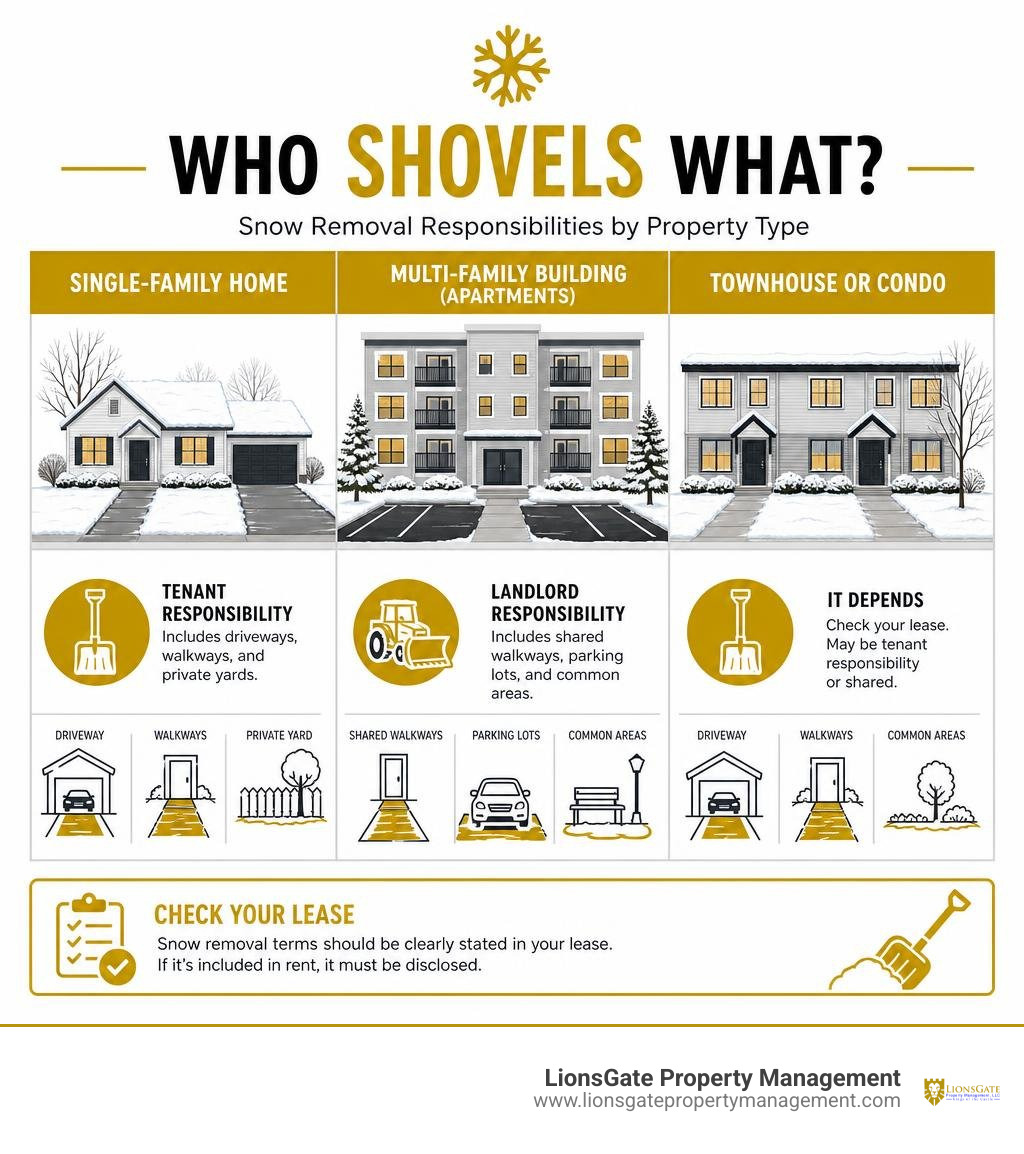
- Single-family rentals: Snow removal is often the tenant's responsibility, especially if the lease assigns exterior maintenance duties or the tenant has exclusive use of the yard.
- Multi-family buildings and apartments: The landlord is almost always responsible for clearing shared walkways, parking lots, and common areas — regardless of what the lease says.
- Bundled into rent: Some landlords include professional snow removal as a bundled amenity, factored into the monthly rent price — but this must be disclosed in the lease.
The stakes are real. A tenant once came to a housing counselor after slipping on ice at her rental — repeatedly. Each fall made her injuries worse, until she couldn't work, couldn't pay rent, and the entire situation, as one resource put it, snowballed. That story is a reminder that unclear snow removal responsibilities aren't just a minor inconvenience. They're a legal, financial, and safety issue for both tenants and landlords.
I'm Isaac Spragg, founder of LionsGate Property Management, and I've managed my own real estate investments across Providence, Rhode Island — which means I've dealt with the real costs and responsibilities of snow removal costs included in rent for small multifamily properties. In this guide, I'll break down exactly what your lease should say, what the law requires, and how to protect yourself either way.
Is Your Snow Removal Cost Included in Rent?
When winter storms roll through Rhode Island, the last thing you want to do is argue over who is holding the shovel. Whether your snow removal cost is included in rent largely depends on the architectural layout of your home and the specific terms of your lease.
| Property Type | Typically Responsible for Snow Removal | Primary Reason |
|---|---|---|
| Single-Family Rentals | Tenant | Exclusive possession of the property and yard |
| Duplexes & Triplexes | Landlord (Common areas) / Tenant (Exclusive areas) | Shared access routes require centralized safety management |
| Apartment Complexes | Landlord / Property Management | Shared common areas, parking lots, and public sidewalks |
To make sure you do not get caught off guard when the next New England blizzard hits, it is crucial to understand how these responsibilities are divided. For a complete look at local requirements, check out our Don't Get Snowed In Your Go-To Guide for Local Snow Clearance.
Single-Family Homes vs. Multi-Family Properties
In a single-family rental, the tenant enjoys "exclusive possession" of the entire property. This means you have total control over the home, the yard, and the driveway. Because of this exclusive use, courts and local ordinances generally treat single-family tenants more like homeowners. If your lease states that you are responsible for general yard work or lawn care, courts often imply that you are also responsible for winter maintenance.
However, multi-family properties—such as the duplexes, triplexes, and triple-deckers we manage across Cranston and Providence—are a completely different story. Because multiple households share the same driveways, walkways, and entry steps, these areas are considered "common spaces." To learn more about how driveway clearing rates are calculated for these setups, take a look at The Ultimate Guide to Average Driveway Snow Plowing Rates.
Apartment Complexes and Shared Common Areas
In larger apartment complexes, the responsibility for clearing snow and ice almost always falls on the landlord or the property management company. It is practically impossible—and highly unsafe—to expect dozens of tenants to coordinate the clearing of a shared parking lot or a public sidewalk.
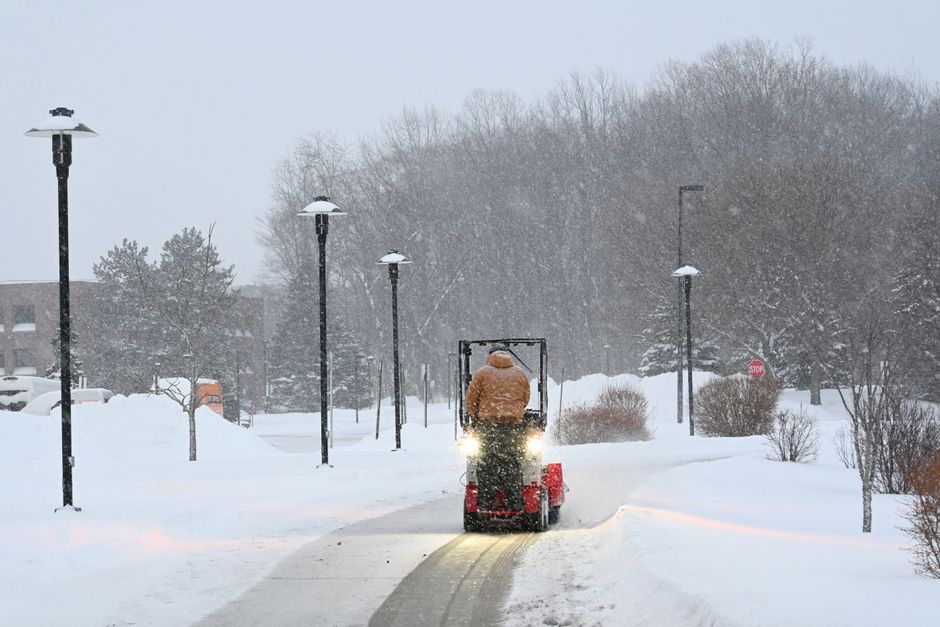
For these properties, landlords typically hire professional plowing crews. The cost of this service is treated as a standard operating expense, which is factored directly into your monthly rent. While you might not see a separate line item on your ledger for "snow plowing," you are paying for it as a bundled building amenity. This is a common practice across New England, as noted in this look at regional rental structures: What's Included in Boston Apartment Rent? (2026).
How to Verify If You Have a Snow Removal Cost Included in Rent
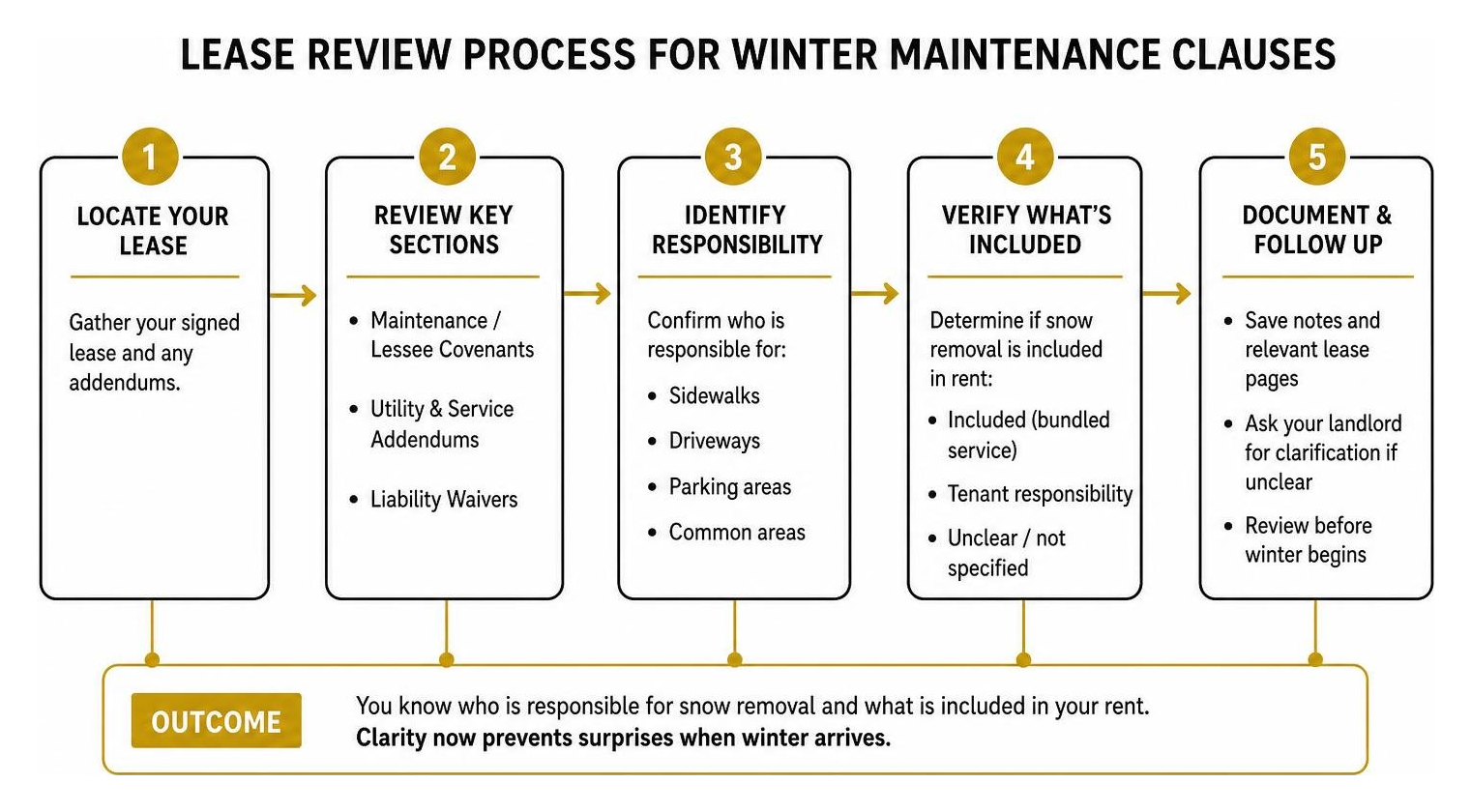
Never assume that snow removal is covered just because you live in a multi-family building. To verify your setup, you must review your lease agreement before the first snowflake falls. Look closely for:
- The "Maintenance" or "Lessee Covenants" Section: This outlines who is responsible for the upkeep of the exterior, sidewalks, and driveways.
- Utility and Service Addendums: Some modern leases feature specific addendums detailing which services (like trash, landscaping, and snow removal) are included in the monthly rent.
- Liability Waivers: Some leases may state that while the landlord performs snow removal, they are not liable for slips unless they show gross negligence.
For an example of how formal leases structure these responsibilities, you can review this sample Snow Garden Apartments, LLC RESIDENTIAL LEASE AGREEMENT.
The Pros and Cons of Having Your Snow Removal Cost Included in Rent
Having your snow removal cost is included in rent offers clear advantages, but there are also a few trade-offs to keep in mind.
The Pros:
- Budget Predictability: You pay a flat, predictable monthly rent year-round. You will never receive a surprise $200 plowing bill after a major late-season blizzard.
- Convenience: You don't have to worry about shivering on your driveway with a plastic shovel at 6:00 AM just to get your car out for work.
- Safety and Compliance: Professional crews use commercial-grade salt and equipment, lowering the risk of icy slips and municipal fines.
The Cons:
- Higher Base Rent: Landlords must cover their winter operating budgets, which means your base monthly rent might be slightly higher than a property where you handle maintenance yourself.
- Timing Variations: Professional crews have routes to complete. If a major storm hits, you might have to wait a few hours for the plow to arrive at your specific property.
How State Laws and Local Ordinances Dictate Responsibility
While a lease is a binding contract, it cannot override state laws or local municipal codes. In many states, including Rhode Island, landlords are legally obligated to keep common areas safe and clear of hazards. This is known as a non-delegable "duty of care."
If you have questions about general landlord-tenant responsibilities, our Property Management FAQs offer a helpful starting point.
Local Municipal Rules and Strict Timeframes
In Rhode Island, local cities and towns set strict, legally binding timelines for clearing public sidewalks adjacent to rental properties. If these rules are ignored, the city will issue fines—and in some cases, perform the work itself and place a tax lien on the property.
- Providence: Property owners or occupants must clear snow and ice from public sidewalks within 8 hours after a storm ends. If the storm occurs overnight, sidewalks must be cleared by 8:00 AM.
- Cranston: Sidewalks must be cleared within 24 hours after a snowstorm ends.
- Warwick: Sidewalks must be cleared within 24 hours of the storm's conclusion.
- Pawtucket: Property owners have 12 hours after the snowfall stops to clear a safe path on public walkways.
Understanding the Legal Duty of Care and Liability
If a tenant or a visitor slips and falls on an icy walkway, who is liable? In Rhode Island, the courts look closely at whether the landlord exercised "reasonable care" to keep the property safe.
If the lease states that a single-family tenant is responsible for shoveling, but the tenant fails to do so, the tenant may face liability. However, in multi-family properties, the landlord is almost always held legally responsible for slip-and-fall injuries in common areas. Landlords cannot write a clause in a lease to escape this legal duty. If a common stairway is icy, the landlord must ensure it is treated, regardless of what the lease says.
What Happens If the Lease is Silent on Snow Removal?
If your lease is completely silent on snow removal, contract law and local ordinances fill the gaps. Generally, if the lease does not explicitly state that the tenant must shovel, the responsibility falls back on the landlord—especially in multi-family buildings.
A landlord cannot suddenly send you a bill in the spring for winter plowing if it was never agreed to in writing. Retroactive billing for unauthorized maintenance is illegal. Additionally, a landlord cannot deduct these surprise plowing costs from your security deposit unless the lease explicitly allows for it under a signed "nonstandard rental provision."
The Financials: Professional Snow Removal Costs and Rent Calculations
To understand how snow removal cost is included in rent, it helps to look at the actual costs of running a professional winter maintenance service. Landlords don't just guess these numbers; they build them directly into their annual operating budgets.
For a detailed look at how these rates are calculated, check out Snow Removal Cost Everything You Need to Know.
Typical Pricing for Professional Snow Removal Services
Professional snow removal pricing varies based on the size of the property, the clearing method, and the severity of the storm. According to industry benchmarks for 2026, here is what professional management companies expect to pay:
- Standard Residential Driveway Clearing: Typically ranges from $45 to $160 per visit.
- Commercial & Multi-Family Common Areas: Typically costs between $75 and $250 per visit, depending on the size of the parking lot and the length of the walkways.
- Emergency and After-Hours Services: Often carry a surcharge of $50 to $100, or a 50% to 100% markup on the base rate.
- De-Icing and Salting: Usually adds $30 to $75 per application.
These rates are influenced by depth tiers (e.g., clearing 3 inches of light snow is much cheaper than clearing 12 inches of heavy, wet slush). For an analytical breakdown of these costs, see Snow Removal Cost in 2026: Pricing for Property Managers and Investors | Breasy and The Cold Hard Truth About Snow Removal Service Prices.
How Landlords Factor Winter Maintenance into Monthly Rent
Because winter weather is unpredictable, professional property managers use specific financial strategies to keep monthly rent stable for tenants.
- Seasonal Contracts vs. Per-Visit Pricing: Landlords often sign seasonal, fixed-rate contracts (typically ranging from $300 to $600 for standard residential properties or $1,000 to $3,500 for larger multi-family buildings). This guarantees a fixed cost for the landlord, regardless of how many storms occur. You can read more about this approach here: Guaranteed Snow Removal Cost Is a Fixed Rate Seasonal Contract Worth It.
- Multi-Year Averaging: A mild winter might cost very little, while a severe winter can easily bust a budget. Landlords use multi-year averaging to balance these swings, keeping rental rates steady over time. For insights on how community boards and associations structure these budgets, see this Strata Snow Removal Cost in Fraser Valley: 2026 Budget Planning Guide - Valley Snow.
Frequently Asked Questions About Rental Snow Removal
Can a landlord charge a tenant separately for snow removal if it is not in the lease?
No. A landlord cannot retroactively charge you for snow removal or send you a surprise bill in the spring if it was not clearly outlined in your lease agreement. Any additional fees or maintenance charges must be agreed upon in writing before the lease begins.
Who pays the fines if a tenant fails to clear snow as required by the lease?
If a single-family lease explicitly makes the tenant responsible for shoveling, and the tenant fails to do so, the city will still issue the citation to the property owner (the landlord). However, the landlord has the legal right to pass that fine along to the tenant as a lease violation charge, or issue a formal notice to cure the lease default.
Can a tenant with a disability request a snow removal accommodation?
Yes. Under the Fair Housing Act, a tenant with a physical disability or mobility impairment can request a "reasonable accommodation" for snow removal. If a tenant cannot safely shovel their exclusive walkway or driveway, the landlord must make reasonable accommodations. This is especially important for older adults. To learn more, read our guide on How to Find Reliable Snow Removal for Seniors.
Conclusion
At the end of the day, having your snow removal cost is included in rent is about more than just avoiding a cold morning chore—it is about safety, legal compliance, and peace of mind.
If you are a property owner in Rhode Island, managing snow removal, handling local municipal timelines, and protecting yourself from slip-and-fall liability can feel like a full-time job. That is where we come in.
At LionsGate Property Management, we offer full-service rental property management for duplexes, triplexes, and small-to-mid-size apartment buildings across Rhode Island, including Providence, Cranston, Warwick, Pawtucket, and North Providence. We deliver a stress-free ownership experience with our unique guarantees:
- Guaranteed Rent: We ensure your cash flow remains steady, month after month.
- Proactive Maintenance: We handle seasonal upkeep, landscaping, and prompt snow removal to protect your property and keep your tenants safe.
- No-Cost Evictions: In the rare event of a tenant dispute, we handle the legal process at no additional cost to you.
Whether you are a tenant looking for a safe, well-maintained home or a landlord ready to hand over the shovel, we are here to help. Explore our Snow Removal Services for Condo and Apartment Boards, check out our specialized Residential Property Management Services Providence, or find professional Snow Removal Services Near You today!