
Who Mows the Lawn: Guide to Rental Property Yard Care

Who Actually Mows the Lawn at a Rental Property?
Rental property lawn maintenance is one of the most common sources of confusion — and conflict — between landlords and tenants. And the answer to "who's responsible?" isn't always obvious.
Here's the short version:
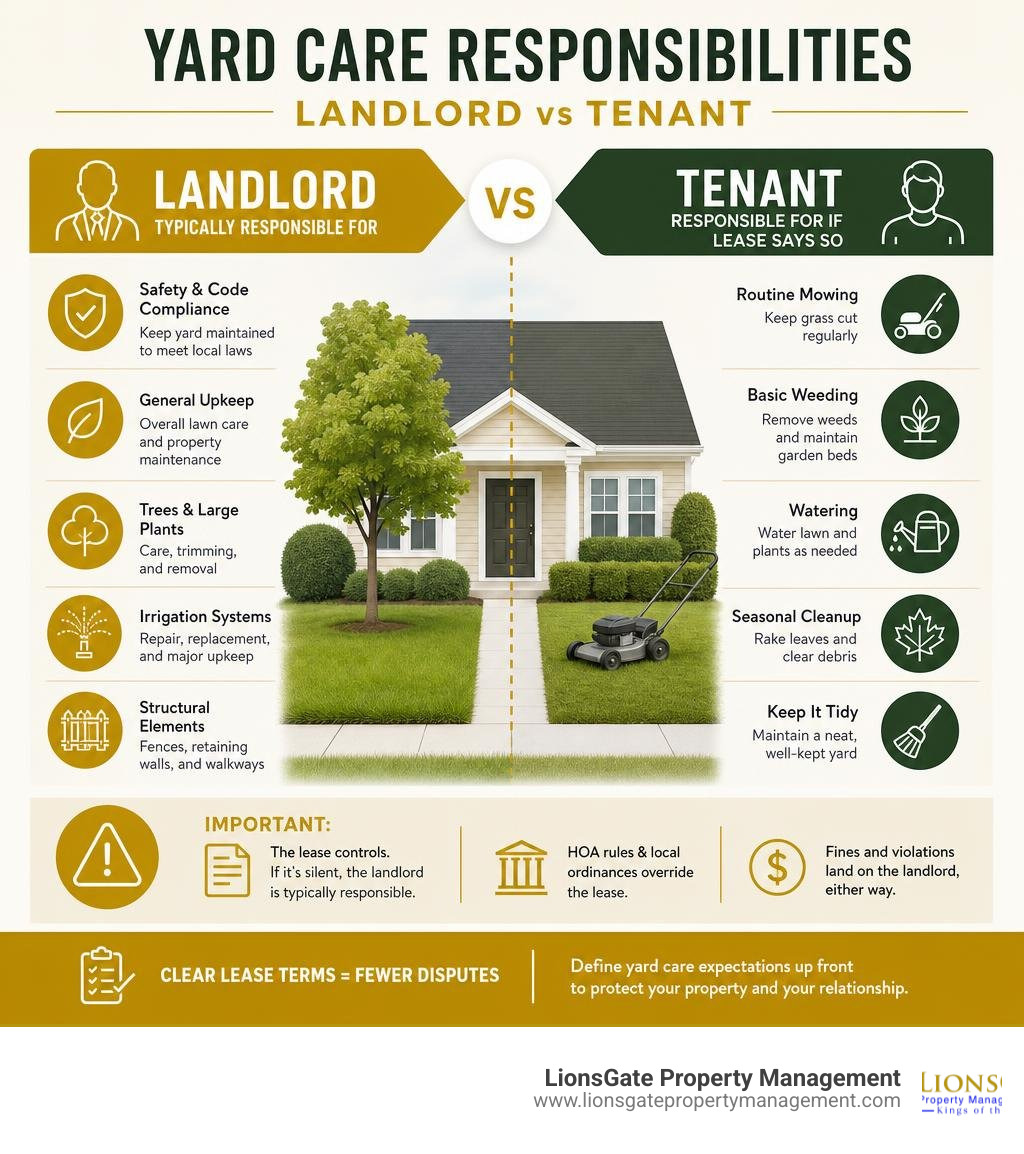
- By default, the landlord is responsible for yard maintenance as the property owner
- The lease agreement can shift that responsibility to the tenant — but only if it clearly says so
- If the lease is silent, the landlord is typically on the hook, especially for anything affecting safety or code compliance
- HOA rules and local ordinances can override what the lease says — and fines land on the landlord either way
In a rental agreement, lawn maintenance responsibility typically defaults to the landlord as the property owner because proper home maintenance is often a neighborhood or city requirement.
The stakes are real. An overgrown yard can trigger code violations, HOA fines, and even legal liability for unsafe conditions — regardless of what your lease says or who you think is responsible.
This guide breaks down exactly how responsibility gets assigned, what your lease should say, and how to avoid the disputes that come from leaving yard care undefined.
I'm Isaac Spragg, founder of LionsGate Property Management, and I've managed my own rental investments alongside client portfolios across Providence, Cranston, Warwick, and surrounding Rhode Island markets — which means rental property lawn maintenance is something I deal with in real leases, with real tenants, every season. The patterns I've seen in what goes wrong — and how to prevent it — are what this guide is built around.
Legal Defaults: Who is Responsible for Rental Property Lawn Maintenance?
When a dispute arises over an overgrown lawn or a dying patch of grass, the first question everyone asks is: “What does the law say?”
In Rhode Island, property maintenance is closely tied to local housing codes and state-level landlord-tenant laws. Legally, the default responsibility for maintaining the exterior of a residential property rests on the landlord. Under local municipal codes in cities like Providence, Cranston, and Pawtucket, property owners are required to keep their properties free of overgrown weeds, tall grass, and debris to prevent rodent infestations and safety hazards.
If your lease agreement does not mention yard care at all—often referred to as a "silent lease"—the responsibility legally defaults to you, the landlord. This means if the city issues a citation for grass exceeding the local height limit (which is typically 6 to 10 inches depending on the municipality), the fine is sent directly to the property owner.
However, there is an exception when it comes to tenant-caused damage. According to the principles detailed in Rental Agreements and Lawn Maintenance - Progressive, if a tenant's careless or negligent actions directly damage the yard, they can be held financially responsible for the repairs. For example, if a tenant parks their car on the front lawn and destroys the turf, or leaves an inflatable pool out all summer that kills the grass, they cannot escape liability just because the lease says the landlord handles "ordinary maintenance."
To protect your investments, we always advocate for a proactive approach. Leaving yard care to chance or assuming a tenant will "just do it" is a recipe for property degradation. For a deeper look at how we handle overall upkeep in the Ocean State, check out The Landlord's Guide to Proactive Rental Maintenance in RI.
Structuring Yard Care in the Lease Agreement
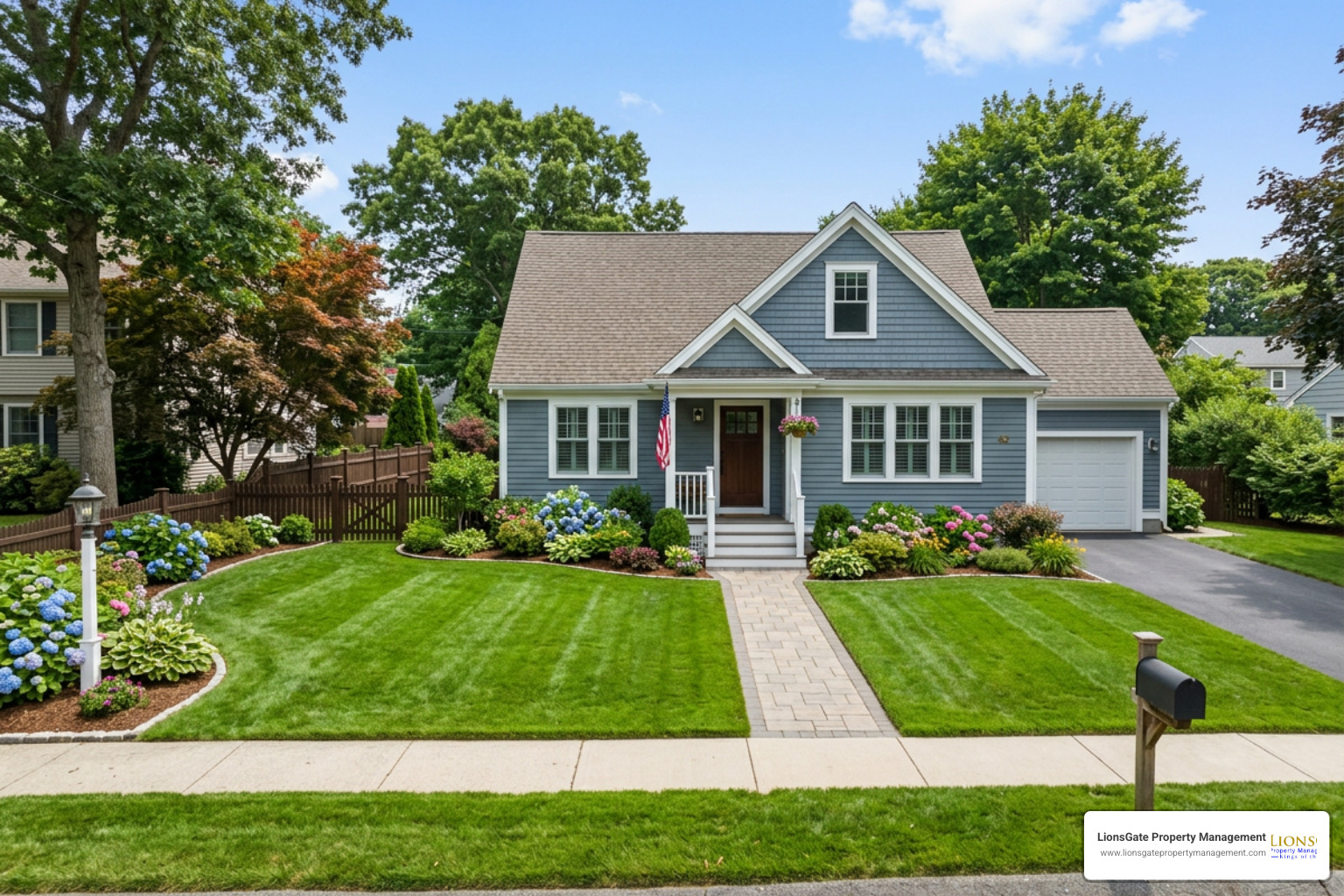
The best way to avoid landscaping drama is to prevent it before the tenant even signs the lease. A handshake agreement or a vague verbal promise like, "Yeah, sure, I'll keep the place looking nice," is practically an invitation for weeds to take over.
To protect your property, we highly recommend using a dedicated lease addendum for yard care. This document should outline:
- Exactly who is responsible for which tasks.
- The required frequency of these tasks (e.g., mowing weekly from May through October).
- Visual benchmarks of what constitutes an "acceptable" lawn (such as grass kept under 4 inches).
- Strict rules regarding landscaping modifications—specifically stating that tenants cannot plant invasive species, cut down existing trees, or dig up flower beds without written landlord approval.
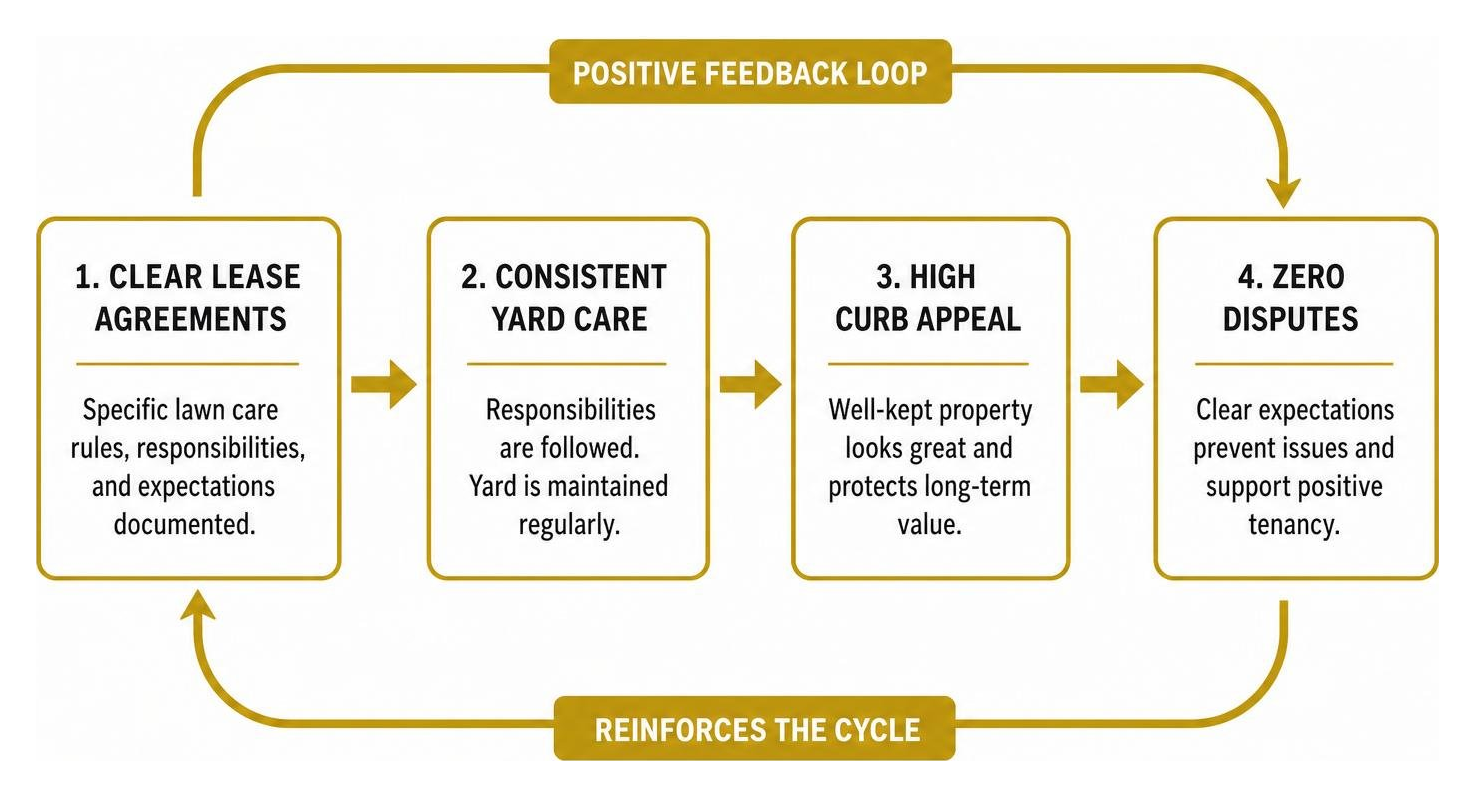
By setting these boundaries early, you establish clear expectations and create a paper trail that makes lease enforcement straightforward if things go south.
Three Models for Structuring Rental Property Lawn Maintenance
When deciding how to assign yard duties, landlords typically choose from three primary operational models. Each has its own set of pros, cons, and financial implications.
| Model | Landlord Responsibility | Tenant Responsibility | Cost/Rent Impact | Best For |
|---|---|---|---|---|
| Full-Service | Everything (Mowing, weeding, seasonal cleanups, aeration) | None (Must allow access to yard) | Built into rent (Higher monthly rent price) | Multi-family properties, premium single-family homes, out-of-state landlords |
| Self-Service | Major tree work, structural repairs | Weekly mowing, watering, weeding, leaf raking | Lower rent or tenant provides own tools | Single-family homes with long-term tenants who enjoy gardening |
| A La Carte | Mowing and seasonal cleanups | Watering, basic weeding, keeping yard free of pet waste | Moderate rent adjustment | Properties where watering is simple but mowing requires specialized equipment |
Under a full-service model, the landlord hires a professional landscaping service to handle the property. While this increases your operating expenses, it ensures the work is done consistently and professionally. You can easily pass this cost onto the tenant by bundling it into the monthly rent. Many tenants—especially busy professionals or seniors—are willing to pay a premium for a truly hands-off rental experience.
In a self-service model, the tenant is fully responsible for routine upkeep. If you choose this route, you must clarify tool ownership. Are you providing the lawnmower? If so, you are generally responsible for maintaining that equipment. If they are using their own, they must ensure it is safe and operational.
For landlords seeking an efficient, professional way to scale their portfolios without dealing with individual lawn crews, utilizing centralized systems like Professional Landscaping Services for Property Managers | Breasy can streamline the process. If you find yourself overwhelmed by the sheer volume of maintenance tasks, read our guide on The Best Property Maintenance Services for Landlords Who Hate Stress to find a model that keeps your blood pressure low.
Essential Lease Clauses and Yard Care Policies
If you decide to delegate some or all lawn care to your tenants, your lease clauses must be incredibly specific. Avoid vague terms like "keep the yard clean." Instead, use precise language:
- Mowing Frequency: State that the lawn must be mowed at least once every 7 to 10 days during the active growing season (typically late April through late October in Rhode Island).
- Watering Schedules: Define expectations for watering, especially during hot summer months, while noting compliance with any municipal drought or water conservation restrictions.
- HOA and Municipal Compliance: Explicitly state that the tenant is responsible for any municipal or HOA fines resulting from their failure to perform agreed-upon yard care.
- Fertilizer and Chemical Application: Prohibit tenants from applying unauthorized pesticides, herbicides, or fertilizers that could damage the local ecosystem or ruin the soil.
- Property Inspections: Reserve the right to conduct regular outdoor property inspections to ensure the lawn is being kept up to standard.
Landlord vs. Tenant Landscaping Duties
To keep the peace, it helps to distinguish between routine, everyday upkeep and long-term capital improvements. Expecting a tenant to climb a two-story ladder to clean gutters or trim heavy oak branches isn't just unrealistic—it's a massive liability risk.
Routine Tenant Tasks vs. Landlord Capital Improvements
As a rule of thumb, tenants should only be assigned tasks that require basic, non-hazardous tools and minimal specialized knowledge. Landlords should retain control over any structural, high-risk, or high-value landscaping assets.
-
Routine Tenant Tasks:
- Mowing the grass to the agreed height.
- Pulling weeds from garden beds and walkways.
- Raking and bagging fallen leaves in autumn.
- Watering lawns, flower beds, and potted plants.
- Keeping the yard free of animal waste, trash, and debris.
-
Landlord Capital Improvements & Major Maintenance:
- Trimming mature trees and large shrubs (which can easily cause injury or structural damage if done incorrectly).
- Maintaining, winterizing, and repairing irrigation and sprinkler systems.
- Clearing gutters of leaves and buildup (a major safety hazard).
- Repairing fences, retaining walls, and hardscape features.
- Replacing dead turf or handling major sod installations.
By drawing a clear line between these duties, you protect your tenants from injury and your property from amateur mistakes. To understand why having a structured, year-round plan for these tasks is so critical for Rhode Island property owners, read Why Your Providence Rental Needs a Maintenance Plan Yesterday.
The True Cost of Neglecting Rental Property Lawn Maintenance
What happens when yard care falls through the cracks? The consequences are far more expensive than a monthly landscaping bill.
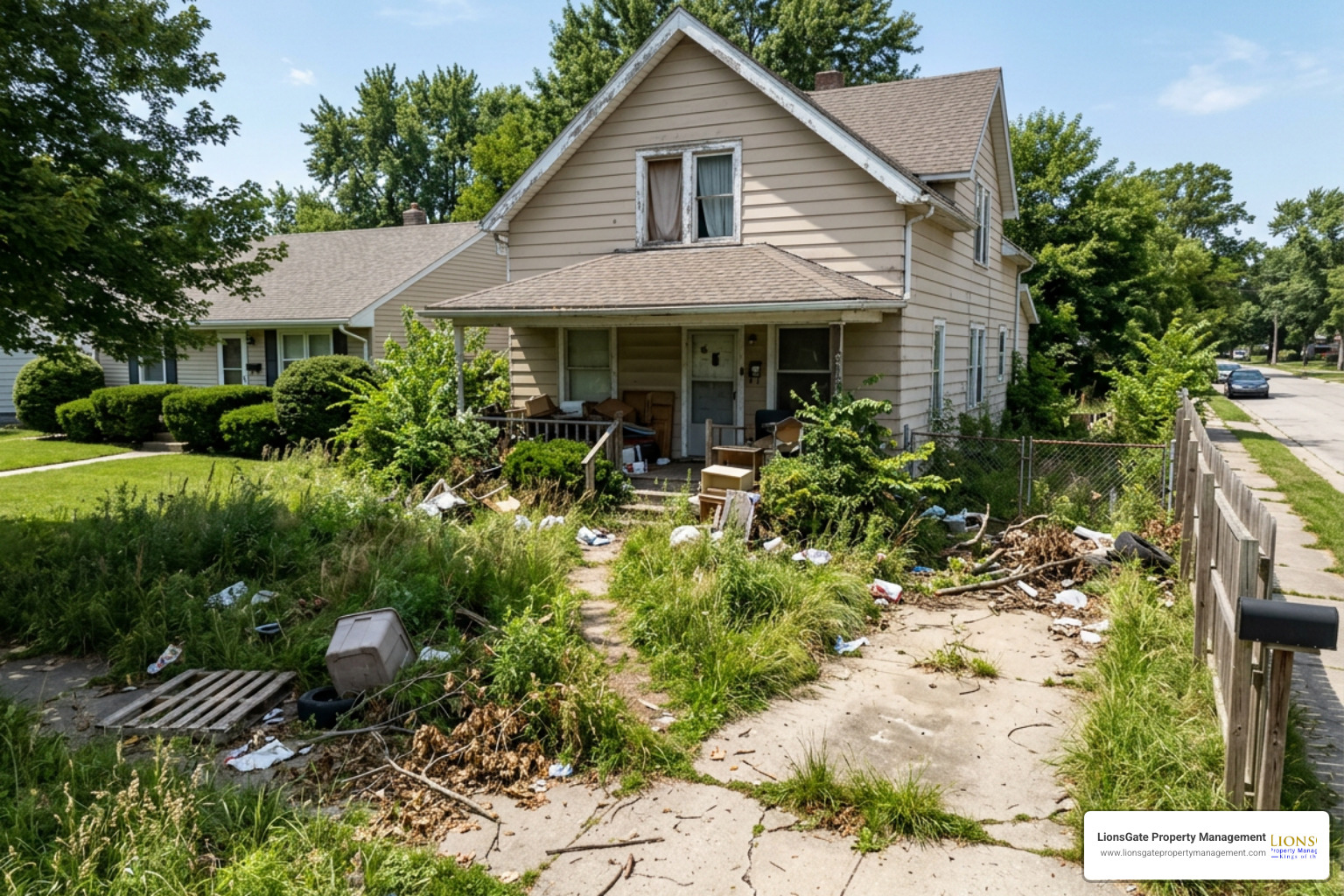
First, there are municipal code violations. Cities like Providence and Cranston actively patrol neighborhoods and issue hefty fines for overgrown properties. If left unresolved, these fines can escalate and even result in municipal liens against your property.
Second, safety hazards multiply. Overgrown grass hides holes, broken glass, and debris, increasing the risk of trip-and-fall injuries. Thick brush also attracts ticks, rodents, and other pests, which can quickly migrate from the yard into the home's interior.
Finally, neglect destroys your property's curb appeal, driving down your long-term asset value and making it much harder to attract high-quality tenants. High-turnover rates and vacant units cost landlords thousands of dollars in lost rent.
Proactive exterior care isn't an expense; it's an investment that safeguards your financial future. Learn more about protecting your assets in How Proactive Maintenance Safeguards Your Rental Property Investments in Providence and Beyond.
Frequently Asked Questions About Yard Care
Navigating the logistics of rental property lawn maintenance often brings up a few common questions. Here are the answers every landlord and tenant should know.
What happens if the lease is silent on lawn care?
If your lease does not address lawn care, the default legal responsibility falls squarely on the landlord. Under local housing and sanitary codes in Rhode Island, the property owner is legally obligated to keep the exterior of the property in a safe, sanitary, and compliant condition. If code enforcement officers issue a citation for tall grass or accumulated brush, the landlord is responsible for paying the fine and resolving the issue.
Can a landlord fine a tenant for not mowing the lawn?
A landlord can only fine a tenant if the lease agreement explicitly permits it. The lease must outline the tenant's responsibility to mow, specify the standard of care, and state the financial penalty for non-compliance. Typically, a better approach is to issue a formal written warning. If the tenant still fails to mow, the landlord can hire a professional service to clear the yard and bill the cost back to the tenant as "additional rent," provided this remedy is written into the lease.
Is the landlord responsible for watering the lawn?
While the landlord is responsible for maintaining the physical infrastructure of the yard (such as the hose spigots or an underground irrigation system), the tenant is typically responsible for the actual watering. To encourage tenants to keep the lawn green during hot summer dry spells, some landlords offer a small utility credit or water bill discount to offset the cost of increased water usage.
Conclusion
At the end of the day, a lush, green lawn shouldn't be a source of stress. Whether you choose a full-service professional model or delegate routine tasks to your tenants through a watertight lease agreement, the key to successful rental property lawn maintenance is clarity, consistency, and proactive communication.
If you are tired of chasing tenants to mow the grass, dealing with municipal code warnings, or worrying about seasonal cleanups and snow removal in Cranston, Warwick, Providence, Pawtucket, or North Providence, we are here to help.
At LionsGate Property Management, we provide comprehensive, stress-free property management solutions tailored to Rhode Island landlords. From our proactive maintenance programs to guaranteed rent and professional seasonal care, we ensure your investment properties stay beautiful and profitable all year long.
Ready to make your rental business completely hands-off? Contact us today to explore our LionsGate Property Management Services and let our team handle the hard work for you.