
Rhode Island Security Deposit Rules: What Every Landlord and Tenant Must Know

What Rhode Island Landlords and Tenants Need to Know About Security Deposits
Understanding the Rhode Island security deposit rules is essential for every landlord and tenant before signing a lease. Get it wrong and landlords risk paying double damages plus attorney fees. Tenants risk losing money they're legally owed.
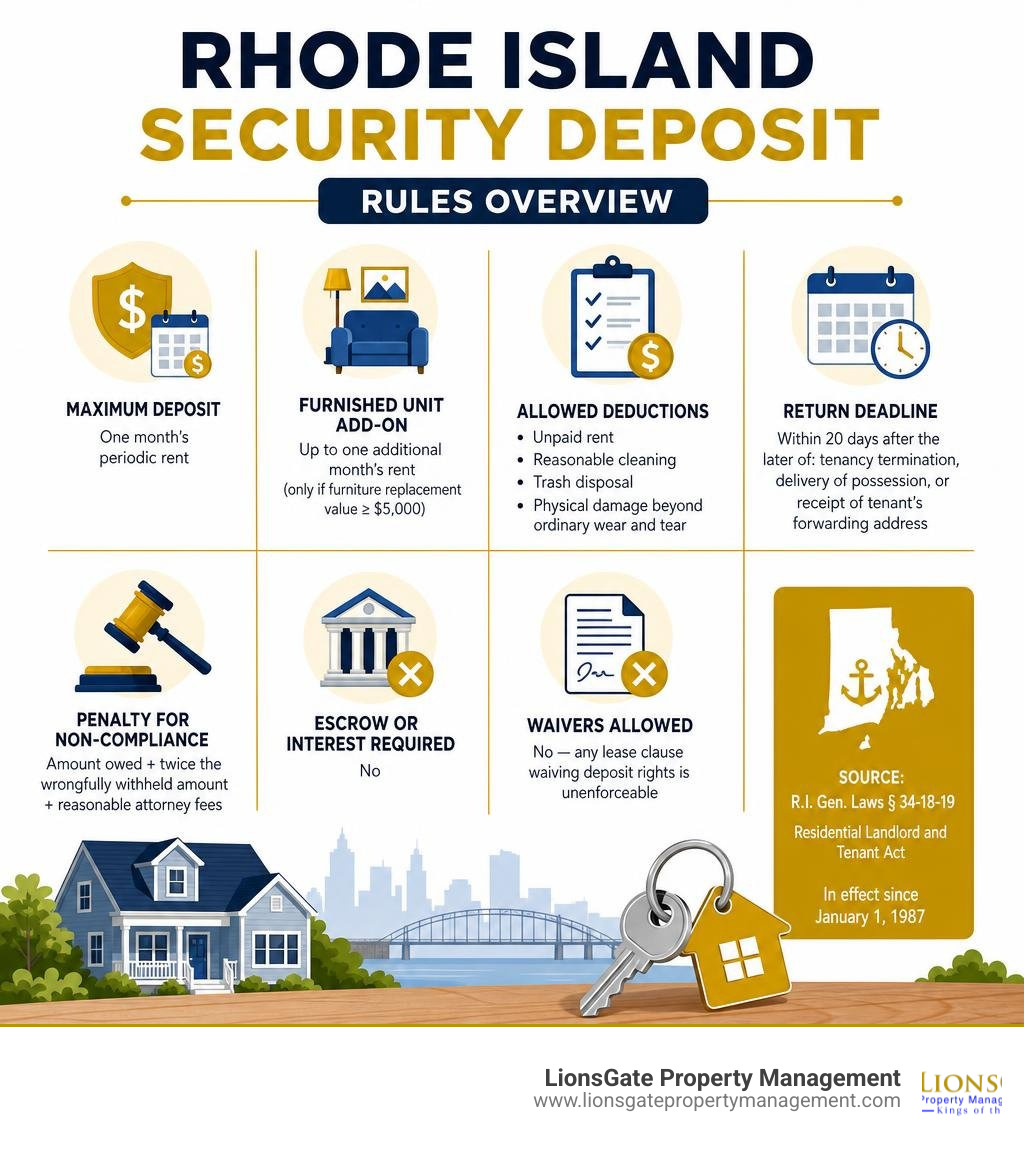
Here's a quick summary of the key rules:
| Rule | Details |
|---|---|
| Maximum deposit | One month's periodic rent |
| Furnished unit add-on | Up to one additional month's rent (only if furniture replacement value ≥ $5,000) |
| Allowed deductions | Unpaid rent, reasonable cleaning, trash disposal, physical damage beyond ordinary wear and tear |
| Return deadline | Within 20 days after the later of: tenancy termination, delivery of possession, or receipt of tenant's forwarding address |
| Penalty for non-compliance | Amount owed + twice the wrongfully withheld amount + reasonable attorney fees |
| Escrow or interest required | No |
| Waivers allowed | No — any lease clause waiving deposit rights is unenforceable |
Rhode Island's security deposit rules come from Section 34-18-19 of the Residential Landlord and Tenant Act, which has been in effect since January 1, 1987. The law applies to all residential tenancies statewide and protects both sides of the rental relationship.
Whether you own a duplex in Providence or a small apartment building in Cranston, these rules apply to you — and the penalties for ignoring them are steep.
I'm Isaac Spragg, founder of LionsGate Property Management, and I've navigated Rhode Island security deposit compliance as both an investor and a property manager serving landlords across Providence, Cranston, Warwick, and Pawtucket. In this guide, I'll walk you through everything you need to know to stay protected and compliant.
Understanding the Rhode Island Security Deposit Limit and Rules
As we head through 2026, the baseline rule for a Rhode Island security deposit remains firm: a landlord cannot demand or receive a security deposit that exceeds one month’s periodic rent for an unfurnished unit.
If your monthly rent is $2,000, the maximum security deposit you can request is $2,000. It doesn't matter if the tenant has a lower credit score, or if you simply want an extra cushion of safety. Demanding even a dollar more is a direct violation of state law.
This strict limit ensures that quality housing remains accessible to working families across our local communities, from Warwick to East Providence. It also sets clear boundaries for landlords drafting their leases. To understand how these financial limits fit into the broader lease agreement, check out our guide on Residential Leasing in Rhode Island What Landlords Need to Know.
How to Handle a Rhode Island Security Deposit for Furnished Units
Are you renting out a fully furnished historic loft in downtown Providence or a stylish corporate rental in Pawtucket? If so, Rhode Island law grants you a specific, highly useful exception.
If a rental unit is furnished, and the replacement value of that furniture is $5,000 or greater, you may charge a separate furniture security deposit. This furniture deposit can be up to one additional month's periodic rent.
This means that for a highly valued furnished apartment renting at $2,500 per month, a landlord could legally collect:
- $2,500 as a standard security deposit
- $2,500 as a separate furniture security deposit
- Total: $5,000
To view the exact legislative language that governs this specific furniture exception, you can read the direct statute on Rhode Island General Laws Title 34. Property § 34-18-19 | FindLaw . That if the furniture in the unit is old or has a replacement value under the $5,000 threshold, you must stick strictly to the standard one-month limit.
Pet Deposits and Service Animals under RI Law
Many landlords ask us if they can charge a separate "pet deposit" on top of the standard security deposit. The answer is a bit of a legal tightrope.
You cannot charge a pet deposit that pushes the total security deposit amount past the one-month rent cap. If you have already charged a full month’s rent as a security deposit, you cannot legally tack on a $300 pet deposit.
To work around this while still protecting your property, many Rhode Island landlords utilize "pet rent"—a modest, reasonable increase in the monthly rental rate (often $50 to $75 per month) to accommodate the wear and tear of a pet. This is completely legal and often highly profitable, as pet owners typically stay in their rentals longer.
However, there is an incredibly important exception you must respect: Service animals and emotional support animals (ESAs) are not pets.
Under federal and local fair housing regulations, service and support animals are classified as working animals. You cannot charge pet deposits, pet fees, or pet rent of any kind for these animals. To learn more about how to stay compliant with local housing protections, read our breakdown of Providence Fair Housing and Equal Opportunity Programs Explained.
Lawful Deductions vs. Ordinary Wear and Tear
When a tenant moves out of a rental in Cranston or North Providence, the most common point of friction is deciding what gets deducted from the security deposit.

Under Rhode Island law, a landlord can only make deductions from a Rhode Island security deposit for four specific reasons:
- Unpaid accrued rent
- Reasonable cleaning expenses (to return the unit to its move-in condition)
- Reasonable trash disposal expenses (if the tenant leaves behind furniture or trash)
- Physical damages caused by the tenant, guests, or pets that go beyond "ordinary wear and tear"
Distinguishing between ordinary wear and tear and actual damage is where things get tricky. Ordinary wear and tear is the natural, inevitable deterioration of a property from normal, non-abusive everyday living. Damage, on the other hand, is the result of negligence, accidents, or abuse.
To make things easy, here is a quick comparison table:
| Ordinary Wear and Tear (Landlord's Expense) | Actual Tenant Damage (Deductible) |
|---|---|
| Faded, peeling, or dirty paint | Large holes in drywall or unapproved paint colors |
| Lightly scratched glass or worn window tracks | Broken window panes or torn window screens |
| Minor carpet wear in high-traffic areas | Large carpet stains, pet urine odors, or cigarette burns |
| Loose door handles or cabinet hinges | Broken cabinet doors or missing fixtures |
| Stained or faded bathroom grout | Cracked bathroom tiles or clogged drains from foreign objects |
| Dust and light grime | Piles of trash, dirty appliances, or abandoned furniture |
Common Tenant Damages
When we perform move-out inspections across Rhode Island, we frequently see damages that are fully deductible from the tenant's deposit. These include:
- Large holes in the walls from mounting televisions or heavy shelving without repairing them.
- Pet damage, such as deeply scratched door frames or baseboards.
- Excessive filth in kitchens and bathrooms that requires professional deep cleaning.
- Unapproved modifications to the property (like painting walls neon green without permission).
To minimize these issues before they even start, proactive maintenance is key. Learn how we keep properties in peak shape by reading The Landlord's Guide to Proactive Rental Maintenance in RI.
Timeline and Procedures for Returning Deposits
Once a lease ends, the clock starts ticking immediately. Rhode Island has incredibly strict timelines for returning deposits, and missing the deadline is one of the fastest ways for a landlord to end up in district court.
Legal Timeline for Returning a Rhode Island Security Deposit
In Rhode Island, a landlord must return the tenant's security deposit—or provide a detailed, itemized written statement of any lawful deductions—within 20 days after the later of these three events:
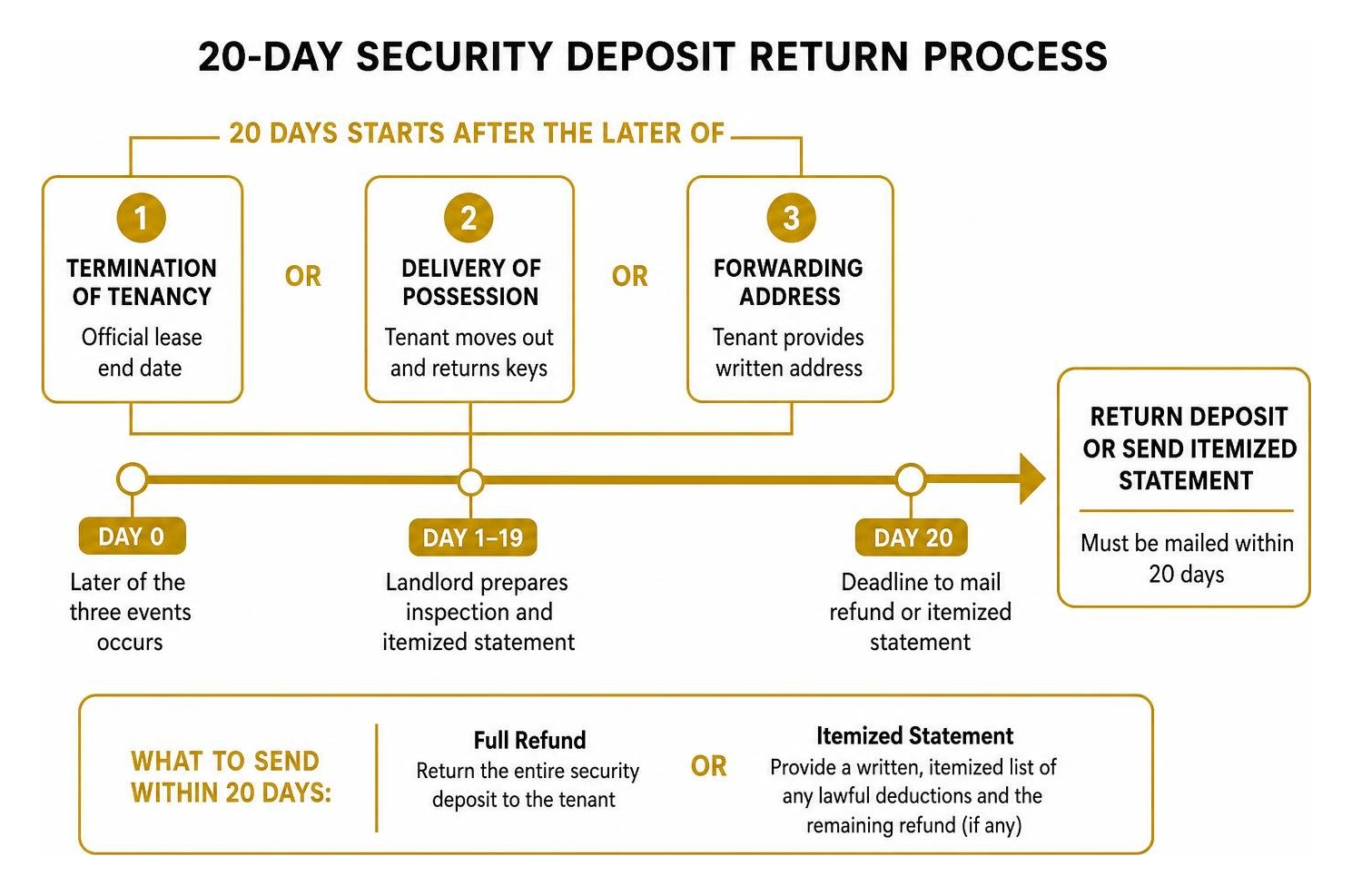
- The termination of the tenancy (the official lease end date).
- The delivery of possession (when the tenant actually moves out and returns the keys).
- The tenant providing a forwarding address in writing where the refund can be sent.
If a tenant moves out, hands over the keys, and gives you their new address on July 1st, you must mail their check or itemized statement no later than July 21st.
For a comprehensive guide to these timelines and general landlord-tenant responsibilities, you can reference the official state guide: THE RHODE ISLAND LANDLORD-TENANT HANDBOOK .
Penalties for Non-Compliance and Wrongful Withholding
If you fail to return the deposit or provide the itemized written list of deductions within that strict 20-day window, Rhode Island law does not play nice.
Under the statute, the tenant has the right to sue the landlord in Small Claims Court (which handles claims up to $2,500). If the court finds that the landlord wrongfully withheld the deposit or missed the timeline, the tenant may recover:
- The full amount of the deposit legally owed.
- Punitive damages equal to twice the amount wrongfully withheld.
- Reasonable attorney’s fees.
This means that if a landlord wrongfully holds onto a $1,500 security deposit past the 20-day mark, a judge could easily order the landlord to pay the tenant $3,000, plus several hundred dollars in court costs and attorney's fees. To see the exact statutory penalties, you can review the official text on Title 34 Property .
Special Situations: Property Sales and Roommate Changes
Real estate is dynamic. Properties get sold, and roommates move in and out. How do these situations affect the security deposit?
What Happens When a Rental Property is Sold?
If you sell your rental property in Warwick or Cranston while a tenant is still living there, you cannot simply pocket the security deposit or hand it back to the tenant.
The selling landlord must transfer the security deposit directly to the new owner. As the selling landlord, you remain legally responsible for that deposit until:
- You transfer the funds to the buyer.
- You send a formal written notice to the tenant containing the new owner's name, address, and contact information.
- You certify that the property is free of outstanding housing code violations (or disclose any existing violations to the buyer).
Once these steps are completed, the new owner assumes all legal liability for returning the deposit when the tenancy eventually ends.
Handling Roommate Changes
If multiple roommates sign a lease together, they are generally "jointly and severally" liable. This means the security deposit is treated as a single lump sum.
If one roommate moves out halfway through the lease and a new roommate takes their place, the landlord is not legally obligated to refund a "portion" of the deposit. Instead, the typical best practice is for the incoming roommate to pay the outgoing roommate their share of the deposit directly, leaving the original deposit intact with the landlord.
If you have more questions about how these unique rental scenarios work in practice, check out our Property Management FAQs.
Frequently Asked Questions about Rhode Island Security Deposits
To make sure we've covered all our bases, let's dive into some of the most common questions we hear from local landlords and tenants.
Can a tenant use the security deposit as last month's rent?
No. A security deposit is not rent. It is a financial safeguard held to cover damages, unpaid rent, or cleaning costs after move-out.
Unless a landlord explicitly agrees to it in writing within the lease agreement, a tenant cannot withhold their last month's rent and tell the landlord to "just take it from the security deposit." Doing so constitutes a lease violation, and the landlord can issue a 5-day nonpayment notice and initiate eviction proceedings if the rent is not paid.
Does Rhode Island require security deposits to be held in escrow?
Surprisingly, no. While it is highly recommended as a property management best practice, Rhode Island law does not require landlords to hold security deposits in a separate escrow account. Furthermore, landlords are not required to pay interest on security deposits to their tenants.
At LionsGate Property Management, we still strongly recommend keeping security deposits completely separate from your personal or operating business funds to ensure you always have the cash ready when the 20-day return window opens.
Are landlords required to provide a security deposit receipt?
Rhode Island law does not legally mandate that a landlord provide a written receipt upon receiving a security deposit. However, it is an absolute best practice for both parties.
A proper receipt should include:
- The date the payment was received.
- The physical address of the rental unit.
- The landlord's name and signature.
- The exact dollar amount of the deposit.
Keeping clear, signed paper trails protects everyone if a dispute ever arises down the road.
Conclusion
Managing a Rhode Island security deposit doesn't have to be a stressful legal minefield. By keeping your deposits capped at one month's rent, documenting your move-in and move-out inspections with detailed photos, and strictly adhering to the 20-day return timeline, you can easily avoid costly court disputes and build positive relationships with your tenants.
Of course, keeping up with changing state laws, handling midnight maintenance calls, and ensuring 100% legal compliance can feel like a full-time job. That's where we come in.
LionsGate Property Management offers full-service rental property management for duplexes, triplexes, and small-to-mid-size apartment buildings in Providence, Cranston, Warwick, Pawtucket, and North Providence. We deliver a completely stress-free ownership experience backed by our unique industry guarantees.
Ready to secure your rental income and leave the compliance headaches behind? Learn more about our Guaranteed Rent Program today!