
Managing Small Apartment Complexes Like a Pro

Why Rental Management Small Apartments Is Harder Than It Looks
Rental management small apartments — buildings with roughly 1 to 25 units — sits in a tricky middle ground. Too big to run casually, too small to justify the systems built for large complexes.
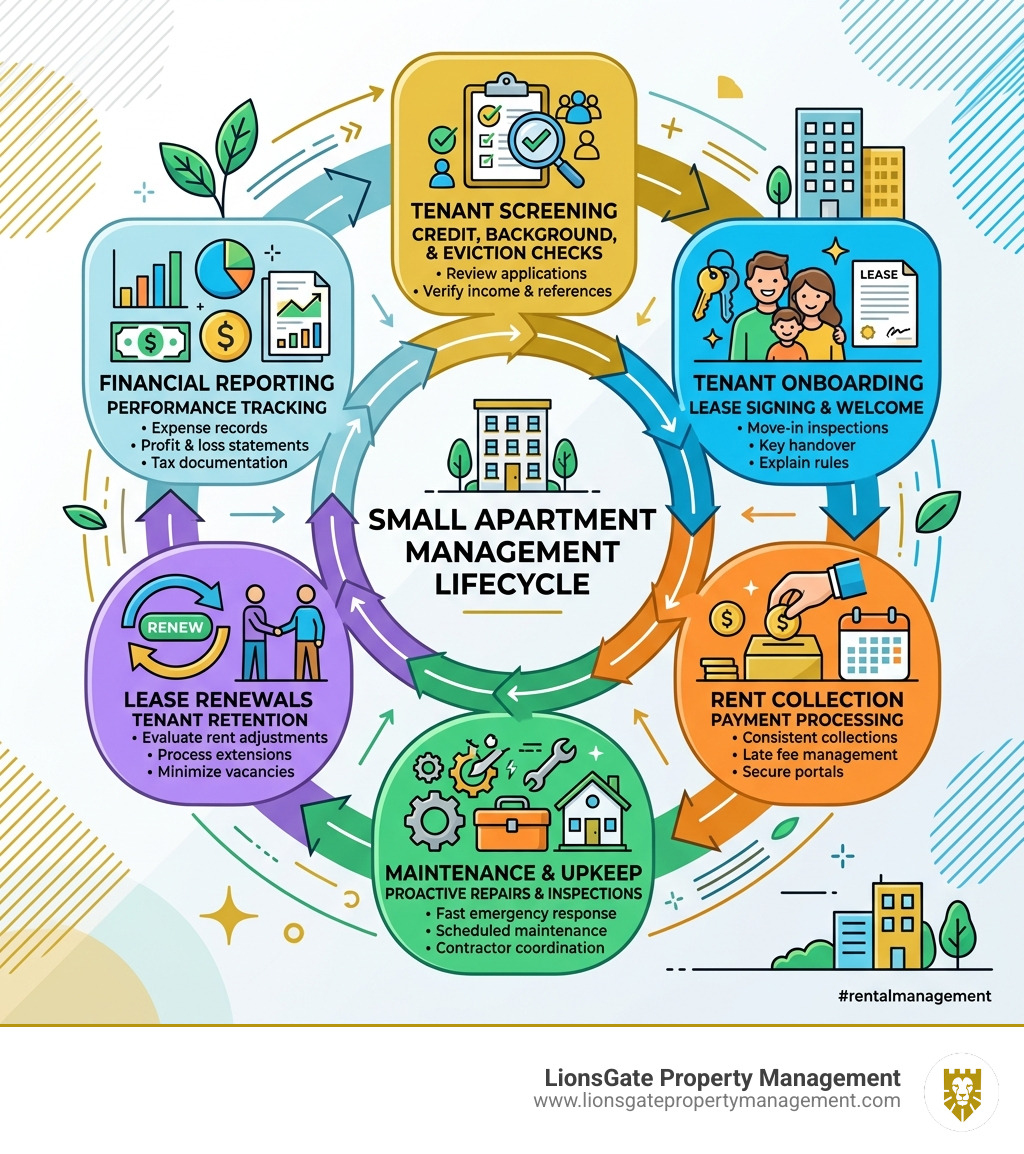
Here's a quick breakdown of what effective small apartment management actually involves:
| Area | What It Means for You |
|---|---|
| Tenant Screening | Credit, background, and eviction checks before signing |
| Rent Collection | Consistent, on-time payments with late fee enforcement |
| Maintenance | Proactive inspections plus fast emergency response |
| Legal Compliance | Local codes, fair housing, lease terms, eviction rules |
| Financial Tracking | Expense records, tax reporting, vacancy metrics |
| Vacancy Reduction | Lease renewals, tenant retention, fast turnaround |
The reality is that most small landlords underestimate how quickly tasks pile up. More units means more maintenance calls, more lease renewals to track, and more legal exposure — all at once.
And the cost of doing it poorly adds up fast. Missed late fees, longer vacancies, and skipped tax deductions can quietly drain hundreds of dollars a month from your returns.
Whether you own a duplex in Providence or a 15-unit walkup, the fundamentals of running a tight operation are the same — but the details matter enormously.
I'm Isaac Spragg, founder of LionsGate Property Management, and I've built my approach to rental management small apartments around the real challenges Rhode Island landlords face every day — from unreliable tenants to late-night maintenance emergencies. In this guide, I've brought together expert insights and proven strategies to help small apartment owners run their properties like seasoned pros.
The Unique Landscape of Managing Small Apartment Buildings (1-25 Units)
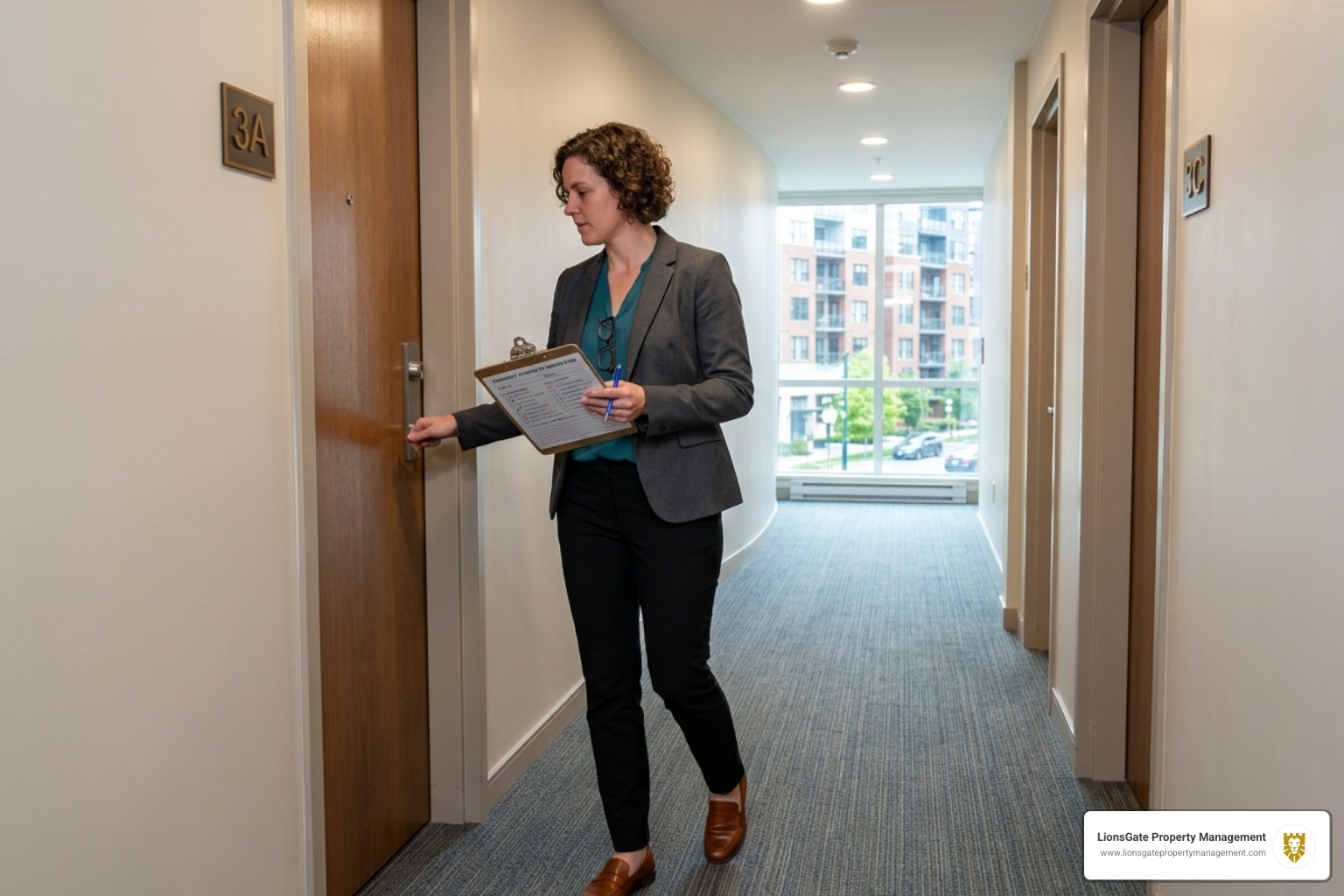
When you move from managing a single-family home to a small apartment building, the game changes. It isn't just "more of the same"; it’s an exponential increase in complexity. In a single-family rental, you have one roof, one water heater, and one family to keep happy. In a 10-unit building, you have ten times the personalities and shared systems that can fail.
The volume of complaints often scales faster than the unit count. Shared walls mean noise disputes, and shared parking lots mean "someone is in my spot" texts at 2:00 AM. Furthermore, How to Spot Hidden Maintenance Issues in Multi-Unit Properties becomes a critical skill. A leak in Unit 4 isn't just Unit 4's problem; it’s a ceiling crisis for Unit 1.
Then there is the opportunity cost. Many owners start with Self-management vs. Professional help as a way to save money. However, research shows that a 5-unit landlord can easily spend $200–$500 per month just in the value of their time handling tasks that could be automated or delegated.
| Feature | Single-Family Rental | Small Apartment (5-25 Units) |
|---|---|---|
| Maintenance | Isolated systems | Interconnected systems (boilers, main lines) |
| Tenant Dynamics | High privacy | Shared common areas/neighbor disputes |
| Vacancy Risk | 100% or 0% | Diversified; one vacancy is only 4-20% of income |
| Regulatory Load | Basic landlord-tenant law | Fire codes, signage, and multi-unit inspections |
Specialized Services for Small Portfolios
Small buildings often fall into a "management gap." Large firms often treat a 12-unit walkup as an afterthought because they are focused on 200-unit high-rises. This is why boutique management is so vital. A relationship-focused service ensures that unit turnovers are handled with urgency and that small details—like the cleanliness of the entryway—aren't ignored.
At LionsGate, our Residential Property Management Services Providence are designed specifically for this niche. We understand that in a small building, resident satisfaction is the primary driver of ROI.
Strategic Rental Management for Small Apartments

Success in rental management small apartments is built on three pillars: who you let in, how you collect the money, and how you keep them there.
Let’s look at the numbers. Industry leaders often see lease renewal rates over 70% and resident delinquency rates as low as 1%. How do they do it? It starts with a 3-point tenant screening process. You cannot rely on a gut feeling or a simple credit score. A professional screen includes multi-state criminal records, credit history, and—most importantly—verified eviction records.
Once you find a great tenant, you need a lawyer-written lease. Generic templates from the internet often miss local Rhode Island nuances regarding security deposits or late fees. Speaking of onboarding, knowing How Smart Owners Streamline Multi-Unit Onboarding in Providence can save you weeks of headaches. Setting expectations on day one about how to report maintenance or pay rent is the difference between a smooth tenancy and a chaotic one.
Optimizing Rental Management for Small Apartments through Technology
In 2026, if you are still collecting paper checks, you are losing money. Period. Research shows that 66% of tenants prefer paying via debit card, ACH, or credit card. Digital platforms aren't just for the "big guys" anymore; there are now professional-grade tools built specifically for the 1-50 unit landlord.
Automation is your best friend. Without automated tracking, landlords typically miss 15–20% of late fee opportunities. That’s $50–$200 a month just floating away. Software also allows for automated lease renewal reminders, which prevents that "oops, the lease expired two weeks ago" conversation that leads to longer vacancies. If you're on the fence about tech, check out the Top 5 Reasons to Hire a Professional Reliable Property Manager to see how professional systems pay for themselves.
Maintenance and Emergency Protocols
Maintenance is the #1 reason tenants leave. Manual coordination (calling three plumbers to see who is available) adds an average of 2–3 days to repair times. In a small apartment setting, you need a "triage" system:
- Preventative Walk-throughs: Conducted quarterly to catch leaks before they become floods.
- 24/7 Emergency Response: Tenants need to know who to call when a pipe bursts at 3:00 AM on Christmas Eve.
- Vendor Management: Using in-house staff or trusted vendors reduces the "hidden fees" often tacked on by third-party contractors.
For our Providence area owners, regional maintenance is a huge factor. We provide snow removal and trash management—two things that can lead to heavy city fines if not handled correctly.
Navigating Legal Compliance and Regional Regulations
Managing small apartments means staying on the right side of the law. In many urban areas, including the Northeast, the regulatory landscape is incredibly complex. You aren't just dealing with a lease; you're dealing with:
- HPD and DOB Filings: Ensuring your building is registered and compliant with local housing departments.
- Rent Stabilization: Understanding which units fall under local price controls.
- Fair Housing Rules: Ensuring your marketing and screening don't inadvertently discriminate.
- Security Deposit Limits: In many areas, you cannot charge more than one month’s rent, and there are strict timelines for returning those funds (often 21-30 days).
For example, specialized Manhattan-specific regulatory expertise highlights just how intense these rules can be, with dedicated managers needed just to monitor agency deadlines. While Providence isn't Manhattan, the principle remains: one mistake in an eviction filing or a lead paint disclosure can cost you thousands in legal fees.
Geographic Management Differences: Akron to Providence
Location dictates your management strategy. In a place like Akron, OH, you might focus heavily on recycling center standards and humidity-related maintenance. In Providence, RI, the focus shifts to "walk scores" and public transportation access.
The East Side of Providence, for instance, is a high-demand area where residents value walkable neighborhoods with shops and restaurants. Managing here requires a different touch—higher aesthetic standards for the building and perhaps more frequent common area cleaning—to justify the premium rents.
Optimizing ROI through Technology and Financial Tracking
If you can't measure it, you can't manage it. Manual tracking via spreadsheets is a recipe for "leaky" finances. Landlords using manual methods miss an average of $1,500–$3,000 annually in tax deductions because they lost a receipt or forgot to track a specific expense.
Professional rental management small apartments involves generating "tax-ready" reports, like a Schedule E, with one click. It also involves "Rent Comparable Analysis." Are you charging $1,800 when the building next door just leased a similar unit for $2,100? That $300 gap is $3,600 a year in lost revenue. This is Why Hiring Reliable Property Managers in Providence Pays Off—we ensure your assets are always performing at market peak.
Financial Metrics in Rental Management for Small Apartments
To run your building like a pro, track these four metrics:
- Vacancy Rate: How many days is a unit sitting empty? (Average market time is around 29.6 days).
- Delinquency Rate: What percentage of your rent is actually hitting your bank account?
- Maintenance-to-Income Ratio: Are you spending too much on "band-aid" repairs instead of replacing old systems?
- Resident Retention: Remember the 80/20 rule—80% of your stability comes from the 20% of effort you put into keeping your current tenants happy. It is always cheaper to keep a tenant than to find a new one.
Frequently Asked Questions about Small Apartment Management
Should I self-manage or hire a company for a 10-unit building?
If you have a full-time job, self-managing 10 units is essentially taking on a second career. Between the 24/7 maintenance needs and the legal complexities of multi-unit buildings, most owners find that the 8-12% management fee is easily offset by higher rents, lower vacancies, and the recovery of their own free time.
What are the most common HPD violations for small buildings?
Common issues include lack of proper signage (emergency contact info), improper trash disposal, sidewalk maintenance, and failing to register the property annually. In Rhode Island, fire safety code compliance is also a major focus for inspectors.
How can I reduce vacancies in a small apartment complex?
Start your renewal process early—at least 90 days before the lease ends. Offer "tenant appreciation" small gestures, like a gift card for on-time payments. Most importantly, respond to maintenance requests within 24 hours. A tenant who feels ignored is a tenant who is browsing Zillow.
Conclusion
Managing small apartment complexes doesn't have to be a source of constant stress. By shifting from a "DIY" mindset to a professional, systems-based approach, you can turn a demanding job into a truly passive investment.
At LionsGate Property Management, we specialize in exactly this. We offer a Guaranteed Rent Program, proactive maintenance, and even no-cost evictions to take the risk off your shoulders. Whether you have a triplex in Pawtucket or a 20-unit building in downtown Providence, we have the local expertise to maximize your ROI.
Ready to see how your property stacks up? Check out our Guaranteed Rent Program Providence and let’s get your portfolio running like a pro.